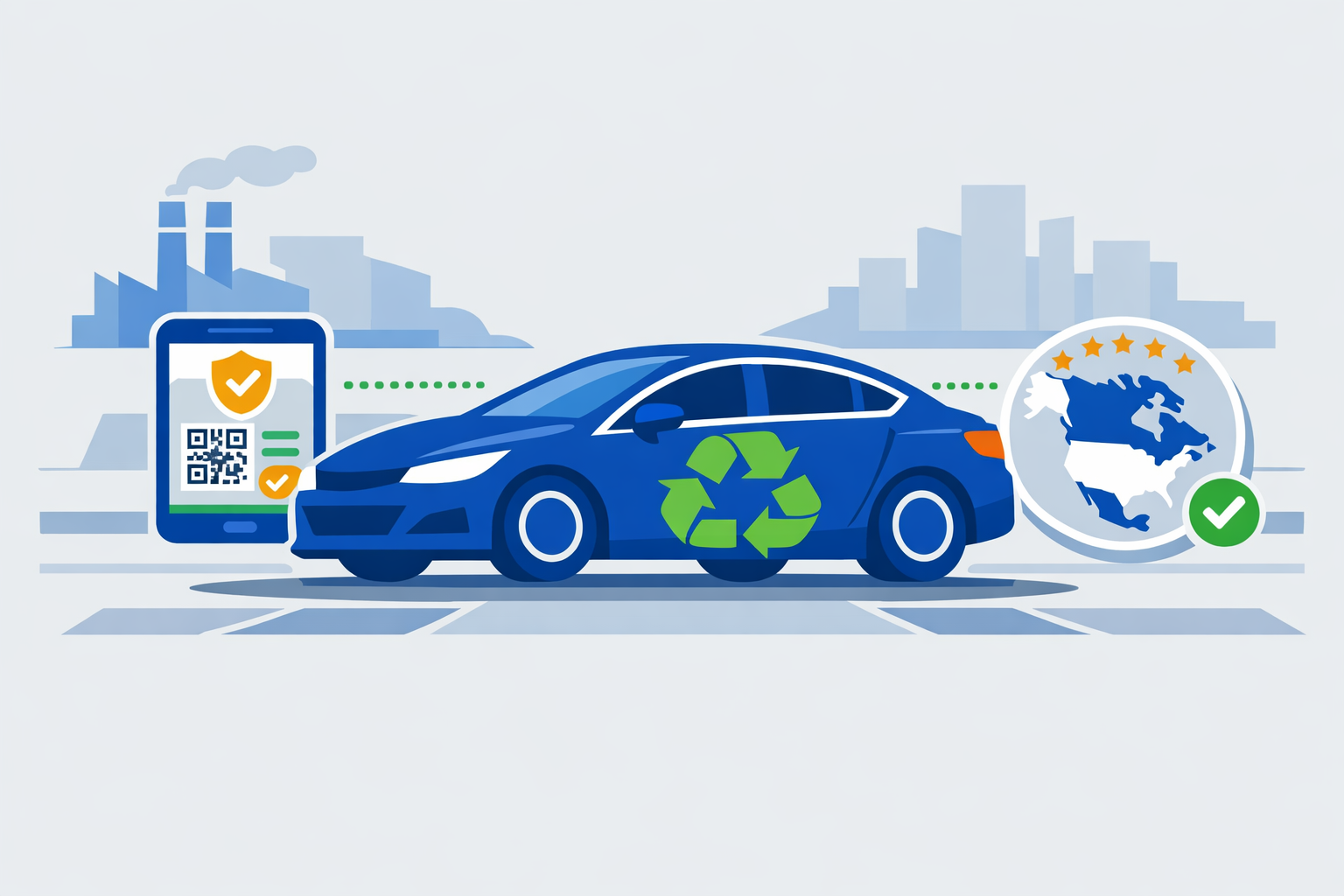
The U.S. administration has proposed a federal procurement rule requiring recycled content in new light-vehicle components, including interior panels, under-hood parts, and battery enclosures. Announced for implementation in 2026, the rule seeks to reduce reliance on virgin resins and strengthen domestic recycling capacity. Automakers and Tier-1 suppliers would be subject to new supply, traceability, and performance standards to meet automotive-grade requirements.
Background
The proposed rule supports federal sustainability and circular economy objectives, expanding the focus of the EPA's Comprehensive Procurement Guidelines beyond remanufactured parts and materials such as tires and coolants. Existing guidelines recommend federal fleet procurement of rebuilt vehicular parts and recycled engine coolants[1]. This rule would introduce the first federal mandate specifically addressing recycled polymer content in vehicle components.
International precedents inform this move: the European Union recently mandated that new vehicles incorporate at least 15% recycled plastic within six years and 25% within ten years, with a minimum of 20% sourced via closed-loop recycling of end-of-life vehicle plastics[2].
Details
The U.S. proposal requires that light-vehicle components like trim panels, battery housings, and under-hood parts contain a defined minimum percentage of recycled plastic by weight. Industry analysts expect this to drive investment in U.S. recycling infrastructure, post-consumer and post-industrial resin recovery, and the development of traceable supply chains meeting automotive specifications. Suppliers are anticipated to prioritize recycled content certifications, bio-based materials, and closed-loop programs to demonstrate regulatory compliance and product differentiation.
OEMs and Tier-1 suppliers will incur costs to ensure access to automotive-grade recycled polymers. These efforts may involve capital outlays for testing and validation to confirm performance and safety equivalency with virgin materials. Industry observers predict procurement shifts and potential pricing impacts as supply chains incorporate new material sources.
Outlook
The rule is at the proposal stage, with public comment and interagency review scheduled before final adoption. A phased rollout, similar to the EU's timeline, is expected, allowing industry several years to transition. The regulation is projected to drive regional recycling capacity growth and enhance supply chain resilience for automotive plastics.