Federal regulators have outlined a proposed rule requiring increasing percentages of recycled plastic in light-vehicle components, marking the first US mandate specifically targeting post-consumer recycled (PCR) polymer content in automobiles. The proposal covers interior panels, under-hood parts, and battery-related enclosures, with phased benchmarks beginning in 2026 and full implementation targeted for 2028. The rule would apply to automakers and their Tier-1 and Tier-2 suppliers, requiring documented compliance with performance-based standards for durability, heat resistance, and chemical compatibility.
Background
The US proposal arrives amid intensifying global regulatory pressure on automotive plastics circularity. The European Parliament and Council reached a provisional agreement in December 2025 on the End-of-Life Vehicle Regulation (ELVR), requiring a minimum 15% recycled plastic content in new vehicles six years after entry into force and 25% within ten years. Under the EU deal, at least 20% of those recycled content targets must be sourced from end-of-life vehicles, according to documents published by the European Parliament.
In the United States, recycled-content mandates have advanced primarily at the state level for packaging. As of August 2025, five states have passed laws requiring post-consumer recycled content in plastic packaging, according to the Association of Plastic Recyclers. Federal legislative efforts have focused on packaging rather than durable goods. Notably, the Accelerating a Circular Economy for Plastics and Recycling Innovation Act, introduced in September 2024 by Reps. Larry Bucshon (R-Ind.) and Don Davis (D-N.C.), calls for 30% minimum recycled content in plastic packaging by 2030. The proposed automotive rule would extend federal recycled-content requirements to durable goods for the first time.
The American Chemistry Council has advocated for recycled content standards as part of automotive OEM material certification processes and has called for federal and state initiatives to stimulate investment in national durable plastics recycling infrastructure.
Details
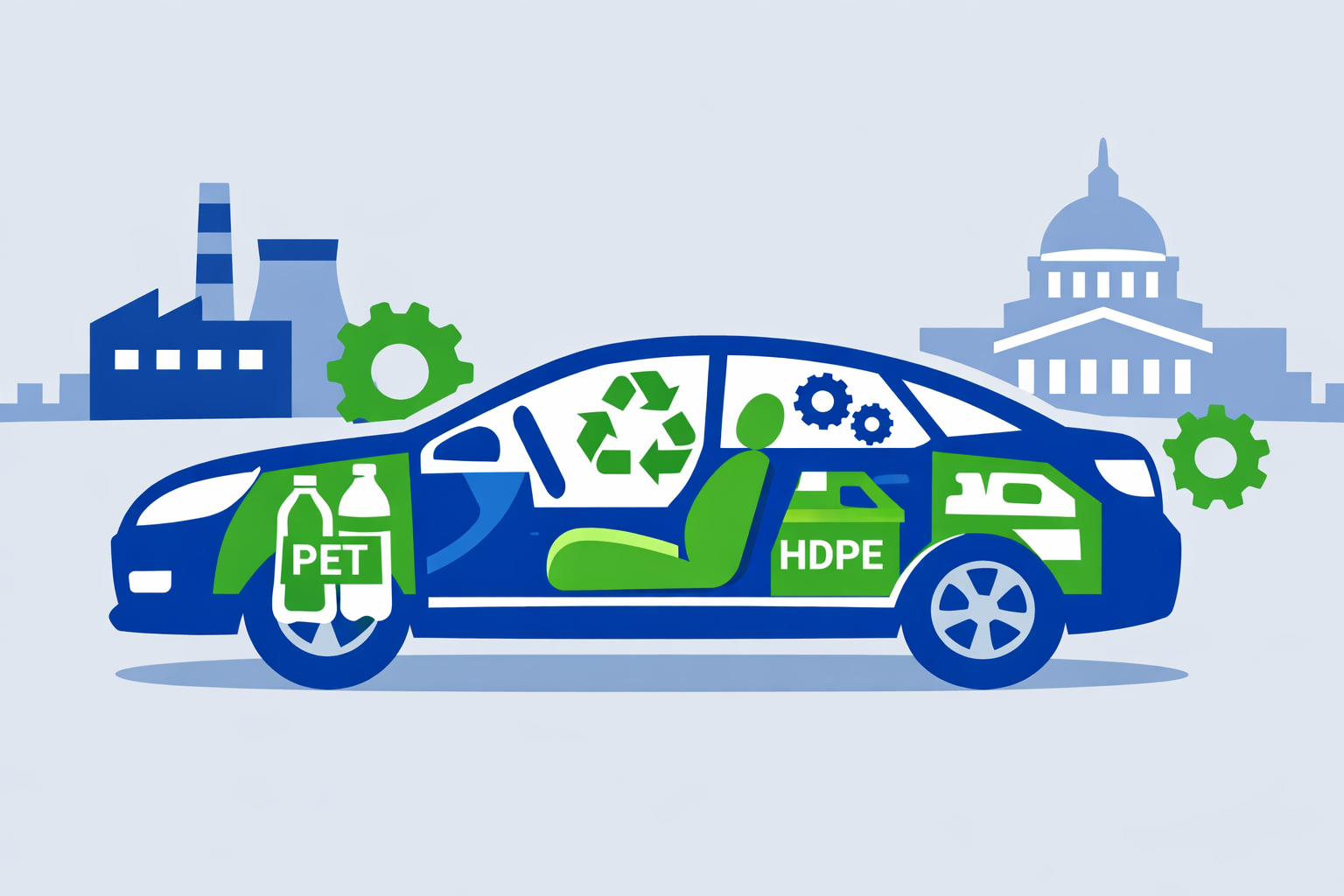
The rule is technology-neutral and performance-based, permitting a mix of feedstocks including recycled PET, HDPE, and specialized polymers that meet automotive-grade thresholds. Certification and independent testing are central to enforcement, with penalties for non-compliance including fines and credit reductions in regulatory reporting. The framework aligns with EPA guidelines and design-for-recyclability (DFR) principles that encourage components to be disassembled and recycled at end of life.
Supplier readiness varies across the sector. The global post-consumer recycled plastics in automotive market was valued at $11.92 billion in 2024 and is expected to grow at a compound annual growth rate of 11.1% through 2030, according to Grand View Research. Several OEMs have set voluntary targets: Ford has pledged to use at least 20% recycled content across its vehicle lineup, while GM aims for 50% sustainable materials in all vehicles by 2030, according to industry analysts. Suppliers with scalable PCR supply chains and certified quality-control systems are expected to gain preferred-supplier status as the rule takes effect.
ICIS Plastic Recycling Analyst Mia McLachlan noted that recycled content mandates "are expected to be met primarily through recycled polyolefins," given the wider availability of suitable waste feedstocks compared with other automotive polymers. ICIS has estimated that 0.5 to 0.6 million tonnes of recycled polyolefins would be required in Europe alone by 2040 under the EU regulation, with recycled polypropylene supplying the majority.
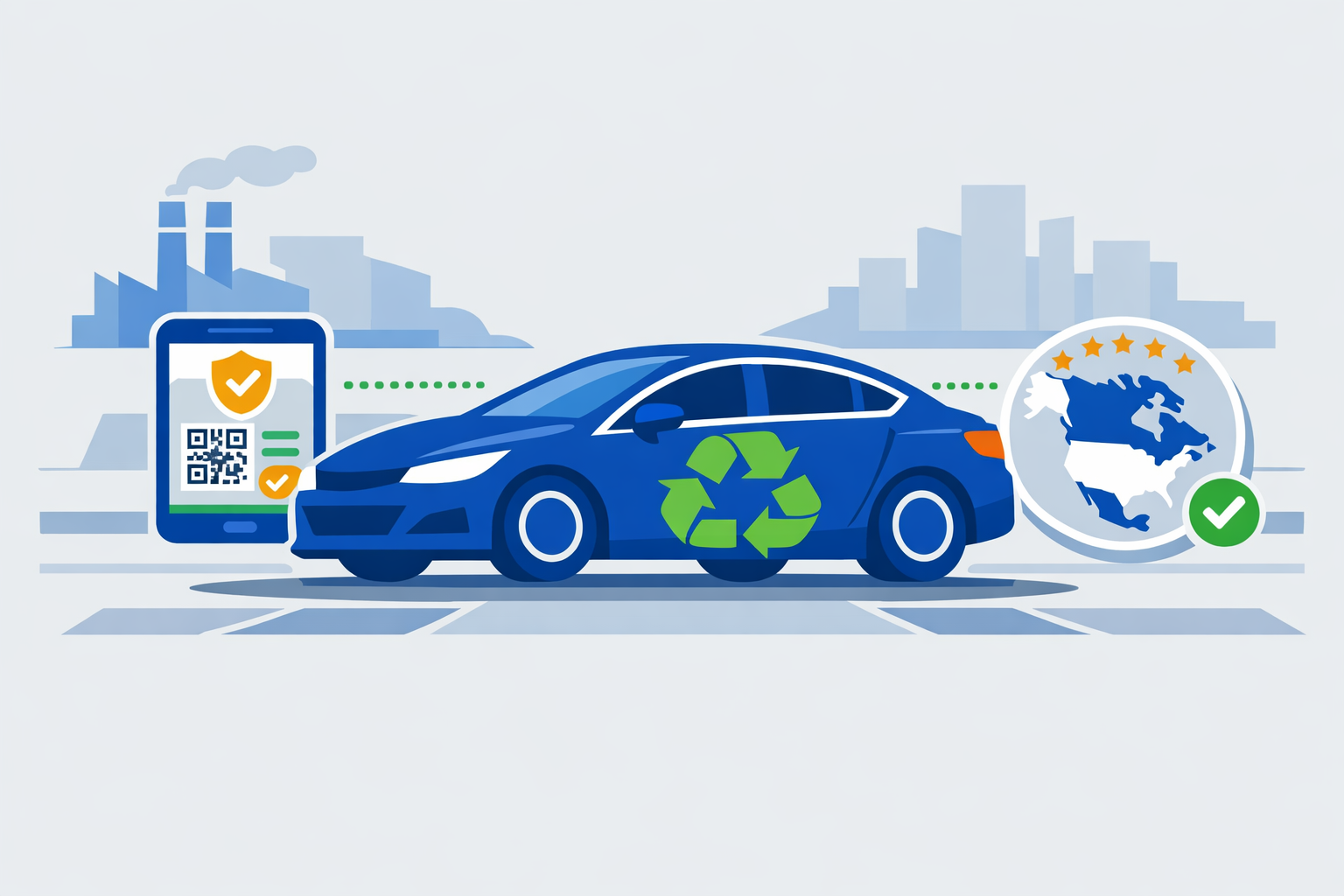
Traceability is emerging as a central compliance challenge. Digital bills of materials, supplier declarations, and product-embedded identifiers are under discussion to support transparent reporting and auditing of recycled-content claims.
Outlook
A formal US rule publication is expected later in 2026, with phased benchmarks rolling out through 2028. IDTechEx forecasts that sustainable plastics content in vehicles will reach approximately 18% by 2035 - a level that falls short of many stated OEM and regulatory targets, underscoring the scale of infrastructure investment and supply-chain coordination still required. Automakers and suppliers are advised to conduct gap analyses and adjust procurement contracts ahead of final adoption.
For related coverage, see our earlier report on the US proposal for federal recycled content in auto plastics and EU circularity rules for automotive composites.