A proposed US federal rule mandating post-consumer recycled (PCR) content in light-vehicle interior plastic components is advancing toward finalization, compelling automakers and Tier-1 suppliers to overhaul material sourcing strategies, verification frameworks, and end-of-life recycling programs ahead of anticipated compliance deadlines.
Background
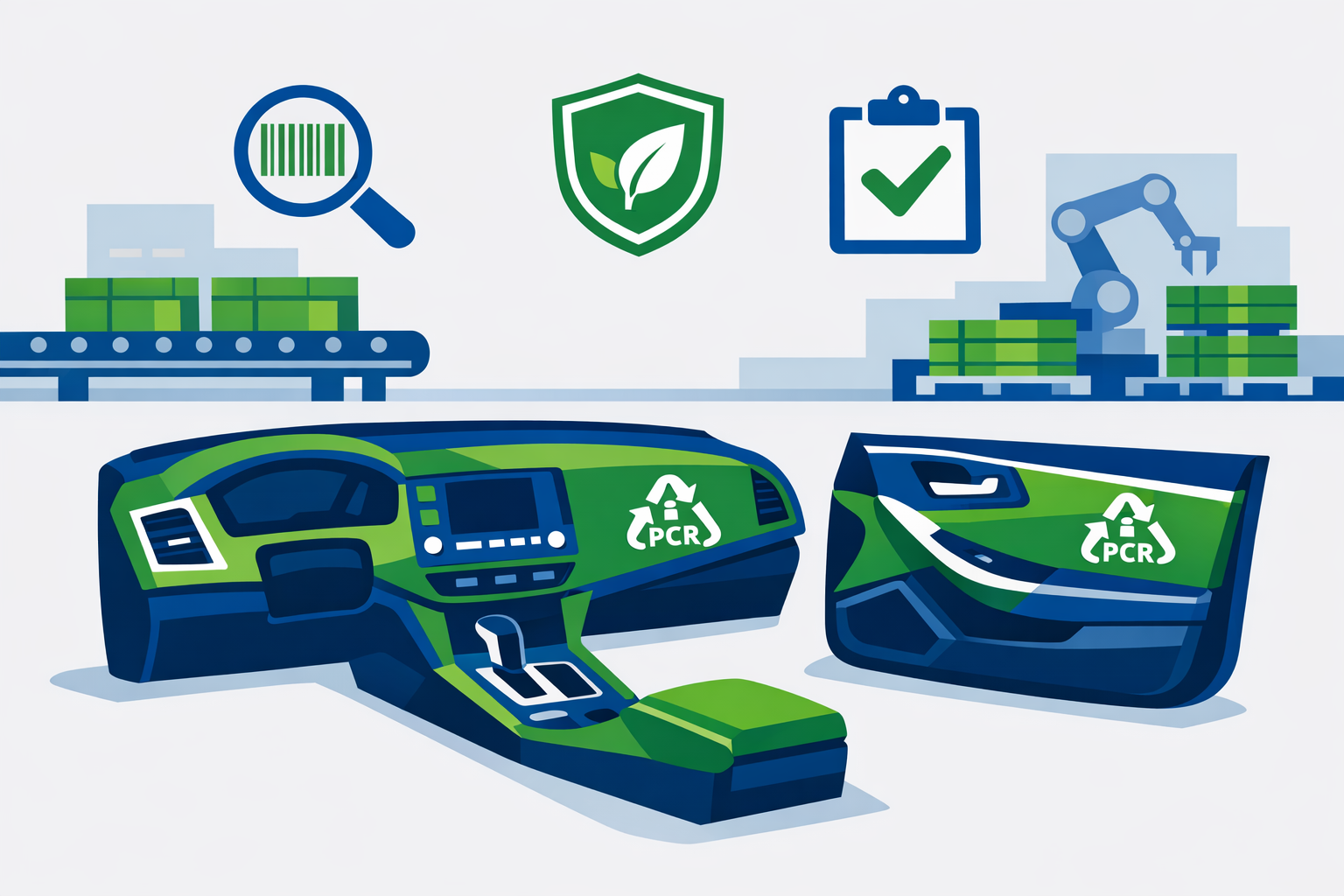
The federal proposal, to be implemented through updated EPA procurement guidance, targets plastic-intensive interior applications including dashboard substrates, door panel skins, center consoles, and seat-back structures. Interior trim components-including dashboards, door panels, center consoles, and seat backs-represent a primary focus for recycled material adoption due to their high plastic content and growing regulatory scrutiny, according to Future Market Insights. The rule would mark the first federal mandate directly specifying recycled polymer content in vehicle interiors, extending beyond the EPA's existing Comprehensive Procurement Guidelines, which have historically focused on remanufactured parts and recycled materials such as coolants and tires.
The regulatory push mirrors precedents at the state and international levels. While most US legislative action has occurred at the state level, 2025 brought renewed interest in national coordination. As of 2025, five states have enacted laws requiring certain containers and packages to meet minimum recycled content standards.[1] Internationally, the EU is preparing to mandate up to 25% recycled plastic content in new vehicles, including material sourced from end-of-life cars. An analysis by the EU's Joint Research Centre found that about 3% of plastics used in car manufacturing end up in the recyclates market, according to the World Economic Forum.
Details
The proposed US rule is expected to set phased PCR content thresholds by weight for key interior component categories, with verification tied to chain-of-custody certification. Strong reporting, verification, and enforcement are considered essential; the Association of Plastic Recyclers (APR) recommends third-party certification to confirm post-consumer sources and ensure recyclers maintain chain-of-custody tracking.
The post-consumer recycled plastics in automotive market is valued at USD 15.12 billion in 2025 and is projected to grow at a compound annual growth rate (CAGR) of 10.8%, reaching USD 38.05 billion by 2034, according to Research and Markets. The global automotive interior trim components using PCR materials market is projected to reach USD 2.2 billion in 2026 and expand to USD 5.9 billion by 2036, registering a CAGR of 10.4% over the forecast period, according to Future Market Insights.
The dominant resins under consideration for interior PCR applications are polypropylene (PP) and acrylonitrile butadiene styrene (ABS). PCR-PP and PCR-ABS collectively account for nearly 55% of market demand, driven by their balance of strength, impact resistance, thermal stability, and aesthetic versatility. PCR-PP is widely used in structural and semi-structural interior components, while PCR-ABS is increasingly specified for decorative trims and visible surfaces requiring consistent texture and color.
On verification, advanced sorting systems leveraging artificial intelligence and near-infrared spectroscopy are improving recycled feedstock purity, while automation in compounding and extrusion is reducing variability and enhancing batch consistency. Material science innovations are enabling high-impact, UV-stable, and heat-resistant PCR compounds that meet stringent OEM validation protocols.
Major OEMs are already recalibrating sourcing targets ahead of finalization. Ford has pledged to use at least 20% recycled content across its vehicle lineup by 2025, and GM is aiming for 50% sustainable materials in all vehicles by 2030, according to Grand View Research. However, cost sensitivity, the absence of uniform national mandates, and a more dispersed manufacturing base pose challenges in North America. Tier-1 compounders focused on US-sourced PCR and localized supply chains are gaining a competitive edge.
Supply-side concerns are equally significant. Imported recycled content plastic threatens the economic viability of US recycling infrastructure and is already impeding investment in expanded collection and processing, according to the APR. The European Union faces similar challenges. Imported plastic undermines investments in local collection and recycling infrastructure, and communities miss the economic benefits of PCR policies when companies source material abroad.
Outlook
PCR content standards are expected to reshape sourcing strategies and intensify competition for high-quality recycled feedstocks. Producers are responding by investing in design changes, supply chain partnerships, and material tracking systems. Digital traceability is gaining prominence, with blockchain-enabled supply chain monitoring enabling OEMs to verify recycled content percentages and regulatory compliance claims. The rule's finalization is expected to trigger further capital investment in domestic mechanical and chemical recycling capacity, with supply chain resilience and third-party PCR certification becoming critical differentiators for Tier-1 suppliers and compounders seeking to serve compliant vehicle programs.