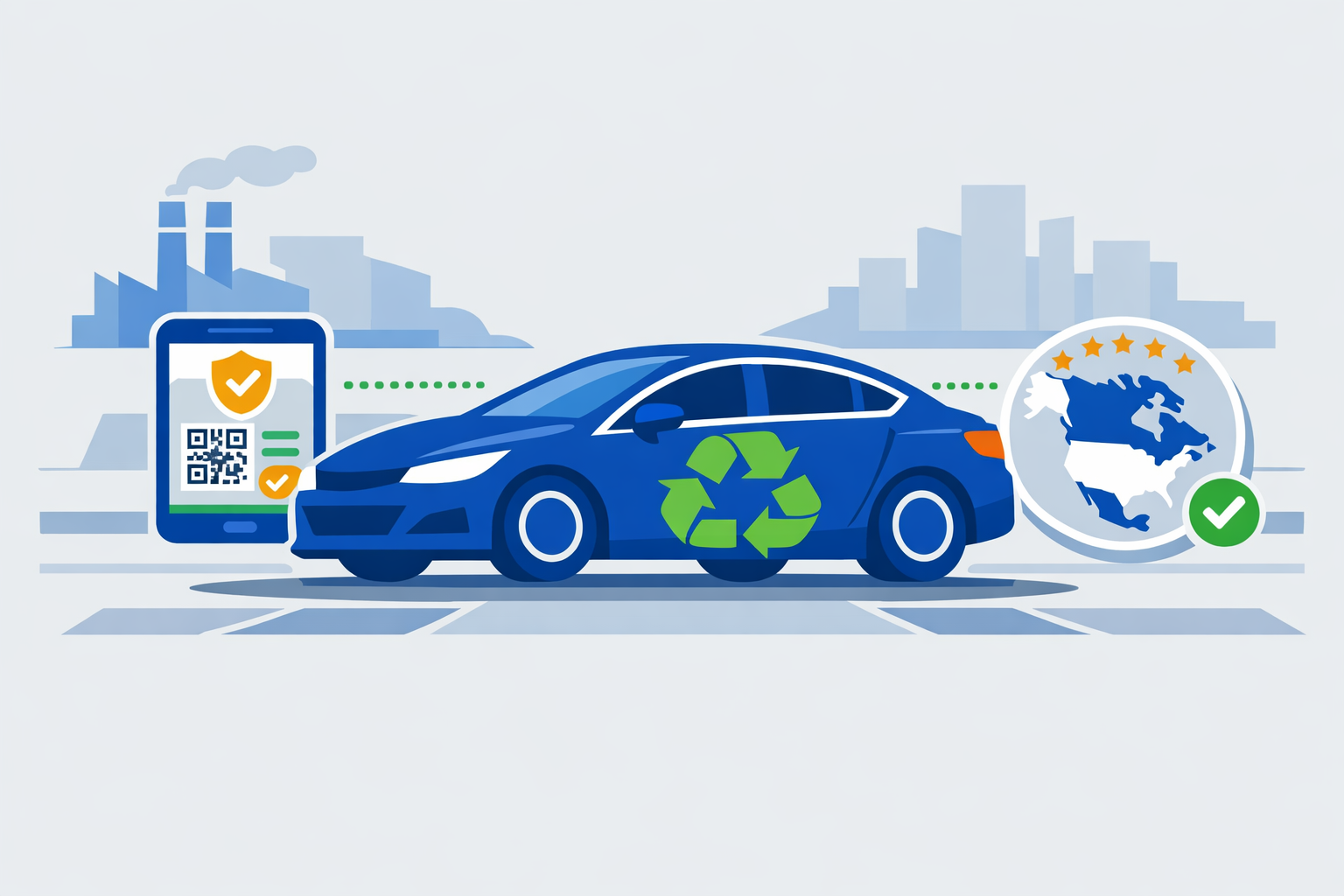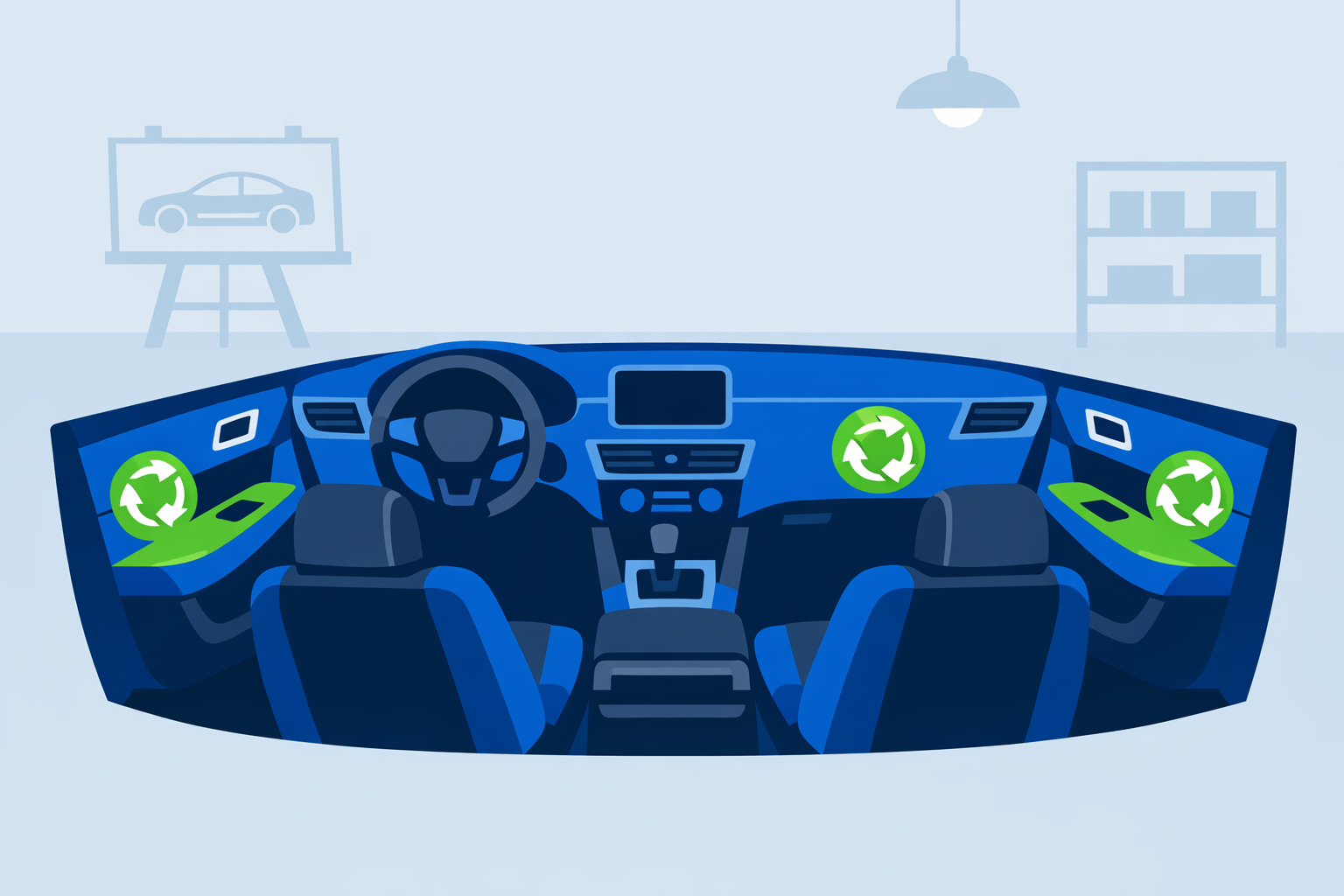
Less than 3% of plastics used in car manufacturing end up in the recyclates market[1], according to the EU's Joint Research Centre - a figure that has galvanized regulators on both sides of the Atlantic. In the United States, a federal rule targeting recycled content in vehicle interior plastics is advancing toward finalization, with implications that stretch far beyond the assembly line. For procurement specialists, polymer engineers, and sustainability officers, the clock is ticking.
The rule builds upon the EPA's existing Comprehensive Procurement Guidelines framework and would establish the first federal mandate specifically targeting post-consumer recycled (PCR) polymer content in automotive components - covering interior trim panels, door modules, seat structures, and related assemblies. Industry response is already accelerating well ahead of the final text.
This article examines where the rule stands, what finalization means operationally, and how forward-looking organizations are restructuring sourcing, certification, and design practices to stay ahead.
From Proposal to Finalization: What the Regulatory Timeline Means
The rule's trajectory reflects broader domestic and global policy convergence. As previously reported, the US proposal was announced for implementation in 2026, building on international precedents set by the EU's End-of-Life Vehicles (ELV) framework, which mandates at least 15% recycled plastic within six years of adoption and 25% within ten years for new vehicles.
"Finalization" in regulatory terms does not equal immediate compliance. Industry analysts expect a phased rollout, with defined rulemaking milestones including:
- Publication of final rule in the Federal Register with defined PCR thresholds by weight for covered interior components
- Phase-in period allowing OEMs and Tier-1 suppliers time to qualify new material grades and restructure supplier contracts
- Reporting and verification deadlines requiring suppliers to document recycled content claims with supporting chain-of-custody records
- Third-party certification requirements to validate PCR content declarations across the supply chain
The federal rule is expected to specify testing methodologies - likely aligned with ISO or ASTM standards for recycled content quantification - and set minimum reporting obligations cascading from resin producers to finished-part manufacturers. The policy trajectory mirrors state-level EPR and PCR mandates[2] that have proliferated since 2020, but with explicit applicability to durable automotive components rather than packaging.
Supply Chain Restructuring: Sourcing, Contracts, and Capital Investment
The global post-consumer recycled plastics in automotive market was estimated at $11.92 billion in 2024 and is projected to grow at a compound annual growth rate of 11.1% through 2030, according to Grand View Research[3]. Interior components accounted for a 60% value share of that market in 2024, driven by dashboards, door panels, and seat fabrics - precisely the components in scope for the proposed federal rule.
For procurement teams, the most immediate pressure is securing automotive-grade PCR resin supply ahead of mandated thresholds. Unlike commodity-grade recycled resins used in packaging, interior automotive applications demand consistent melt flow, low odor (VOC compliance), color matchability, and mechanical performance under thermal cycling - specifications that narrow the approved supplier base considerably.
Key supply chain adjustments already underway include:
- Long-term supply agreements: Multi-year contracts provide reclaimers with the certainty to invest in supply capacity and quality[4], and early movers are locking deals to hedge against feedstock volatility. Natural HDPE bale values rose from approximately 35 cents per pound in July 2024 to 96 cents in March 2025 as feedstock supply tightened, illustrating real price exposure.
- Domestic sourcing preference: Tier-1 suppliers and compounders focusing on US-sourced PCR and localized supply chains[5] are expected to gain competitive advantage, particularly as the rule is anticipated to prioritize domestically recycled material to support US recycling infrastructure investment.
- Capital expenditure on recycling programs: OEMs are investing directly in end-of-life vehicle (ELV) plastic recovery programs and partnering with dismantlers and shredders to establish closed-loop feedstock pathways. Collaboration across the entire ELV plastics supply chain - including dismantlers, shredders, recyclers, and automakers - is critical[6] to improving recovery rates.
Major OEMs are also building compliance into vehicle program planning cycles. Ford has committed to using at least 20% recycled content across its vehicle lineup by 2025, while GM has set a target of 50% sustainable materials in all vehicles by 2030, according to Grand View Research[3].
| OEM | PCR / Recycled Content Commitment | Target Timeline | Scope |
|---|---|---|---|
| Ford | At least 20% recycled content | 2025 | Full vehicle |
| GM | 50% sustainable materials | 2030 | Full vehicle |
| Toyota | PCR seat fabrics, soundproofing (Prius) | Ongoing | Interior components |
| Mercedes-Benz | Increasing recycled material usage (Ambition 2039) | 2039 | Full vehicle |
Cost Dynamics: PCR Premium, Traceability Burden, and Margin Pressure
The cost implications of higher PCR content in vehicle interiors are nuanced. While PCR can reduce virgin material costs in some cases, the necessary downstream processing, certification, and color matching introduce additional cost layers[5]. The premium is not uniform - it varies by resin type, application specification, and geographic sourcing.
Three cost drivers warrant particular attention:
Feedstock price volatility: Recycled resin prices have shown greater volatility than virgin polymer in recent periods. As imported recycled plastic has become cheaper over the past year, some companies have turned to imports[7] over domestic sources - a tension the federal rule may address through origin requirements.
Certification and audit costs: Third-party PCR certification processes start at approximately $5,000 USD per cycle[4], with recertification required every three years. Across a multi-tier supply chain - reclaimer, compounder, Tier-2, Tier-1 - these costs aggregate materially.
Traceability infrastructure: Without traceability, companies cannot credibly verify the origins of recycled content[8], a prerequisite for demonstrating regulatory compliance. Implementing digital chain-of-custody systems - batch numbering, material declarations, lifecycle data - requires investment in data infrastructure that many Tier-2 and Tier-3 suppliers lack.
Key cost insight: Most brands currently have visibility only up to their Tier-1 suppliers[8], with significant blind spots further down the value chain. Federal supplier reporting requirements will force deeper supply chain visibility - and the associated compliance costs - further upstream.
The Role of Third-Party Certification
Third-party PCR certification is expected to be a cornerstone of federal compliance verification, consistent with its role in existing state-level recycled content laws. APR PCR Certification is a full chain-of-custody, third-party assessment verifying that recycled content comes from post-consumer sources[4], and programs such as ISCC PLUS and RecyClass serve similar functions internationally.
For the automotive sector, certification carries additional weight because of the performance validation layer. Suppliers offering audited PCR grades with certification are expected to gain preferred supplier status[5] as OEMs align procurement criteria with federal compliance requirements.
Key certification systems relevant to the automotive PCR context include:
- APR PCR Certification - US-focused, covers post-consumer resin pellet and flake; requires minimum 90% post-consumer plastic material content for certification eligibility
- ISCC PLUS - Widely used global system covering mass-balance chain of custody for chemically recycled and bio-based content
- RecyClass - Verifies recyclability and recycled content claims; referenced in EU regulatory contexts
Covestro's partnership with OEMs NIO and Volkswagen, alongside certification body TÜV Rheinland, demonstrates automotive-specific chain-of-custody validation[9] in practice - producing recycled engineering plastics with 50% PCR content derived from end-of-life vehicle headlamps that meet Vehicle Interior Air Quality (VIAQ) requirements.
Regulatory note: The proposed US rule is expected to align certification requirements with existing frameworks rather than create entirely new standards, reducing duplicate audit burdens for suppliers already certified under APR or equivalent programs.
Design for Recyclability: The Next Compliance Frontier
Regulatory compliance with PCR mandates is not exclusively a sourcing and certification challenge - it begins at the design stage. The shift to PCR requires early involvement of polymer compounders, Tier-1 suppliers, and OEMs in design for recyclability, pigment matching, and process capability[5] to avoid part cycle time delays or increased scrap rates.
Interior design teams are already adapting in several key areas:
- Material simplification: Reducing the number of polymer types in a given interior assembly to improve end-of-life recyclability and close the loop for future PCR feedstock
- Colorant and additive compatibility: Carbon-black-colored polymers are undetectable by state-of-the-art near-infrared sorting systems, rendering them lost for further recycling[10] - driving a shift toward NIR-sortable pigment systems in interior trim
- Mono-material design approaches: Favoring single-polymer assemblies that can be more cleanly separated and recycled, particularly for door panels and instrument clusters
- Testing and validation at specification stage: Qualifying PCR grades during material specification - not as an afterthought - to ensure tensile, thermal, and VOC performance targets are met before production tooling is committed
OEMs and material suppliers must collaborate across the entire value chain, redesigning components for disassembly and qualifying recycled plastics to automotive-grade standards[1]. For procurement and engineering teams, this represents a significant shift in how new vehicle programs are structured and scoped.
Industry Reactions and Customer Communication
Industry response to the rule's anticipated finalization has been broadly supportive among major OEMs and Tier-1 chemical suppliers, though implementation timelines and the scope of covered components remain focal points of comment submissions. The America's Plastic Makers coalition has actively called for federal policy strengthening end-of-life vehicle recycling[6], expanding recycled plastics use in new automobiles, and advancing voluntary recycled-content standards aligned with emerging global requirements.
From a customer-facing perspective, automakers are increasingly embedding PCR material use into sustainability narratives - citing specific recycled content figures in product marketing, sustainability reports, and regulatory disclosures. Toyota highlights PCR materials in marketing campaigns for models such as the Prius[11], where recycled PET bottles are transformed into soundproofing and seat fabric.
The EU's comparable regulation grants temporary derogations if recycled plastic availability or price constraints make compliance unfeasible[1] - a precedent the US rule may follow and one that procurement teams should factor into contingency planning.
FAQ
Q: Which vehicle components are expected to be covered by the federal PCR rule? The rule is expected to cover interior components such as trim panels, door modules, instrument clusters, seat structures, and underbody components - the same categories already targeted voluntarily by leading OEMs. Exterior components may be phased in later.
Q: What is the difference between post-consumer recycled (PCR) and post-industrial recycled content? PCR material originates from products that reached end-of-life consumer use, such as ELV plastics or packaging collected via curbside programs. Post-industrial (pre-consumer) material consists of manufacturing trim waste or production offcuts. All existing and proposed PCR mandates require post-consumer origin; post-industrial content does not qualify.
Q: How will the federal rule interact with existing state-level recycled content and EPR laws? The federal automotive rule targets durable vehicle components and is distinct from state EPR laws that primarily cover packaging. However, both regimes affect the same supply chains - resin producers and compounders will face requirements from multiple regulatory directions simultaneously.
Q: What certification standards are likely to be referenced in the final rule? The rule is expected to reference established programs such as APR PCR Certification, ISCC PLUS, or equivalent third-party verified chain-of-custody systems, consistent with the approach taken in California and Oregon state-level recycled content laws.
Q: What should procurement teams do right now to prepare? Priority actions include auditing current PCR exposure across material specifications, initiating supplier certification conversations, locking in long-term supply agreements for automotive-grade PCR resins, and integrating recycled content requirements into new program material specifications from the earliest design stage.