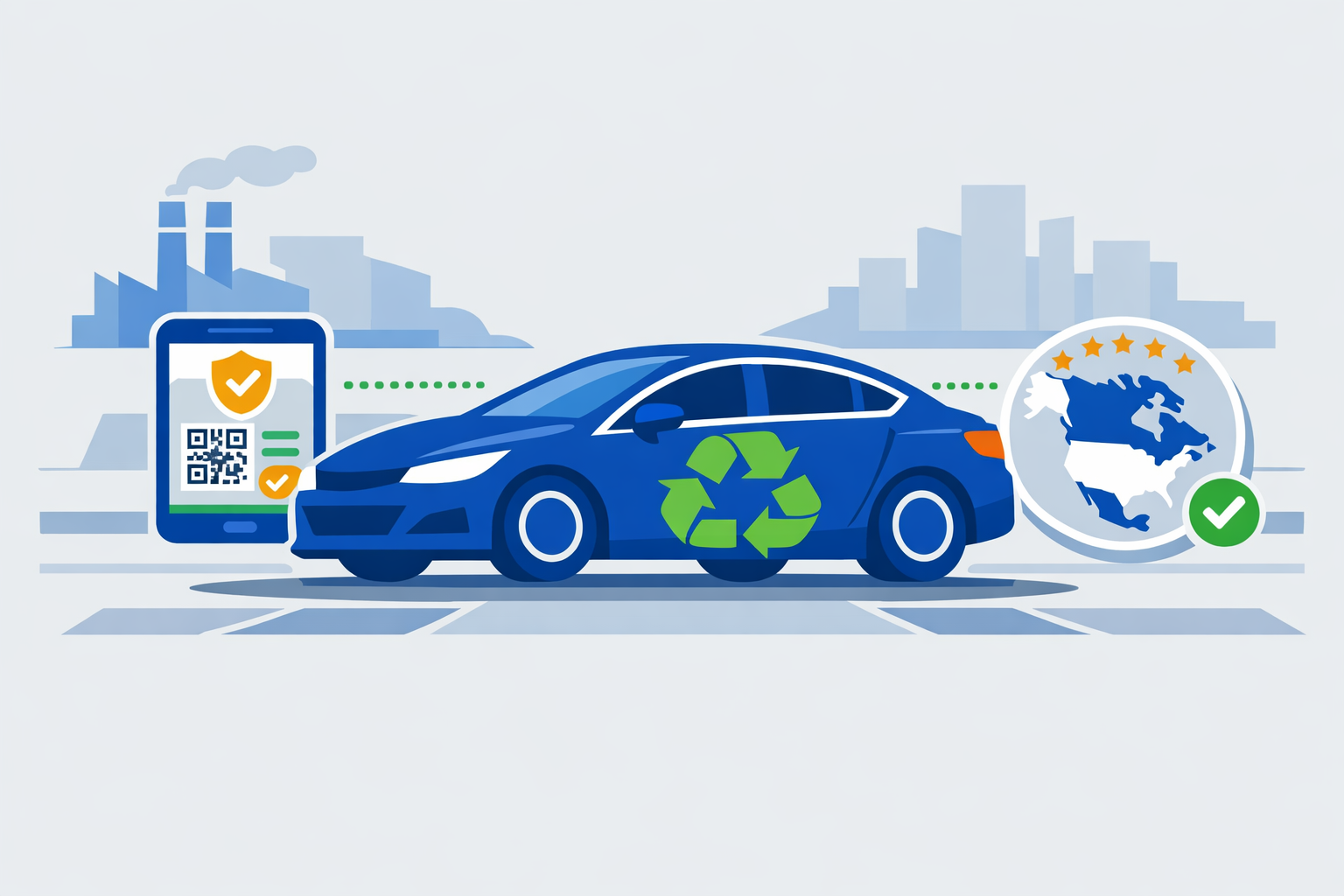
Federal regulators in the United States are advancing a proposal that would require minimum levels of recycled plastic content in automotive interior components, marking the first binding national standard of its kind for the sector. The phased rule, developed through a multi-agency process with input from industry, environmental groups, and state governments, targets dashboards, door panels, seat components, and console trim. If finalized, initial compliance requirements would take effect in 2025 for select interior components, with full implementation extending through 2027.
Background
The proposal arrives amid a pronounced absence of uniform national mandates covering recycled plastics in durable goods such as vehicles. Cost sensitivity and a dispersed manufacturing base have historically posed challenges for widespread post-consumer recycled (PCR) plastic adoption in U.S. automotive applications. While several states have enacted recycled-content laws for packaging-at least five states require recycled content in plastic packaging as of 2024, with California, Washington, and New Jersey among the most comprehensive-no equivalent federal framework has applied specifically to vehicle interior plastics.
The proposed rule draws from an international regulatory landscape already moving rapidly. EU regulations, for example, mandate 25% recycled content for vehicles. This regulatory shift elevates plastics in vehicles from an optional sustainability consideration to a legally enforceable design requirement-compelling OEMs, recyclers, and material suppliers to collaborate across the value chain, redesign components for disassembly, qualify recycled plastics to automotive-grade standards, and scale collection and processing infrastructure.
The American Chemistry Council has also flagged the sector's commercial potential: the vehicle recycling market is projected to grow from $72 billion in 2022 to $160 billion by 2028, a 15.2% annual growth rate, according to the American Chemistry Council.
Details
Under the proposed framework, compliance would be staged: Phase 1 targets select interior components such as door panels and console trim with initial recycled-content reporting obligations in 2025; Phase 2 broadens coverage to dashboards and seat components in 2026; and Phase 3 demands the most stringent recycled-content thresholds across all covered interior plastics by 2027, accompanied by penalties for non-compliance and periodic audits.
Manufacturers would be required to map their plastic sourcing, establish traceability from post-consumer streams, and verify recycled-content claims through standardized certification processes. Regulators have indicated that labeling requirements will accompany the rule to prevent greenwashing and provide transparent product information for consumers.
Polypropylene is one of the most widely used post-consumer recycled plastics in automotive manufacturing, frequently applied to interior components such as door panels, dashboards, and trim panels. For mono-material polypropylene interior parts, the challenges of introducing recycled content are more straightforward, making these components the primary near-to-medium-term target for automakers.
However, supply-side constraints loom large. Key challenges include material availability, variable material properties, and cost-with conditions varying significantly by polymer and application. Plastics recyclers entered 2025 amid what has often been described as the worst year on record, facing cheap virgin and imported resin alongside renewed industry criticism. Some industry participants warn that current reprocessing capacity may fall short of automotive-grade specifications, particularly for high-clarity or high-heat-resistance polymers used in dashboards and control panels.
Major North American automakers have made parallel sustainability commitments. Ford has pledged to use at least 20% recycled content across its vehicle lineup by 2025, while GM aims for 50% sustainable materials in all vehicles by 2030.
The American Chemistry Council has called for federal and state-level initiatives to stimulate investment in national durable plastics recycling infrastructure for collecting, separating, sorting, and processing end-of-life automotive plastics, alongside tax incentives and rebates for vehicles incorporating recycled content.
Outlook
The Association of Plastic Recyclers has identified incentivizing the use of domestically sourced recycled plastics as its primary focus for 2026-a priority the proposed automotive mandate could directly support by creating structured end-market demand. In the near term, successful approaches will likely require intermediary physical separation of key components during disassembly prior to shredding. Longer-term strategies will depend on new technologies and business models to automatically separate automotive shredder residue suited to physical and chemical recycling methods. As the rulemaking progresses, automakers are expected to accelerate investments in material science, supplier diversification, and aftermarket recycling programs to secure compliant feedstock streams ahead of the 2027 deadline.
For related coverage, see our earlier report on the broader US federal recycled-content proposal for light-vehicle components.