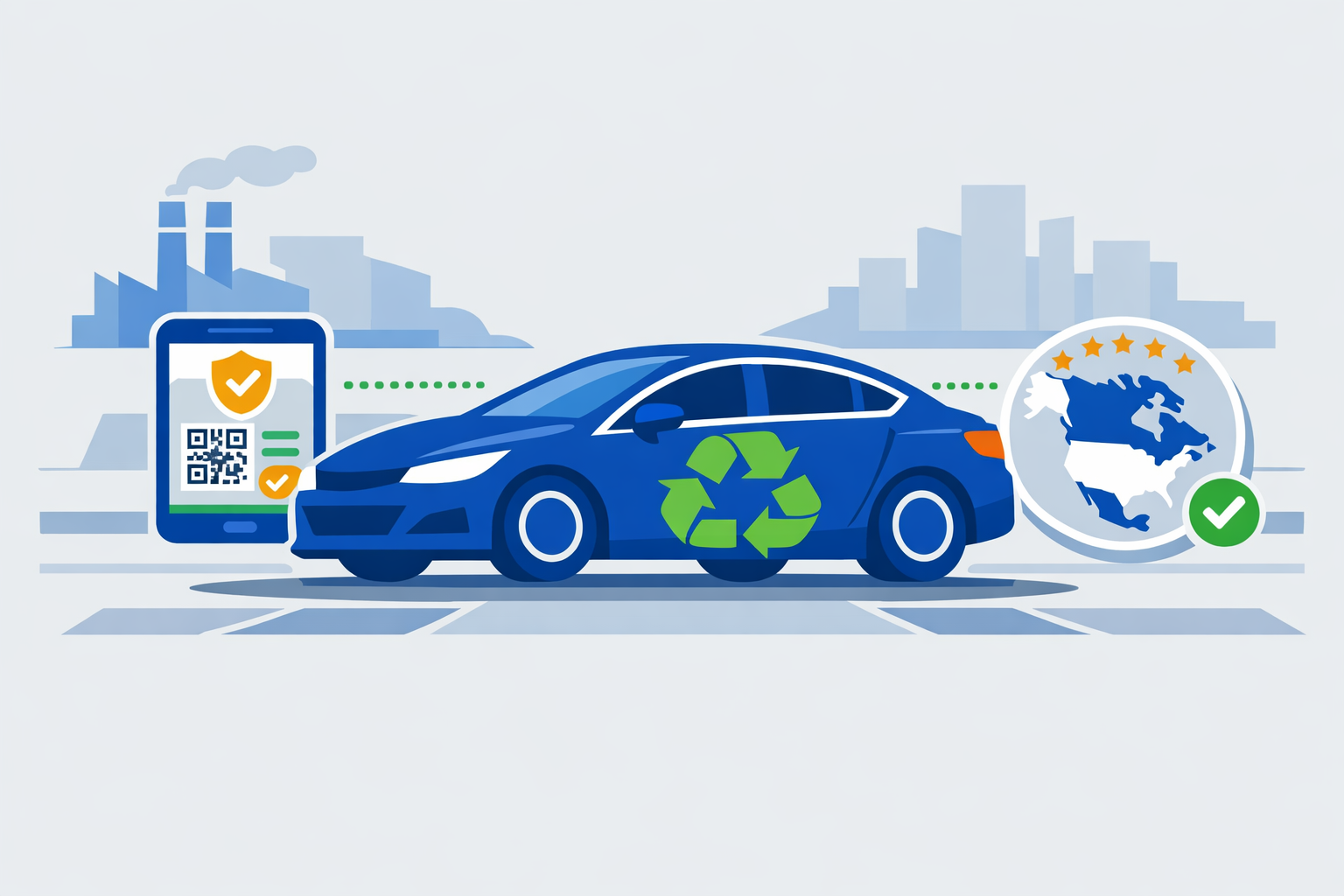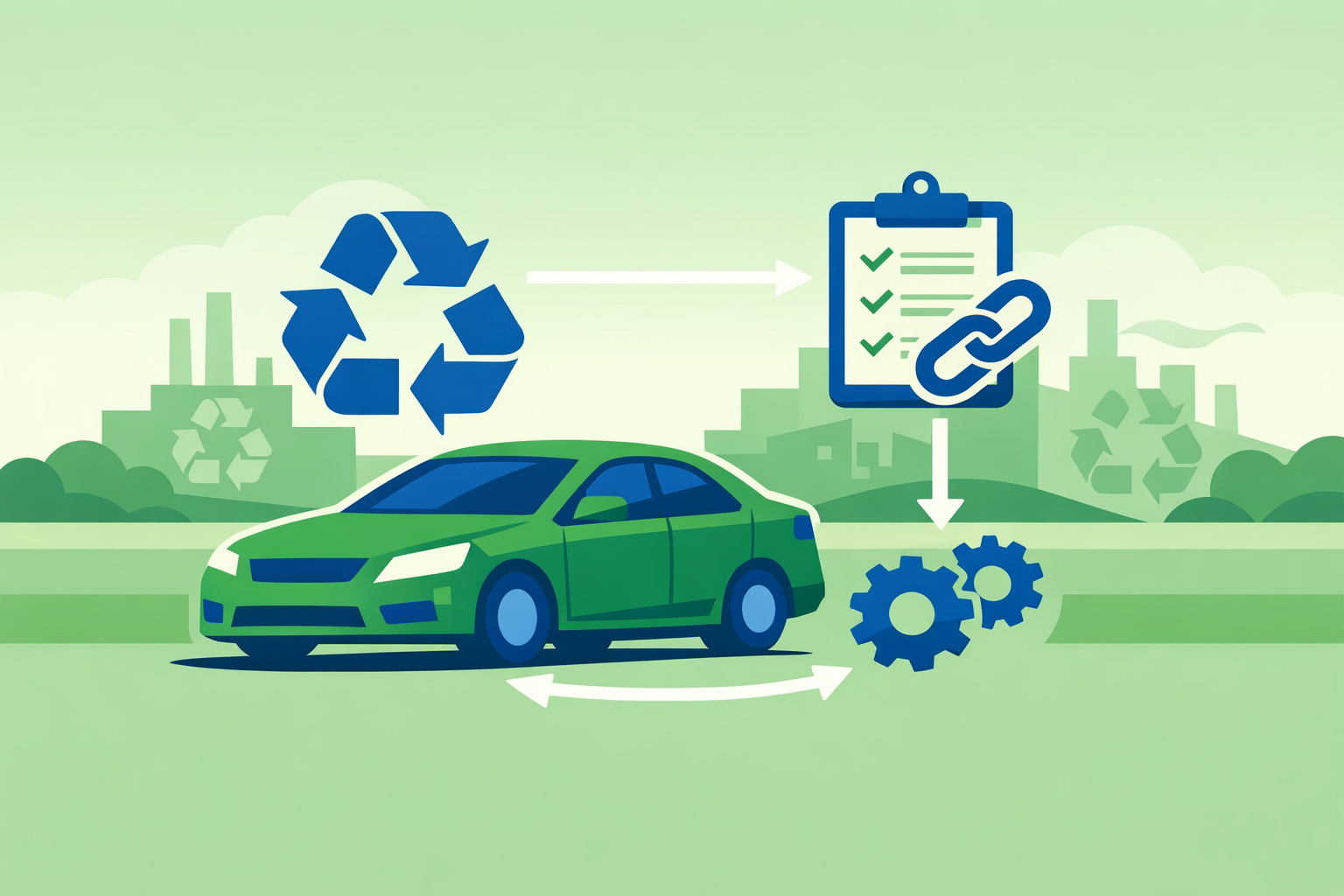
The US federal government has proposed mandating minimum recycled content levels in automotive plastic components, a measure projected to affect domestic recycling capacity, thermoforming and injection molding demand, and battery enclosure manufacturing. The proposal establishes phased targets for recycled plastic inclusion and outlines procedures for supplier and OEM compliance verification, with select exemptions under specific conditions.
Background
This regulatory initiative aligns with the global shift toward automotive circularity, mirroring recent actions in the European Union[1]. The US currently lacks binding federal recycled content requirements for plastics, although recent proposals such as the CIRCLE Act seek to enhance recycling infrastructure via tax credits[2]. States including California and New Jersey have enacted mandates for recycled content in packaging plastics, but not for automotive applications[3].
Details
The proposed rule would require automotive plastic parts to contain 15% recycled content within six years, increasing to 20% in eight years and 25% in ten years. Temporary exemptions would be permitted if recycled feedstock is unavailable or prices surge. Compliance would involve chain-of-custody documentation from materials suppliers and OEMs, potentially with third-party auditing. Both post-consumer and industrial recycled plastics would qualify, although exclusive reliance on industrial scrap would be restricted to promote closed-loop recycling. Stakeholders will have the opportunity to submit comments prior to finalization.
Battery enclosures-often injection-molded and subject to stringent performance criteria-may encounter difficulties in meeting recycled content benchmarks, largely due to variability in the mechanical properties of recycled resins. Recent research suggests that this variability can be substantially mitigated, with studies reporting up to an 89.5% reduction in elastic modulus variability through bio-inspired composite design[4].
The proposal could place additional demands on domestic recycling infrastructure and is expected to boost the use of thermoforming and injection molding processes with recycled-grade resins. Industry groups contend that the US can expand recycled supply-especially for PET, HDPE, and PP-by leveraging existing capacity with appropriate policy support[2].
Strategically, the rule is designed to advance domestic circularity goals and reinforce supply chain resilience, particularly in the electric and clean vehicle sectors. It also complements critical mineral content requirements under the Inflation Reduction Act, fostering North American recycling and processing[5].
Outlook
The proposal now enters a public comment period. Manufacturers and recyclers are anticipated to provide technical input on feasibility, supply chain availability, and verification protocols. Policymakers are evaluating funding strategies, including tax incentives, to facilitate expansion of domestic recycling infrastructure. Industry deliberations are expected to focus on balancing ambitious recycled content targets with feedstock availability and cost implications.