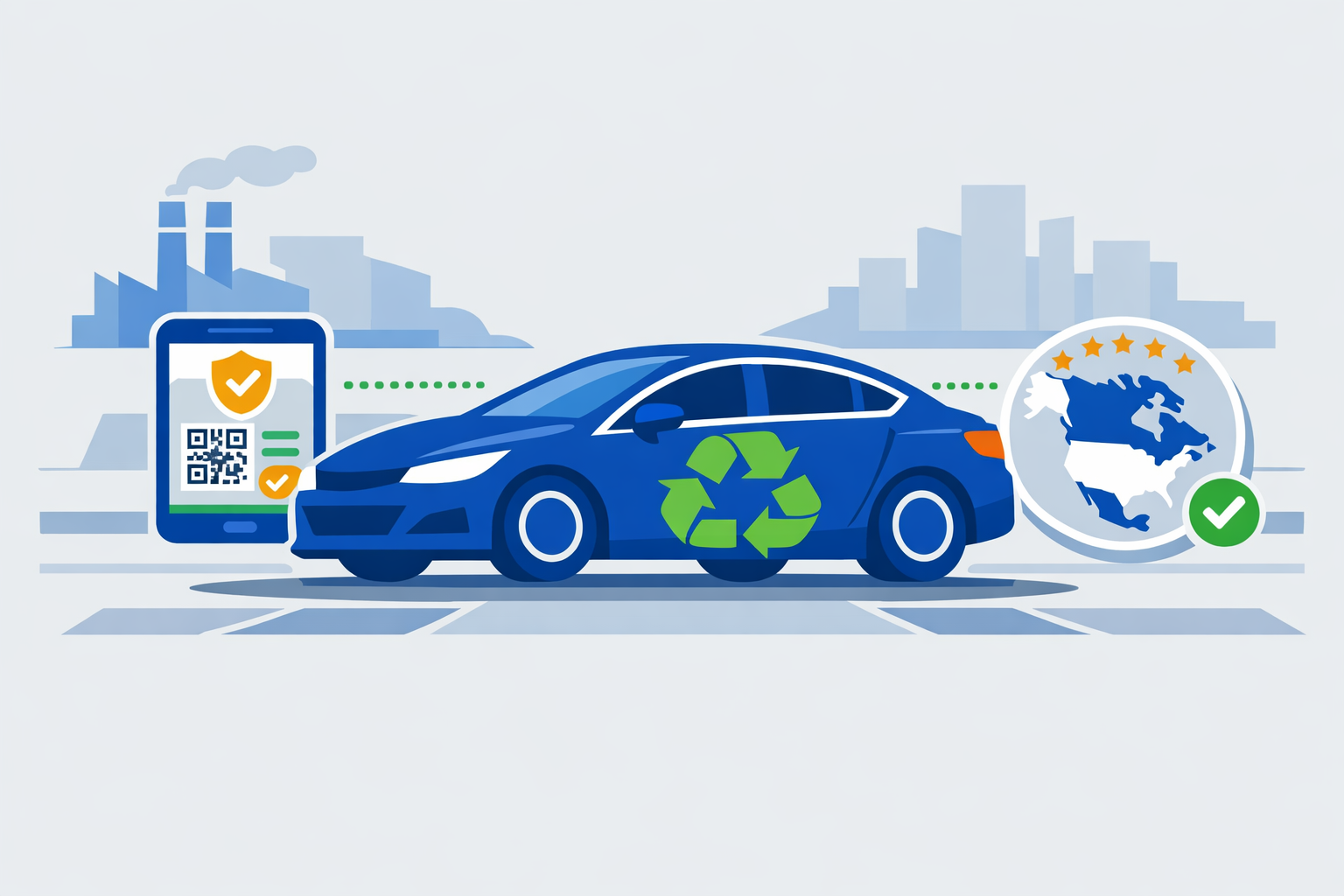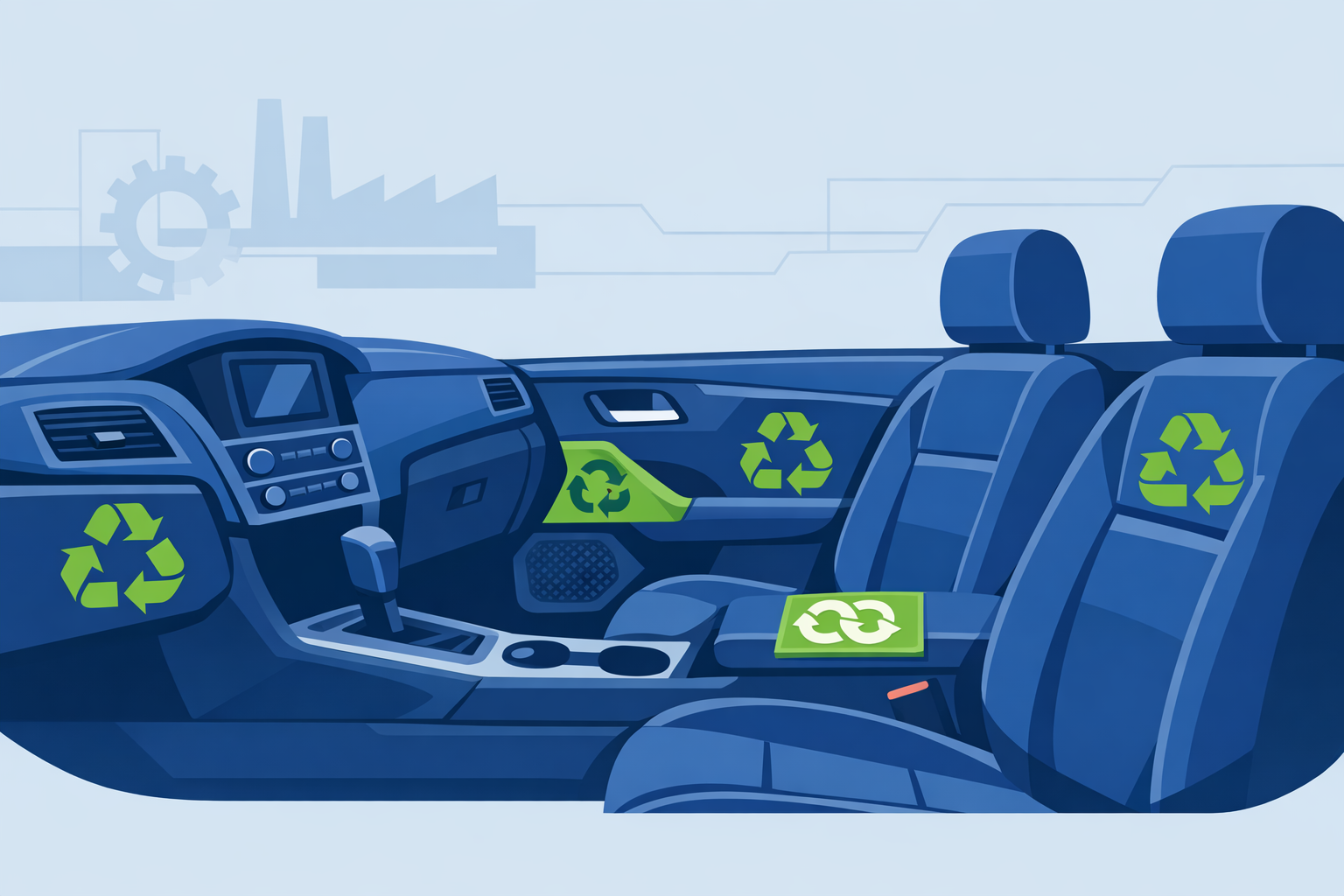
A federal rule requiring post-consumer recycled (PCR) content in light-vehicle interior plastic components is advancing toward finalization, compelling automakers and Tier-1 suppliers to overhaul material sourcing, verification protocols, and closed-loop recycling programs before compliance deadlines take effect.
The proposed rule would introduce the first U.S. federal mandate specifically addressing recycled polymer content in vehicle components, expanding existing Environmental Protection Agency (EPA) Comprehensive Procurement Guidelines beyond remanufactured parts and materials such as tires and coolants. Components in scope include trim panels, door liners, dashboard substrates, seat structures, and console assemblies - precisely the interior applications where, according to Grand View Research, interior components already account for 60% of the PCR automotive plastics market by value, driven by the high usage of recycled plastics in dashboards, door panels, and seat fabrics.
Background
Regulatory pressure on automotive plastics has been building on both sides of the Atlantic. The European Union's revised End-of-Life Vehicles (ELV) Directive set binding targets requiring 15% recycled plastic content in new vehicles within six years, rising to 25% within ten years, with a minimum 20% sourced through closed-loop ELV recycling. That precedent has informed the U.S. proposal's structure, which industry analysts expect to follow a similarly phased compliance schedule.
Domestically, the plastics regulatory landscape has shifted substantially. As of mid-2025, seven U.S. states have enacted Extended Producer Responsibility (EPR) laws for packaging, according to the Sustainable Packaging Coalition, while five states have passed laws requiring minimum PCR content in plastic packaging, according to the Association of Plastic Recyclers (APR). California's AB 793, already in force, requires plastic beverage containers to contain at least 25% recycled content from January 1, 2025, rising to 50% by 2030. These packaging-sector precedents have established administrative frameworks - certification, data reporting, eco-modulated fee structures - that the proposed automotive rule is expected to mirror.
The global post-consumer recycled plastics in automotive market was estimated at USD 11.92 billion in 2024 and is projected to reach USD 22.32 billion by 2030, growing at an 11.1% CAGR, according to Grand View Research.
Details
The draft regulation targets polymer types most prevalent in vehicle interiors: polypropylene (PP), acrylonitrile butadiene styrene (ABS), polycarbonate (PC), and thermoplastic polyolefins (TPO). Industry analysts note that mono-material polypropylene interior components present the most straightforward pathway for introducing recycled content, making them the primary near-term compliance target, according to IDTechEx.
Verification requirements under the proposed rule are expected to align with third-party certification standards. Both Oregon and California already cite the APR's PCR Certification Program for compliance accountability, and more states are likely to include certification to ensure accountability, according to the APR. Automotive suppliers face additional complexity: ensuring consistent quality for PCR plastics in cars while meeting strict manufacturing processes, combined with a lack of standardized collection, sorting, and production processes, creates significant hurdles for scaling up car-to-car plastic recycling, according to Covestro, which has developed PCR engineering plastics from end-of-life vehicle headlamps.
Major OEMs have begun repositioning procurement ahead of finalization. Ford has committed to using at least 20% recycled content across its vehicle lineup, and GM aims for 50% sustainable materials in all vehicles by 2030, according to Grand View Research. Stellantis has stated a target of 40% recycled content in vehicle plastics by 2030, sourcing post-consumer polypropylene and polyamide compounds from European recyclers, per Plastics Engineering. Industry analysts warn, however, that the supply chain for automotive-grade PCR is still developing, leading to potential supply shortages.
The APR has raised a related concern about import competition: as imported recycled plastic has become cheaper, some companies are turning toward buying imported recycled plastic instead of domestically recycled plastics, threatening to undermine U.S. recycling infrastructure investment. The proposed rule is expected to include a North American sourcing preference to address this risk.
Outlook
The regulation is in the interagency review phase, with a public comment period expected before formal adoption. A phased implementation granting OEMs and suppliers a multi-year ramp period - similar to the EU's ELV timeline - is anticipated. Suppliers are already investing in traceability systems, material testing protocols, and closed-loop partnerships to position themselves ahead of final rulemaking. A 2024 University of California, Berkeley study found that mandated recycled content is the single most impactful policy to reduce plastic pollution, a finding regulators have cited in support of the rule's framework.
For related coverage, see our previous reporting on the EU End-of-Life Vehicles Directive recycled plastic mandates and the original U.S. federal recycled content proposal for auto plastics.