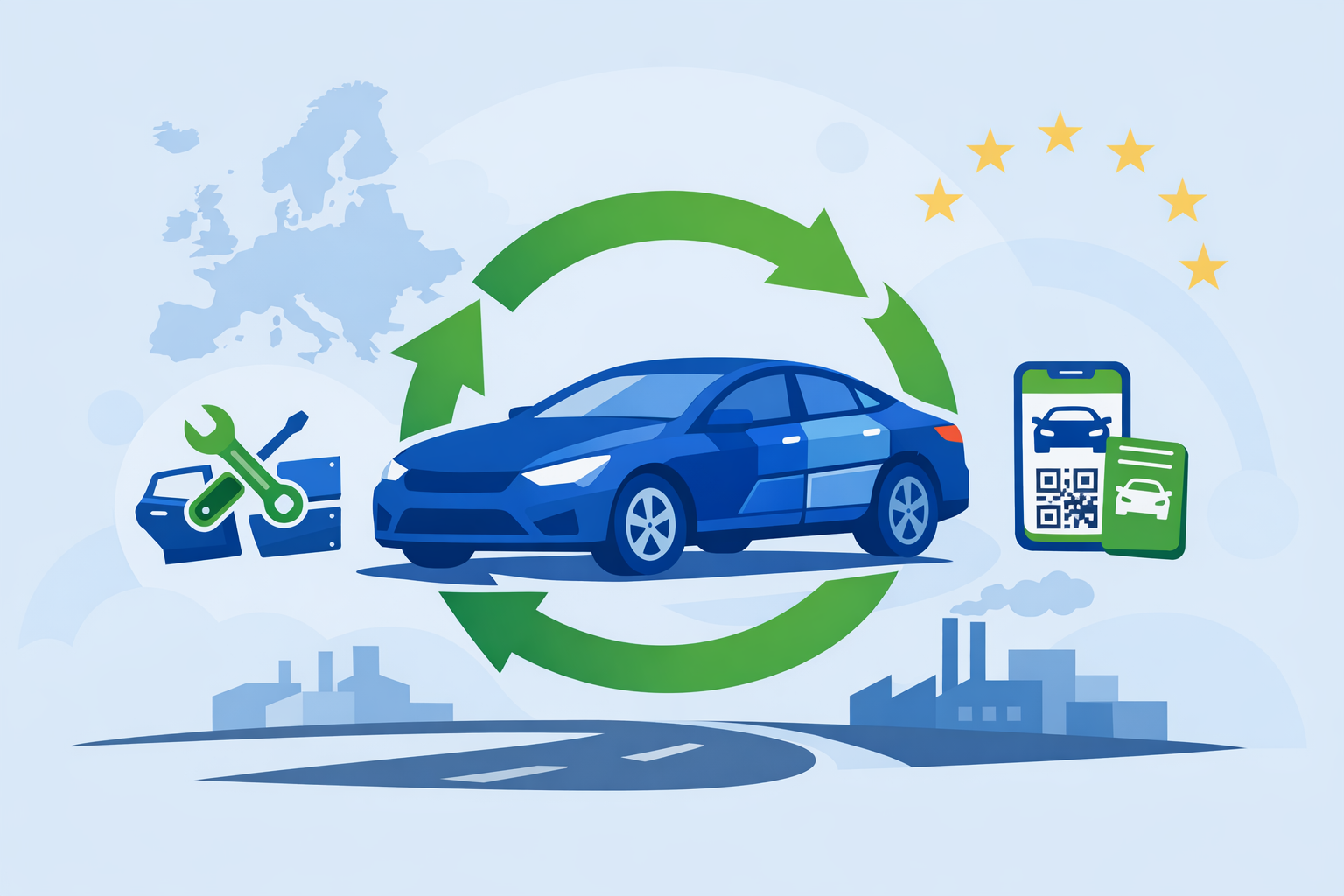
The European Union has adopted new circularity regulations on automotive composites, enforcing phased minimum recycled plastic content and stricter end-of-life requirements across multiple vehicle categories. The regulation introduces progressive recycled-content targets-15% within six years, increasing to 25% in ten years. It mandates design for disassembly and extended producer responsibility. These requirements apply to cars, vans, heavy-duty vehicles, and motorcycles within the EU, with implementation scheduled through 2030. Automakers and Tier-1 suppliers must adjust material sourcing, design strategies, and supply-chain testing to achieve compliance.
Background
Aligned with the EU's Circular Economy Action Plan and revisions to end-of-life vehicle (ELV) regulations, the Council and European Parliament have agreed on higher recycled-content thresholds to reduce dependence on primary plastics and advance material reuse. The framework amends Regulation (EU) 2018/858, replacing earlier directives and broadening coverage to trucks, motorcycles, and special-purpose vehicles. It establishes digital vehicle passports for improved traceability and recyclability, and streamlines circularity strategies by vehicle category. Extended producer responsibility provisions hold manufacturers accountable for the collection, depollution, and recycling of vehicles and related costs, while mixed shredding is prohibited unless quality standards are met. The Commission maintains authority to grant temporary exemptions and to set future minimum shares for recycled steel, aluminum, and critical raw materials.[1]
Details
The recycled plastic content targets follow a three-phase approach: 15% recycled plastic within six years of entry into force, increasing to 25% within ten years, subject to availability and cost considerations. A minimum of 20% of this plastic must come from end-of-life vehicles or used parts.[2] The regulation authorizes the Commission to conduct feasibility studies and establish minimum recycled-content thresholds for steel, aluminum, magnesium, and rare earth elements in e-drive motors within two to three years.[3]
Vehicle designs must allow for the removal and replacement of components-including catalytic converters, gearboxes, and electronic units-by authorized treatment facilities. Digital circularity passports must align with other EU systems to reduce administrative complexity.[1] Extended producer responsibility requires manufacturers to cover recycling, transport, and treatment costs, with regional variations in application.[1]
Outlook
The European Parliament and Council are finalizing the regulation's text, with adoption anticipated by mid-2026. Upon enactment, phased implementation will continue through 2030, requiring manufacturers and suppliers to adjust material sourcing, qualify recycled-fiber and bio-based composites, redesign components for disassembly, and invest in supply-chain verification and compliance testing.
Plastics and composites sector manufacturers should prepare for significant changes in procurement, certification, and regional recycling infrastructure as the automotive industry adapts to the EU's advancing circular economy requirements.