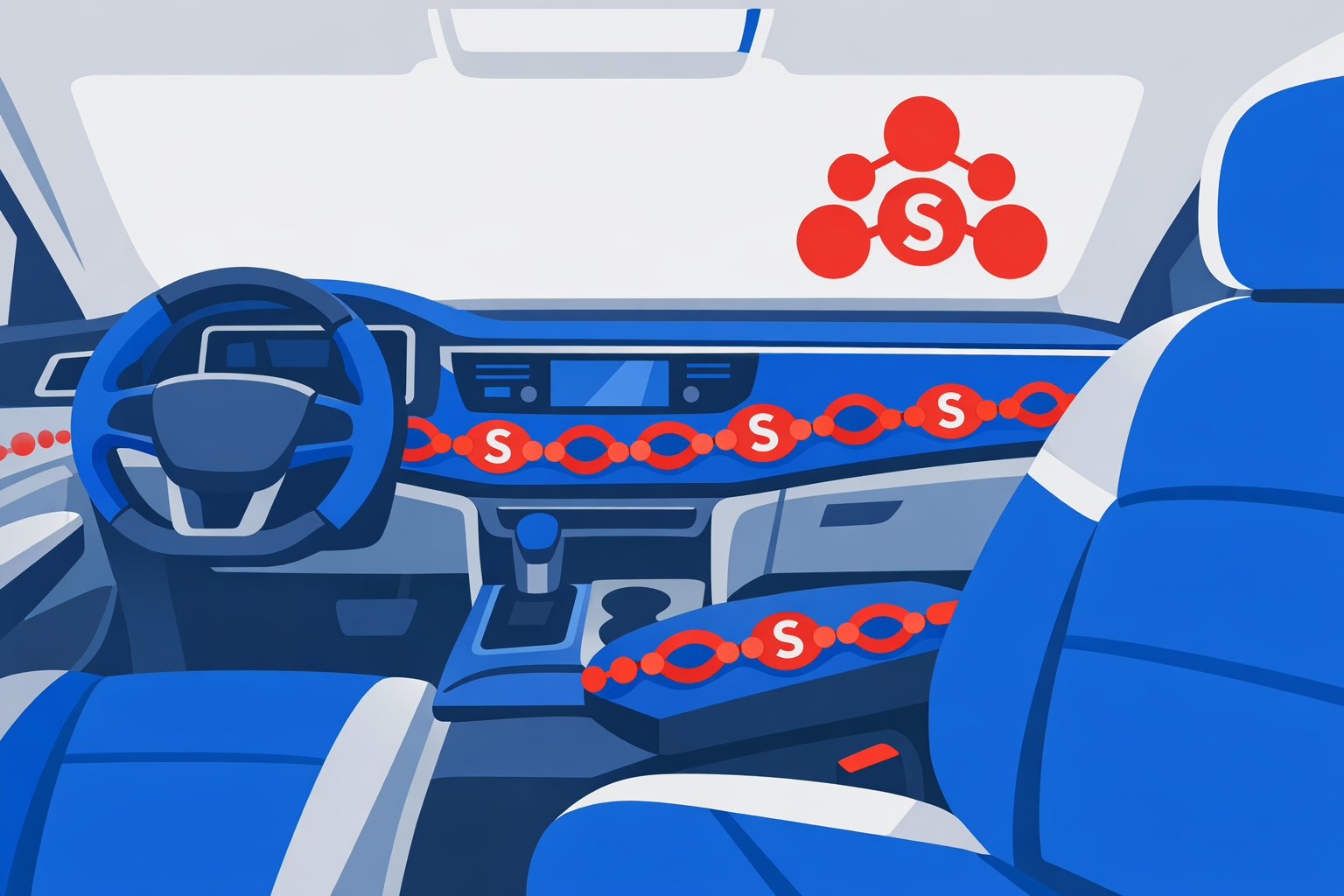
Research has documented over 700 distinct bacterial strains[1] on soft and hard surfaces within a typical vehicle cabin - a microbial load that has long outpaced the materials science available to address it. That equation is beginning to shift. A new family of sulfur-based antimicrobial polymers is under active evaluation for automotive interior integration, arriving as regulators on both sides of the Atlantic substantially raise the evidentiary bar for antimicrobial claims on treated articles.
The convergence of technical readiness, regulatory scrutiny, and consumer demand for demonstrably cleaner cabins is reshaping supplier roadmaps and OEM material-selection criteria alike.
What Makes Sulfur-Based Polymers Distinctive
Conventional antimicrobial additives in automotive plastics and textiles have historically relied on silver ions, copper nanocomposites, or organic biocides to deliver surface-level protection. Sulfur-based polymers - a class that includes polysulfide and thioether-functionalized macromolecules - operate through a different mechanism. Rather than leaching soluble ions, these materials use reactive sulfur moieties, either integrated into the polymer backbone or grafted as side chains, to interact directly with sulfur-containing proteins[2] in the bacterial cell membrane. This disrupts transport systems, induces membrane stress, and in some configurations generates localized reactive oxygen species (ROS)[3] that trigger oxidative damage to microbial DNA and lipids.
This architecture carries two meaningful advantages for automotive applications. First, because the antimicrobial function is bound to the macromolecular structure rather than distributed as a mobile small molecule, migration potential into cabin air and skin-contact surfaces is substantially reduced - a property of direct relevance to regulators. Second, the sulfur chemistry is sufficiently tunable that polymer engineers can modulate hydrophobicity, charge density, and molecular weight to optimize both microbial membrane interaction and compatibility with host matrices such as polyurethane foams, thermoplastic polyolefins (TPOs), and polyester seat fabrics.
Target Surfaces and Integration Approaches
High-touch cabin zones represent the primary deployment targets for antimicrobial composites. Studies identify[1] the steering wheel, cupholders, seat belts, and seats as areas carrying the highest concentration of colony-forming units (CFUs). Integration strategies vary by substrate:
- Hard surfaces (dashboards, door panels, HVAC trim): The antimicrobial sulfur polymer is compounded directly into the thermoplastic matrix - typically TPO or ABS - during processing, delivering durable, through-the-part protection assessed under ISO 22196.
- Soft surfaces (seat fabrics, headliners): Pad-dry-cure finishing or cold atmospheric plasma treatment enables antimicrobial functionalization of woven and nonwoven textiles, with efficacy evaluated per ISO 20743 and AATCC 100.
- Climate-control components: HVAC ducting and vent components fabricated from glass-filled polyamide or polypropylene represent an emerging application area, given the role of ventilation systems in circulating air across microbially colonized surfaces.
- Seatbelt webbing: A growing industry trend[4] involves integrating antimicrobial additives into seatbelt webbing - a high-touch element frequently neglected in cabin-cleaning routines.
Manufacturers are increasingly pursuing multi-layer composite architectures - for example, a structural TPO substrate compounded with the sulfur polymer, combined with a top-coat that maintains the visual and tactile properties required by OEM specifications. This approach maximizes surface antimicrobial density without compromising bulk mechanical performance.
Beyond compounding, antimicrobial automotive interiors also benefit from extended material service life[4]: microbes and fungi accelerate the degradation of leather, fabric, and plastics, so protective polymer systems may reduce maintenance costs and extend cabin refurbishment intervals - a practical argument for fleet and shared-mobility operators.
The Regulatory Landscape: Tighter and More Complex
Antimicrobial performance claims on automotive interior components trigger multiple overlapping regulatory frameworks, and the environment is growing more demanding.
In the European Union, the Biocidal Products Regulation (BPR), Regulation (EU) 528/2012[5], governs treated articles - including automotive textiles and plastic parts marketed with biocidal claims. All active substances[6] must be approved before the treated article can be placed on the EU/EEA market. The regulation requires two-step authorization: approval of the active substance, followed by authorization of the treated article or product. A 2023 ECHA enforcement audit[7] found that 37% of biocidal products checked across European markets did not comply with BPR - a finding that has sharpened enforcement attention.
Critically, ECHA published a substantially revised BPR Human Health Assessment Guidance (v5.0) in 2025[8] - the first major overhaul in nearly seven years. The updated framework introduces explicit requirements for secondary inhalation exposure assessments in re-entry scenarios involving volatile substances and updates the assessment of mutagenicity, reproductive toxicity, and developmental neurotoxicity. Companies with active substance submissions currently in the pipeline must apply v5.0 guidelines beginning March 2026, and new product submissions from August 2027.
{{component:callout-bpr-v5}}
The EU's BPR evaluation process started in Q4 2025[9], assessing whether the current rules remain fit for purpose - a process that may generate further amendments affecting automotive treated articles. Simultaneously, ECHA's Forum adopted a 2024-2025 enforcement program[10] specifically focused on product characteristics summaries and labeling for biocidal products, with inspections commencing in January 2025.
In the United States, the EPA regulates pesticide-treated articles and antimicrobial claims under FIFRA and TSCA frameworks, with ongoing scrutiny of novel polymer chemistries entering consumer-facing applications. Suppliers targeting both markets must manage parallel dossier development - a non-trivial compliance burden increasingly influencing supplier consolidation strategies.
{{component:table-standards}}
Cross-Industry Learning: Healthcare to Automotive
The development pathway for sulfur-based antimicrobial automotive polymers draws meaningfully on healthcare and wound care applications. Antimicrobial polymer coatings have been evaluated in medical device contexts - from catheter surfaces to wound dressings - where multi-modal mechanisms combining membrane disruption and ROS generation[2] have been characterized in detail. The testing rigor developed for those applications, including colonization resistance assays, cytotoxicity panels, and long-term leaching profiles, now informs automotive laboratory protocols and risk assessment frameworks.
HRL Laboratories, in collaboration with Boeing and GM[11], published work in early 2025 on a biphasic polyurethane antimicrobial coating engineered to meet automotive and aerospace durability standards. The dual-phase architecture combines a polycarbonate phase for structural resilience with a polyethylene glycol phase enabling controlled active release - and demonstrated the ability to restore surface antimicrobial activity through routine cleaning. While that system uses a different chemistry from sulfur-based polymers, it illustrates a shared design logic: sustained efficacy without compromising mechanical or aesthetic properties.
Cabin testing protocols are also drawing on real-world wear simulation methodologies borrowed from medical device aging studies, applying them to automotive-specific stressors: multi-cycle abrasion, UV photo-oxidation, elevated interior temperatures (regularly reaching 60-80 °C in parked vehicles), and exposure to cleaning product chemistries.
{{component:process-pathway}}
End-of-Life Considerations and the Recycling Intersection
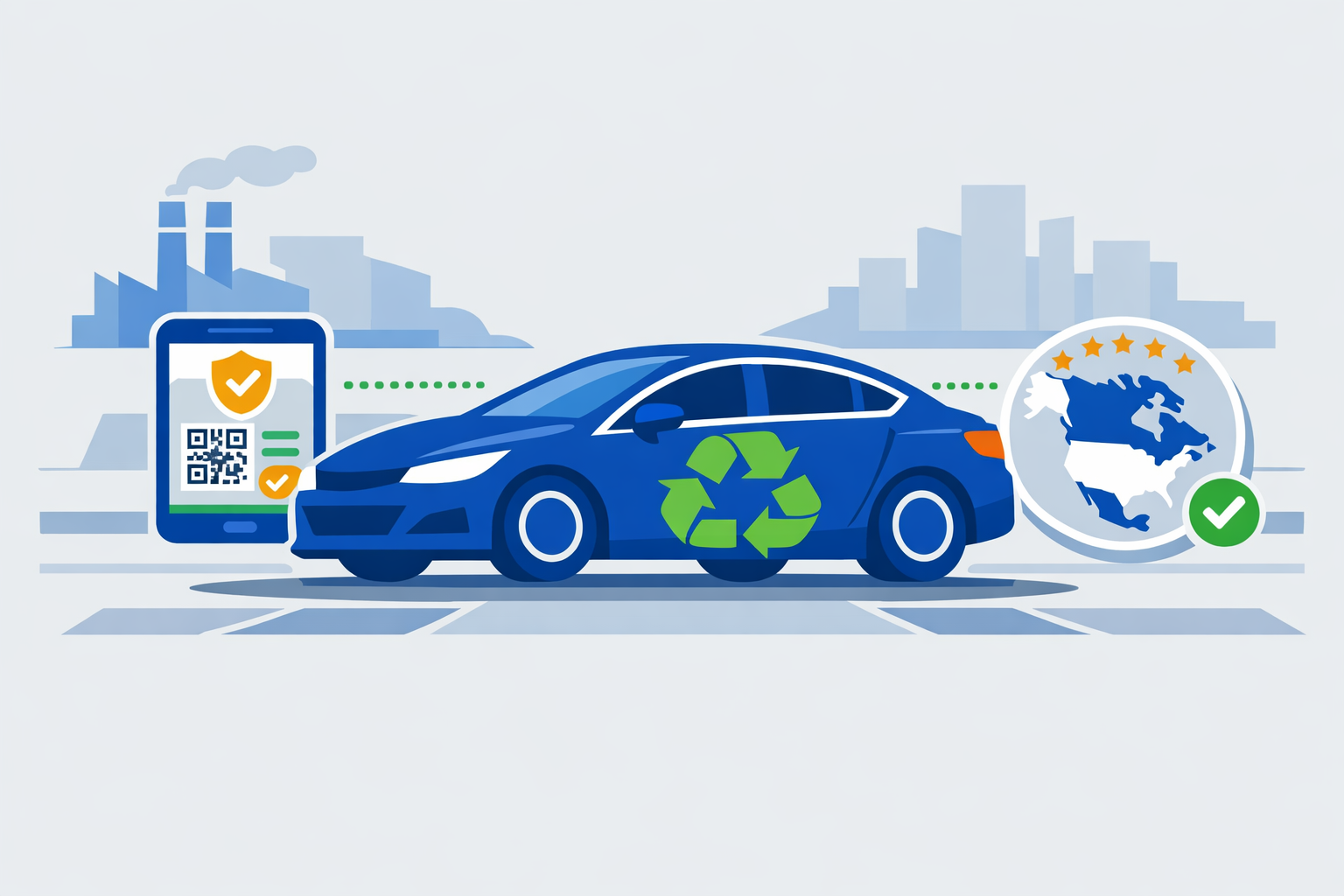
Introducing novel functional polymer chemistries into automotive interiors creates a specific challenge within the broader drive toward circular automotive plastics. The EU's revised End-of-Life Vehicles (ELV) framework[12] - covered in detail in our analysis of EU circularity rules for automotive composites - will require new vehicles to contain up to 25% recycled plastic content within ten years, with 20% from closed-loop ELV sources.
Antimicrobial additives - including sulfur-based polymer systems - introduce complexity into this closed-loop ambition. Waste-management operators and recyclers have raised concerns about traceability of functional additives in mixed polymer streams, particularly where the additive chemistry is not documented in material passports. Starting in mid-2025[13], EU regulations require manufacturers to embed detailed material data into automotive components through mandatory digital product passports listing polymer types, additives, and end-of-life handling instructions.
For sulfur-based systems specifically, incineration emissions profiles and the potential behavior of polysulfide fragments in mechanical recycling streams remain under active assessment. Suppliers developing these materials are being encouraged to engage with recycling partners early in the development cycle to establish segregation protocols and assess compatibility with existing automotive polymer recyclate specifications.
The global antimicrobial textile market reached USD 13.77-15.34 billion in 2025 and is projected to reach USD 16.55-25.51 billion by 2030-2032, with the automotive segment representing approximately 3-5% of antimicrobial textile consumption[14] - a relatively small share but one exhibiting the highest growth trajectory across all application segments.
Outlook: Differentiator Today, Standard Tomorrow?
Smart textile integration currently lacks mature standardization as of 2025[14], creating an environment in which OEM internal specifications are establishing de facto performance thresholds ahead of formal ISO harmonization. Early-adopting manufacturers who influence the development of those standards stand to gain lasting supply-chain and competitive advantages.
Major OEMs - including BMW, Mercedes-Benz, Tesla, and Toyota - are actively developing pilot programs[14] integrating antimicrobial surface technologies, with premium valuations attached to demonstrable cabin hygiene improvements. For mid-range platforms, the business case is increasingly framed around fleet and shared-mobility operators, where cabin turnaround frequency and cross-occupant contamination risk directly affect total cost of ownership.
As antimicrobial claims migrate from differentiated premium features to expected baseline attributes, the regulatory pathway - active substance approval, treated article authorization, post-market surveillance, and digital traceability - will determine which polymer chemistries and suppliers are positioned for scale. Sulfur-based antimicrobial polymers, with their reduced migration profile and tunable mechanism of action, present a technically credible candidate. Whether that technical credibility translates to commercial scale depends substantially on how the regulatory dossier is assembled and how end-of-life compatibility is resolved.
The cabin safety conversation has expanded well beyond VOC emissions and air quality filtration. Surface microbiology is now firmly on the agenda - and the materials science is beginning to catch up.
Frequently Asked Questions
What are sulfur-based antimicrobial polymers, and how do they differ from silver-based systems? Sulfur-based antimicrobial polymers incorporate reactive sulfur moieties - such as thioether or polysulfide groups - directly into the polymer backbone or as side chains. Unlike silver-ion systems, which release mobile ionic species into the environment, sulfur-based polymers interact with microbial cell membranes through direct contact and localized reactive oxygen species generation, reducing migration potential and addressing regulatory concerns about mobile biocide release from treated articles.
Which automotive surfaces are primary targets for antimicrobial polymer integration? High-contact surfaces carrying the greatest microbial load include the steering wheel, seat fabrics, door panel armrests, dashboard trim, HVAC vents, and seatbelt webbing. Integration methods vary by substrate: compounding into thermoplastics for hard parts, and finishing treatments or fiber hybridization for soft textiles.
What regulatory frameworks apply to antimicrobial automotive interiors in the EU? The primary framework is the EU Biocidal Products Regulation (BPR), Regulation (EU) 528/2012, which requires all active substances in treated articles to be approved by ECHA. The updated BPR Human Health Assessment Guidance v5.0 (2025) introduces new inhalation exposure and toxicology requirements. Articles must also carry substantiated antimicrobial claims and comply with applicable ISO performance standards (ISO 22196, ISO 20743).
How does the EU End-of-Life Vehicle regulation interact with antimicrobial polymer adoption? The revised ELV framework requires recycled plastic content targets of up to 25% in new vehicles, with digital product passports documenting additive compositions. Antimicrobial polymer additives must be identified in those passports, and suppliers are expected to demonstrate compatibility with mechanical recycling streams or provide alternative end-of-life pathways to comply with circularity mandates.
Are cross-industry learnings from healthcare accelerating automotive antimicrobial development? Testing protocols for colonization resistance, leaching profiles, and cytotoxicity developed for medical-grade antimicrobial coatings are informing automotive laboratory and risk assessment frameworks. This methodology transfer is reducing the time required to generate regulatory-grade data for new polymer candidates entering the automotive sector.