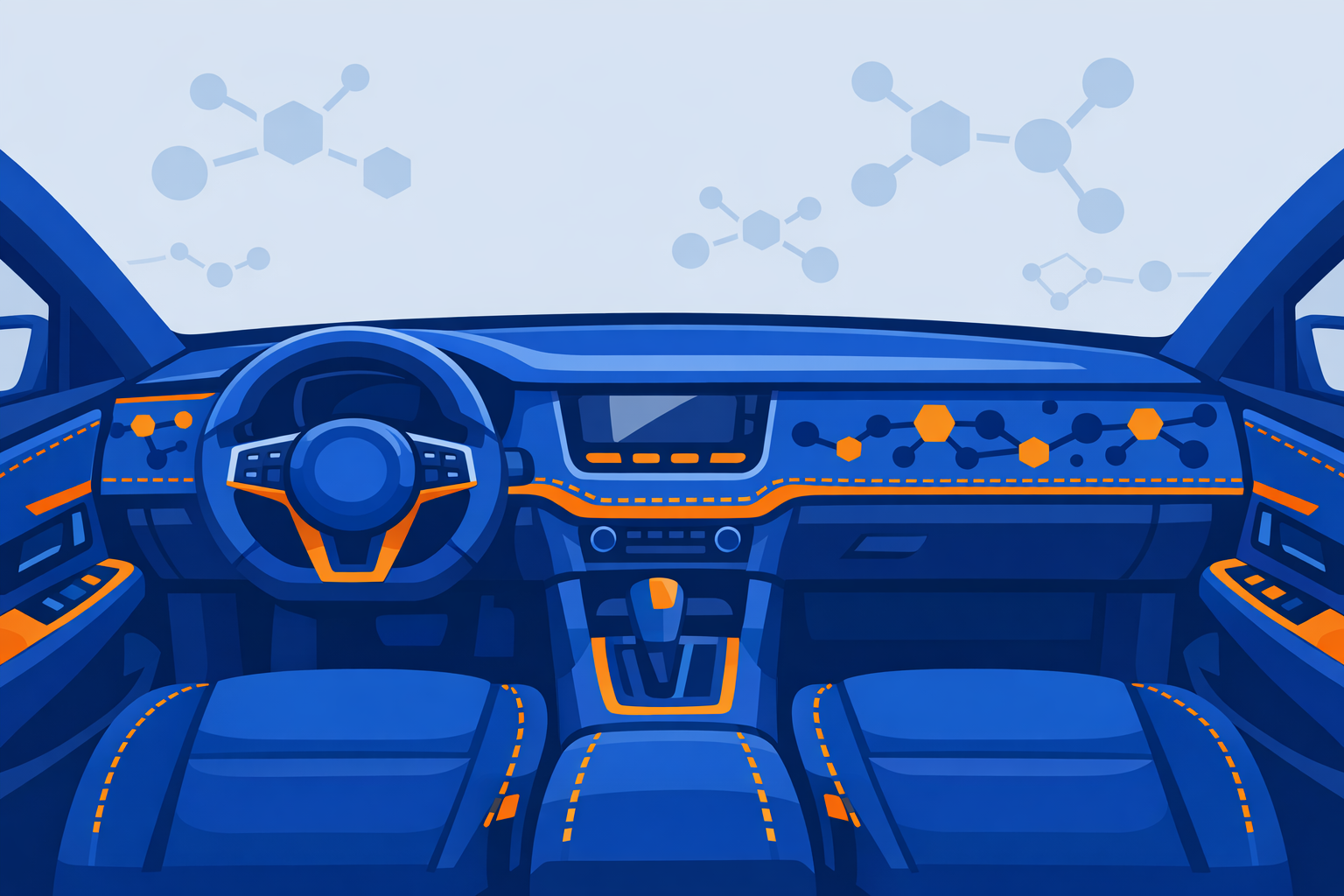
A typical vehicle interior hosts over 700 distinct bacterial strains[1] across its hard and soft surfaces, with steering wheels, cupholders, and seat belts identified as the most heavily colonized contact points. Against that microbial backdrop, the automotive industry's interest in functionally protective materials is well-founded. Now, a newer class of candidates - sulfur-based antimicrobial polymers - is drawing attention from material formulators, OEM procurement teams, and regulatory agencies alike. Their arrival in the cabin, however, is anything but straightforward.
The Science Behind Sulfur-Based Antimicrobial Polymers
Sulfur-containing compounds have a long documented history of antimicrobial use, but their translation into stable, processable polymer matrices has historically been constrained by odor, limited solubility, and formulation complexity.
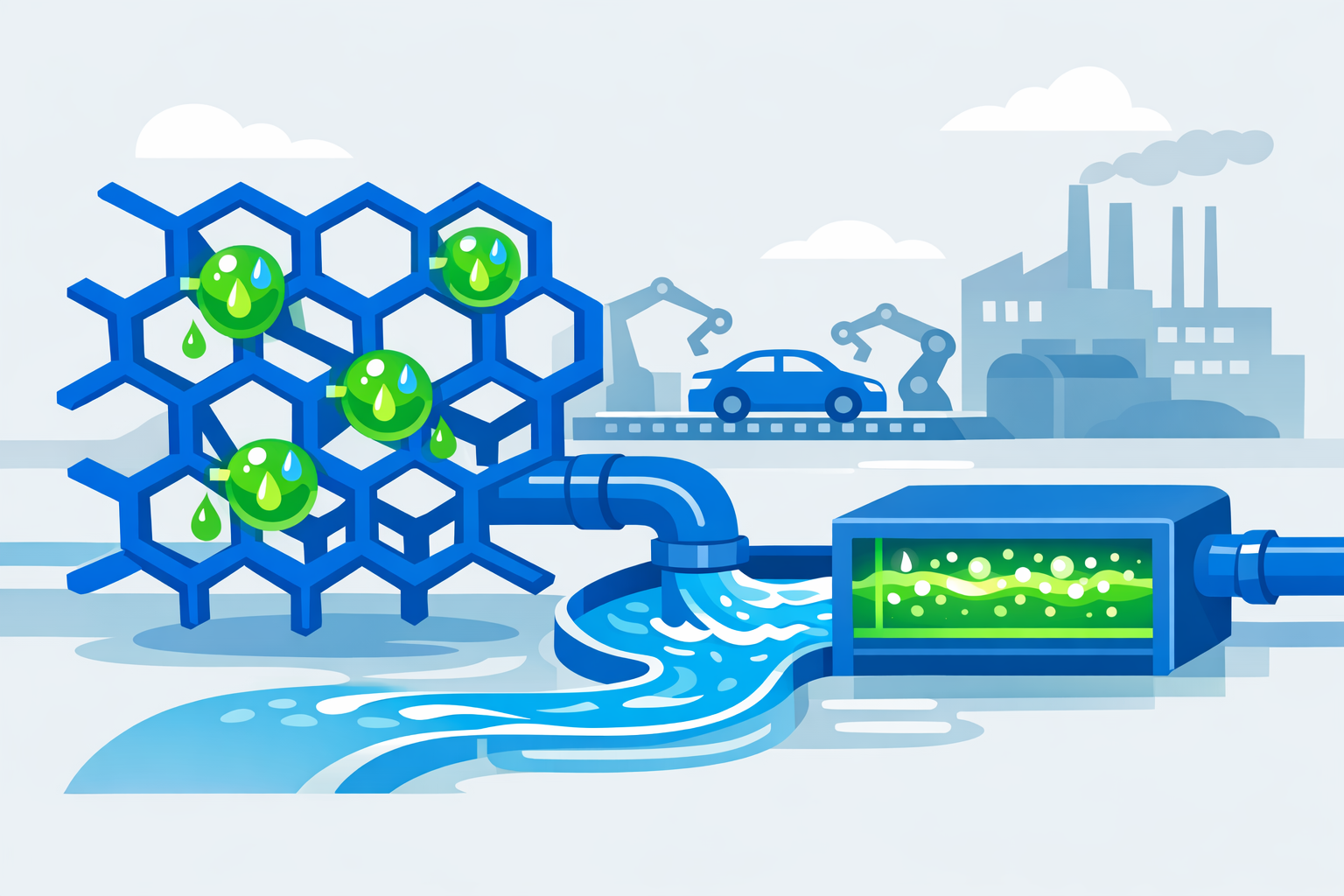
Recent advances in sulfur polymer chemistry - particularly the inverse vulcanization process - have begun to address these barriers. Inverse vulcanization transforms excess elemental sulfur into functional polymers[2] by stabilizing it with organic cross-linkers, producing high-sulfur-content materials with demonstrated antimicrobial properties. More than 60 million tons of sulfur are produced annually as a byproduct of the petrochemical industry, giving the approach an inherent raw material cost advantage.
The mechanism of action against bacteria is not yet fully elucidated. Several pathways have been postulated[3], including thiolation reactions, hydrophobic interactions, and disruption of thiol-containing enzymes in bacterial cell membranes. Notably, one body of research suggests that where significant leaching does not occur, the dominant mode of action is likely homolytic bond cleavage - a finding with positive implications for long-term surface stability and reduced risk of resistance induction.
A landmark study published in April 2026 by a multidisciplinary team from Flinders University and UK collaborators[4] reported a poly(trisulfide) oligomer demonstrating potent antifungal activity against Candida albicans (MIC < 8 µg/mL) and strong inhibition of the Gram-positive bacterium Staphylococcus aureus, while exhibiting minimal toxicity to human and plant cells. The new antimicrobial overcomes previous limitations of sulfur-based preparations including odor and solubility, according to the research team.
Selectivity and Cytotoxicity: Encouraging but Not Yet Settled
The question of selective toxicity - harmful to microbes, benign to human occupants - is central to automotive application viability. In nanoparticle cytotoxicity studies[5], high-sulfur-content polymeric nanoparticles showed more than 80% cell viability at all concentrations tested against human liver carcinoma cells, with no clear dose-dependent toxicity observed. However, researchers note that the cytotoxicity of high sulfur content polymers is not widely reported, and their safety for novel applications remains poorly understood across different comonomer combinations and nanoscale formulations.
This gap is significant. For automotive interiors - enclosed, thermally variable environments with prolonged occupant exposure - in-cabin off-gassing, particulate migration, and skin contact scenarios all require rigorous evaluation before commercial deployment can be credibly pursued.
Where Deployment Is Being Targeted
Pilot activity is concentrating on the highest-contact surfaces within the cabin: dashboards, door panels, armrests, steering wheel surrounds, and seating upholstery. These are precisely the surfaces identified as primary bacterial reservoirs[6] and the ones where OEMs face the clearest consumer-facing hygiene value proposition.
Fleet vehicles - taxis, ride-hailing cars, rental fleets, and autonomous mobility platforms - present the strongest near-term commercial case. Fleet operators have quantified the economic logic[7]: contaminated seat fabric requiring deep chemical cleaning at $50-100 per occurrence versus self-protecting antimicrobial surfaces requiring no special maintenance represents a compelling total cost of ownership argument.
For polymer-molded hard surfaces (ABS, PP, and PC-based dashboards and trim components), antimicrobial actives can in principle be compounded directly into the resin matrix, producing durable, non-topical protection integrated for the component's service life. For textile and soft-surface seating, coating-based approaches predominate, though durability after abrasion and cleaning cycles remains an active area of testing.
A notable recent development is the biphasic polyurethane coating developed by HRL Laboratories in collaboration with Boeing and GM[8], published in the journal Langmuir in February 2025. The system integrates a durable polycarbonate phase with a transport-enabled polyethylene glycol phase, enabling sustained antimicrobial active release with the ability to restore surface protection levels through routine cleaning with common disinfectants - a first for coatings of this type. While not sulfur-based, this architecture illustrates the engineering direction durable antimicrobial automotive coatings must take.
The Regulatory Landscape: A Demanding and Evolving Framework
For manufacturers considering sulfur-based biocidal actives in automotive components destined for European markets, the EU Biocidal Products Regulation (BPR, Regulation EU 528/2012) is the primary gating framework. The BPR establishes a two-tier authorization system[9]: active substances must first receive EU-level approval, followed by national or Union-level authorization of the individual biocidal product.
The BPR requires that automotive articles treated with biocidal products must use only approved active substances, and this obligation extends to imported articles. Companies must also provide consumers with information about biocidal treatment upon request, within 45 days and free of charge[10]. Where a biocidal property claim is made on an automotive component, labeling obligations apply under BPR Article 58, in conjunction with the Classification, Labelling and Packaging (CLP) Regulation.
For sulfur-based actives not currently on the ECHA-approved list, the route to market is the most demanding: a new active substance dossier must be submitted to ECHA, with a review decision typically issued approximately three years from the date of submission. The Biocidal Products Committee (BPC) prepares an opinion within 270 days of evaluation, which then informs the European Commission's decision.
Updated Guidance Raises the Bar
In late 2025, ECHA published a major revision to its BPR Human Health Assessment Guidance (v5.0) - the first major update in nearly seven years[11]. Version 5.0 applies to active substance submissions from March 2026 and new product submissions from August 2027. The updated guidance introduces explicit requirements for secondary inhalation exposure assessments in re-entry scenarios for volatile substances - a provision directly relevant to in-cabin automotive applications - and strengthens requirements around mutagenicity, reproductive toxicity, and developmental neurotoxicity.
ECHA's 2025 BPR enforcement priorities[12] include the BEF-3 project, examining product characteristics and labeling compliance, with inspections launched in January 2025. The emphasis on import controls and online sales monitoring signals that enforcement, not just rulemaking, is intensifying.
In parallel, the BPR itself underwent a formal performance evaluation beginning Q4 2025[13], assessing effectiveness, efficiency, and coherence - a process that could yield further regulatory tightening or clarification for treated articles in the coming years.
| Regulation / Standard | Region | Scope for Automotive | Status (2025-2026) |
|---|---|---|---|
| BPR (EU 528/2012) | EU/EEA | Treated articles, biocidal claims, labeling | Active; BEF-3 enforcement inspections underway |
| ECHA BPR Guidance v5.0 | EU/EEA | Human health assessment for active substance submissions | Applies from March 2026 (active substances) |
| ISO 22196 | International | Antibacterial activity on plastic surfaces | OEM procurement baseline |
| ISO 20743 / AATCC 100 | International | Textile antimicrobial performance; ≥99% kill after 1,000 abrasion cycles | Adopted in leading OEM specs |
| REACH (EC 1907/2006) | EU | Chemical registration; migration and hazard data | Ongoing; applies to novel actives |
| EPA FIFRA / TSCA | US | Antimicrobial pesticide registration; new polymer substance review | Active; scrutiny of novel actives increasing |
Note on conventional silver technologies: According to ECHA's review process, conventional silver-based antimicrobials face significant challenges meeting BPR requirements[14] due to concerns over potential harm to human, animal, and ecological health, with many set to be phased out. This regulatory pressure is one factor drawing attention toward alternative chemistries, including sulfur-based systems.
Performance Testing: What OEMs Are Requiring
Antimicrobial performance standards - including ISO 20743, AATCC 100, ISO 22196, and EN 45545 - establish baseline compliance requirements[7] for components entering OEM qualification programs. The evolving picture: leading automotive manufacturers now require ≥99% bacterial kill rate even after 1,000 abrasion cycles[7], a durability specification that many topically applied treatments struggle to meet.
For sulfur-polymer systems integrated into bulk polymer matrices (rather than applied as surface coatings), durability through the component's service life is theoretically more achievable, provided leaching behavior is well-characterized. Research indicates that where sulfur polymers retain an amorphous character and leaching is minimal, the high degree of sulfur stability within the cross-linked bulk material is a desirable feature of long-term antibacterial surfaces[2].
The challenge is that the antimicrobial mechanism of high-sulfur-content polymers is not yet definitively understood[3], and different comonomer combinations produce materials with varying efficacy profiles - particularly in distinguishing activity against Gram-positive versus Gram-negative bacteria. This variability complicates the generation of standardized dossier data for regulatory submission.
Supply Chain Integration, Cost Implications, and Compatibility Challenges
Introducing a novel antimicrobial active into an established automotive polymer supply chain creates several practical friction points:
- Compounding compatibility: Functional additives must be assessed for antagonistic interactions with existing stabilizers, flame retardants, and plasticizers in the polymer matrix[15]. Sulfur-based actives may interact with metal-based stabilizers (e.g., zinc or tin compounds), requiring reformulation of the additive package.
- Coating adhesion: For surface-applied formats, adhesion to existing automotive topcoat systems (polyurethane, acrylic-melamine) must be qualified across temperature and humidity cycling.
- Masterbatch processing: Antimicrobial technology can be supplied in powder, liquid, or masterbatch pellet formats, with formulation largely dictated by the polymer type and manufacturing process[16]. Novel sulfur-based actives would require new masterbatch development, adding lead time and cost.
- Cost premium: The global antimicrobial plastics market was valued at $104.3 billion in 2025 and is projected to reach $205 billion by 2034 at a CAGR of 7.8%[17], indicating broad demand growth - but per-component cost premiums for novel actives are typically significant in early commercialization phases.
Regulatory approval timelines of approximately three years for new active substances introduce a further strategic cost: manufacturers advancing a sulfur-based biocidal active for EU automotive market use must factor in substantial pre-commercial regulatory investment with no guarantee of approval.
End-of-Life Recycling: An Unresolved Tension
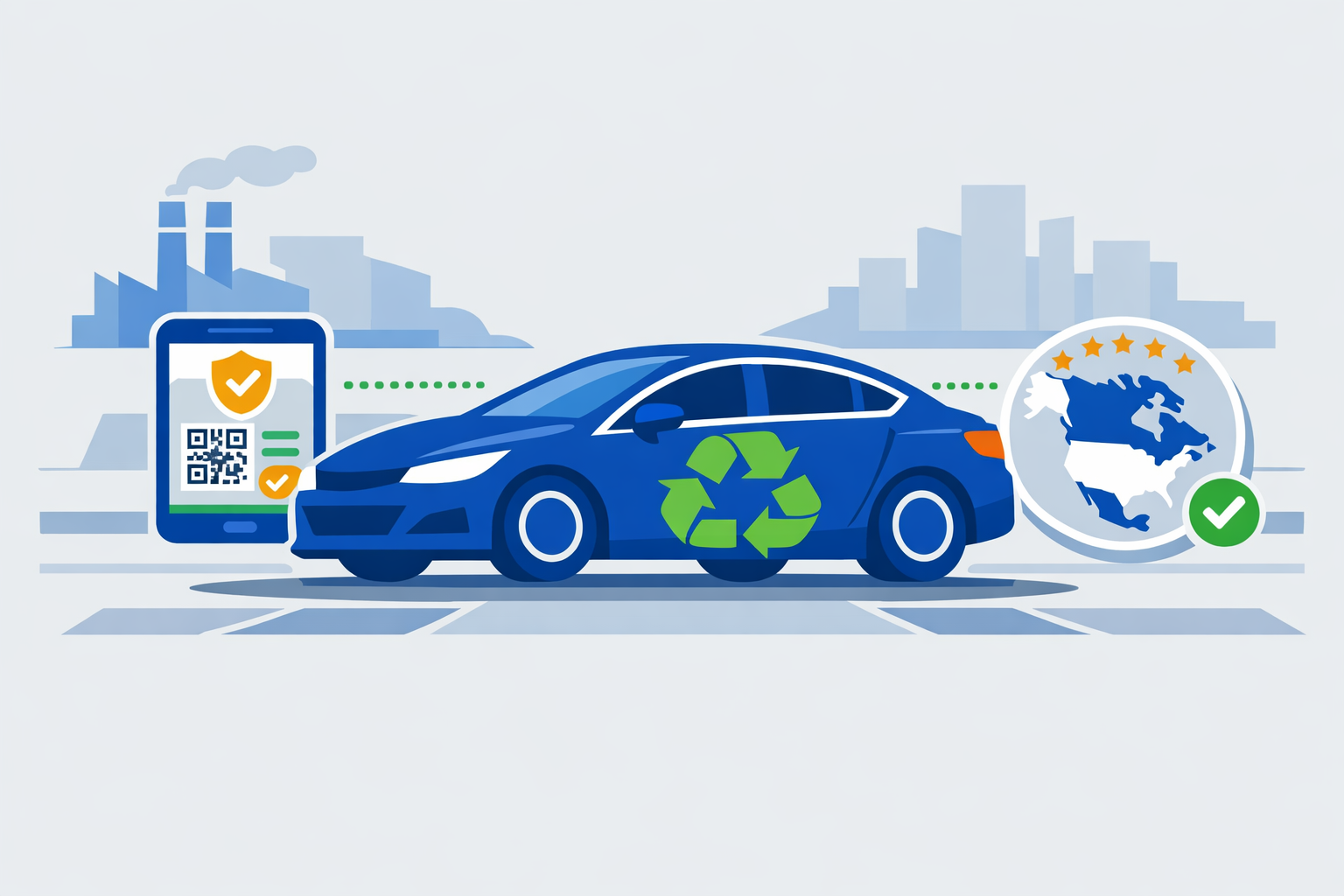
The parallel trajectory of EU circularity mandates for automotive plastics - discussed in detail in our analysis of EU circularity rules for automotive composites - creates a specific tension for antimicrobial polymer strategies. As OEMs face requirements to increase recycled plastic content in new vehicles, the composition of those plastics becomes increasingly important.
Antimicrobial additives embedded in polymer matrices must be assessed for their behavior in mechanical recycling streams. Key questions include whether residual biocidal activity in regrind material affects recycling worker safety, whether the active migrates during melt reprocessing, and whether the active's presence impairs the quality or certifiability of recycled output.
Evolving global regulations are significantly influencing material selection and formulation strategies in antimicrobial plastics[17], with a broader industry trend toward non-migratory, inorganic additive technologies that exhibit low migration characteristics. For sulfur-based systems - which are predominantly organic - demonstrating low migration behavior and recyclability compatibility will be a prerequisite for long-term commercial viability in automotive interiors.
Key Takeaways for Industry Stakeholders
For R&D and material selection teams:
- Sulfur-based antimicrobial polymers offer genuine differentiation from silver-based systems facing BPR phase-out, but mechanism of action data and cytotoxicity characterization must be substantially expanded before regulatory dossiers can be constructed.
- In-cabin exposure scenarios (inhalation, skin contact, thermal off-gassing) require tailored testing protocols beyond standard antimicrobial efficacy standards.
For regulatory affairs and compliance functions:
- Any novel sulfur-based active substance not currently on the ECHA Article 95 list will require a full new active substance dossier, with an approximate three-year review timeline. Early engagement with the evaluating competent authority is advisable.
- ECHA BPR Guidance v5.0, applicable from March 2026, raises the bar for mutagenicity, reproductive toxicity, and developmental neurotoxicity assessments - plan data generation accordingly.
For procurement and supply chain:
- Validate antimicrobial additive compatibility with the full polymer formulation package, not just the base resin.
- Establish end-of-life recyclability assessments as part of material qualification, in parallel with performance and regulatory validation.
For sustainability officers:
- Recyclability of antimicrobial-treated polymers is not yet standardized. Additive transparency and traceability are increasingly becoming market entry criteria[17] - maintain full documentation of active substance identity, loading levels, and migration characteristics to support future circularity claims.
FAQ
Q: Are sulfur-based antimicrobial polymers already in production automotive interiors? A: Not at commercial scale. The technology remains in pre-commercial and pilot stages, with research institutions and early-stage chemical developers advancing the chemistry. Regulatory approval for novel active substances currently takes approximately three years under EU BPR, meaning widespread deployment is unlikely before the late 2020s at the earliest.
Q: How do sulfur-based polymers differ from silver-based antimicrobial additives? A: Silver-based systems act primarily via ionic mechanisms that can cause silver leaching - a behavior regulators are increasingly scrutinizing under BPR. Sulfur-based systems, particularly those produced by inverse vulcanization, may operate via non-leaching mechanisms (homolytic bond cleavage), offering theoretical advantages for long-term stability and resistance management. Both classes require full regulatory dossiers for novel active substances.
Q: Do automotive components with antimicrobial additives require special labeling? A: Under EU BPR, labeling obligations apply when a biocidal property claim is made on the article, or when required by the conditions of the active substance approval. Manufacturers should assess their marketing and technical documentation to determine whether a claim is being made, as the BPR definition is broad.
Q: What is the risk of antimicrobial resistance (AMR) from polymer-embedded antimicrobials? A: Non-leaching polymer systems present a lower theoretical AMR risk than leaching systems, as they do not generate sub-inhibitory concentration gradients. However, as with any antimicrobial technology, long-term studies in real-world environments are necessary to monitor for resistance development.
Q: How does the recycling obligation under EU ELV rules interact with antimicrobial additive requirements? A: This is an active area of unresolved tension. The EU's ELV regulation requiring 25% recycled plastic content in new vehicles within ten years will require antimicrobial additive systems to demonstrate compatibility with mechanical recycling processes and absence of adverse effects in recycled polymer streams. This assessment should be integrated into new material qualification processes now.