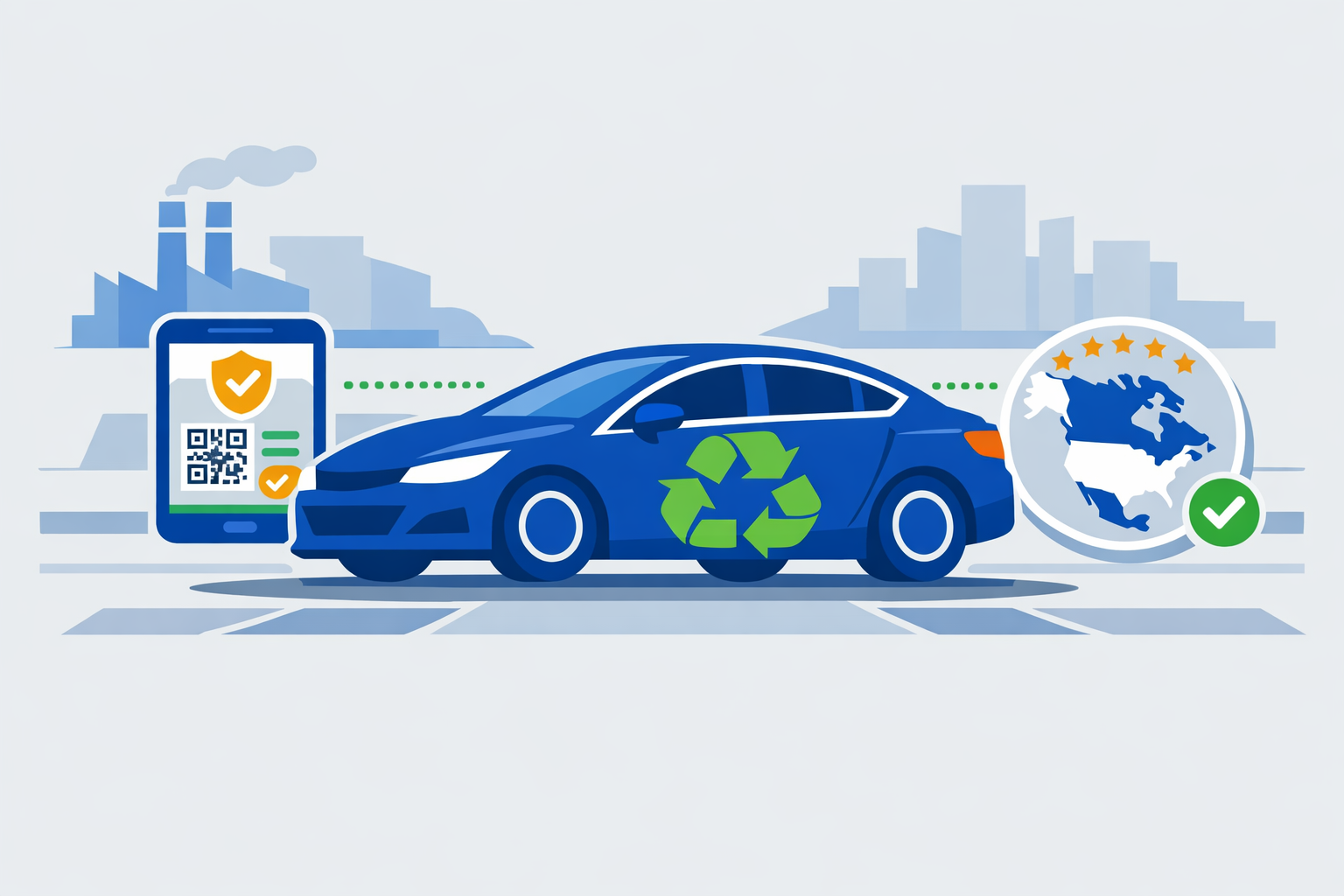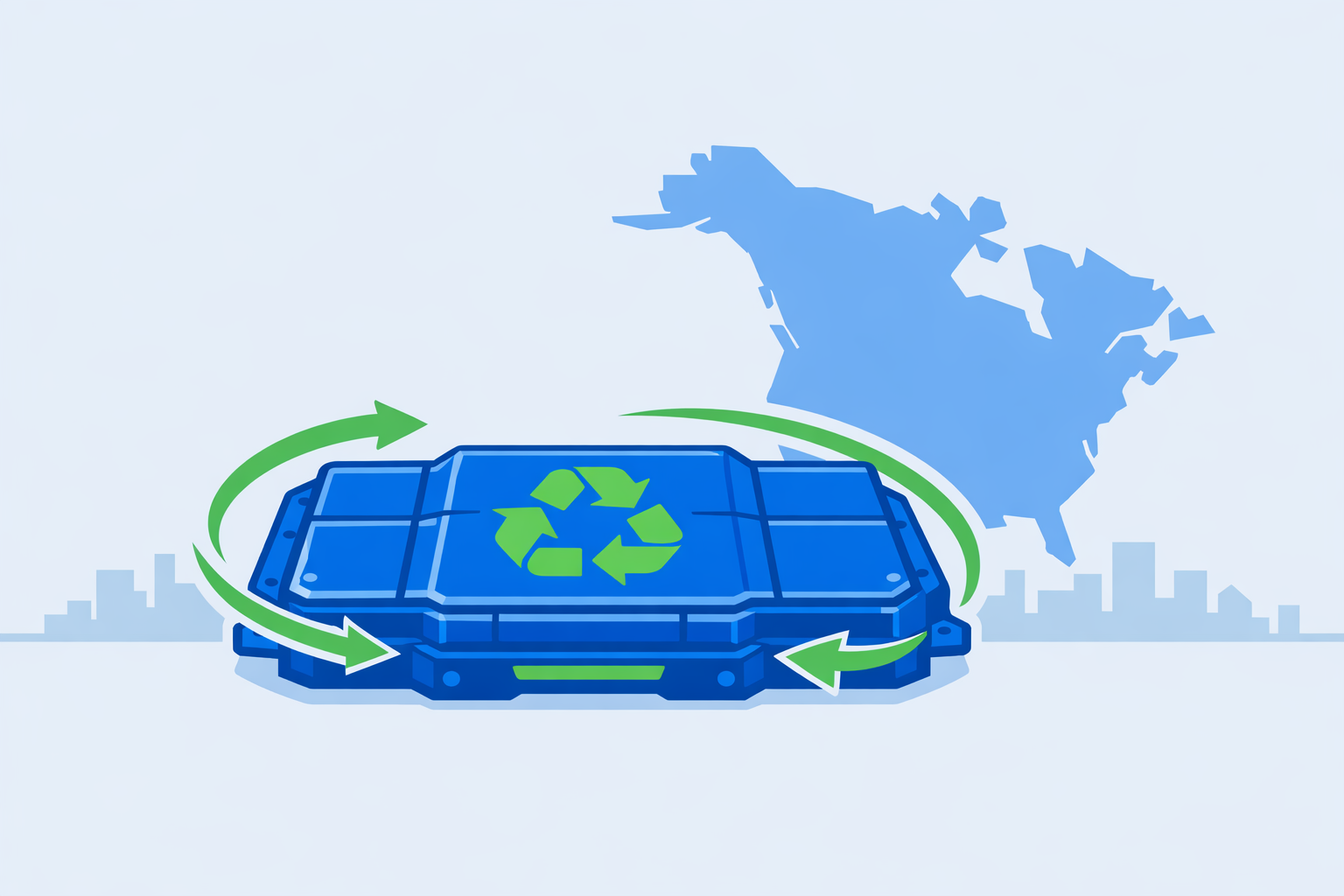
North American automakers are increasing their specification of recycled-content plastics in electric vehicle battery-pack housings, driven by converging policy incentives, supply-chain localization pressure, and OEM sustainability mandates. The shift is reinforced by Canada's newly reinstated purchase incentive program and ongoing U.S. regulatory signals targeting recycled polymer content in vehicle components - together reshaping procurement decisions for battery enclosures, module covers, and thermal management substructures across the EV supply chain.
Background
The regulatory and incentive environment across North America has shifted considerably in 2025 and early 2026. In February 2026, the Canadian government repealed its Electric Vehicle Availability Standard and introduced the CAD 2.3 billion, five-year Electric Vehicle Affordability Program (EVAP), which restores up to CAD 5,000 in consumer incentives for eligible zero-emission vehicles priced at or below CAD 50,000. The program explicitly exempts Canadian-manufactured EVs from the price ceiling, providing a structural advantage for domestic producers - a signal already influencing local content decisions for components including battery housings. Concurrently, CAD 1.5 billion was earmarked by Ottawa for EV charging infrastructure through the Canada Infrastructure Bank, creating a long-term demand signal for domestically produced battery systems.
In the United States, the federal EV consumer tax credit of up to USD 7,500, established under the Inflation Reduction Act, was eliminated as of September 2025 under the One Big Beautiful Bill Act. This development has introduced short-term uncertainty around BEV demand but has not reversed automaker investment in battery material innovation or recycled content specifications. The U.S. market continues to benefit from IRA-linked incentives for domestic battery manufacturing and recycling operations, encouraging partnerships between U.S.-based chemical recyclers, compounders, and EV manufacturers to develop certified recycled resin supply lines.
The industry backdrop also includes a voluntary battery collection initiative in Canada - the EV Battery Recovery Program - operated by the Canadian Vehicle Manufacturers' Association, Global Automakers of Canada, and Call2Recycle Canada. A pilot launched in Quebec in 2023 collected more than 3,000 EV batteries in 2024, and the program was expanded nationwide in June 2025.
Details
Recycled polymers are increasingly specified across battery pack substructures - including trays, lids, module housings, and bracket components - as OEMs work to reduce the carbon footprint of complete vehicle platforms. OEMs are increasingly specifying recycled content for battery trays, covers, and module housings in new models, with the primary driver being a regulatory push for circularity, including mandates on minimum recycled content and extended producer responsibility for end-of-life batteries, according to Fact.MR market analysis.
The dominant material in recycled battery casing applications is recycled polypropylene (rPP), which commands a projected 38.7% market share in the EV battery recycled plastic cases segment due to its processability, chemical resistance, and compatibility with closed-loop collection streams. Polyamide 6 (PA 6) and Polyamide 66 (PA 66) are also widely used in battery trays, cooling circuits, and high-voltage connectors, given their flame retardancy and electrical insulation properties. In North America, polypropylene accounts for approximately 35% of total resin demand in EV plastic applications, while polyurethane and polyamide together contribute about 40%, according to industry analysis.
The technical threshold for recycled-content resins in safety-critical modules remains demanding. Enclosures must meet flame-retardancy classifications, withstand sustained thermal exposure - typically up to 85 °C during normal operation - and maintain mechanical integrity under burst pressures and long-term chemical exposure from electrolytes, coolants, and road salts. According to materials researchers, recycled polypropylene composites for EV battery housings must demonstrate flame retardancy, chemical resistance, dimensional stability, and mechanical strength while offering a reduction in carbon footprint compared to virgin plastics. Supply chain participants note that compounding technologies for engineering-grade recycled plastics, including polyamide and polycarbonate blends, have advanced to meet these requirements, with new-generation polymer composites offering 30-40% higher heat resistance and 25% greater mechanical strength than earlier grades.
The global market for EV battery casings made from recycled plastics is projected to grow from USD 2.59 billion in 2026 to USD 6.19 billion by 2036, at a compound annual growth rate of 9.1%, according to Fact.MR. The United States is forecast to grow at a 9.8% CAGR over the same period, driven by supply chain resilience priorities and domestic sourcing requirements. Key material suppliers active in this segment include BASF, LyondellBasell, SABIC, and Avient Corporation, each developing certified recycled resin grades for automotive battery applications.
On the recycling infrastructure side, the North American battery recycling ecosystem is concentrated in what industry analysts describe as the "battery belt," a corridor stretching from Quebec in Canada south to Georgia, aligning with major automotive manufacturing hubs. Li-Cycle uses hydrometallurgical processes to recover up to 95% of battery materials, while Redwood Materials has been scaling closed-loop recovery capacity, targeting the ability to recycle enough anode and cathode materials to power one million battery electric vehicles annually by 2025 and five million by 2030.
The plastics fraction recovered from EV battery disassembly - including housing panels and insulation components - has historically been underutilized relative to cathode metals. Specialized processes are emerging to improve plastic recovery from end-of-life battery packs, with recyclers adapting shredding and separation workflows to generate feedstock streams that meet compounders' specifications for automotive reuse. Advanced recycling facilities in the U.S. now report material recovery rates of 95-98% by weight, though this figure refers primarily to electrochemical materials; targeted polymer stream recovery remains a key development area.
Outlook
Canada's battery recycling policy gap poses a structural risk to the emerging recycled-content supply chain: Canada currently has no regulatory framework establishing EV battery recycling requirements, and several provinces have proposed but not implemented extended producer responsibility programs for EV batteries. Pressure on federal and provincial regulators is mounting as at least 93,000 EV battery packs in Canada are projected to require recycling by 2040, and potentially 500,000 by 2045.
In the U.S., a proposed federal rule - previously reported by this publication - would introduce minimum recycled plastic content requirements for light-vehicle components including battery enclosures, with interagency review and public comment ongoing. As the North American market moves from pilot programs toward specified material requirements in new EV platforms, the ability of recyclers and compounders to supply consistent, certified recycled resin at scale will be the defining commercial variable for the sector.