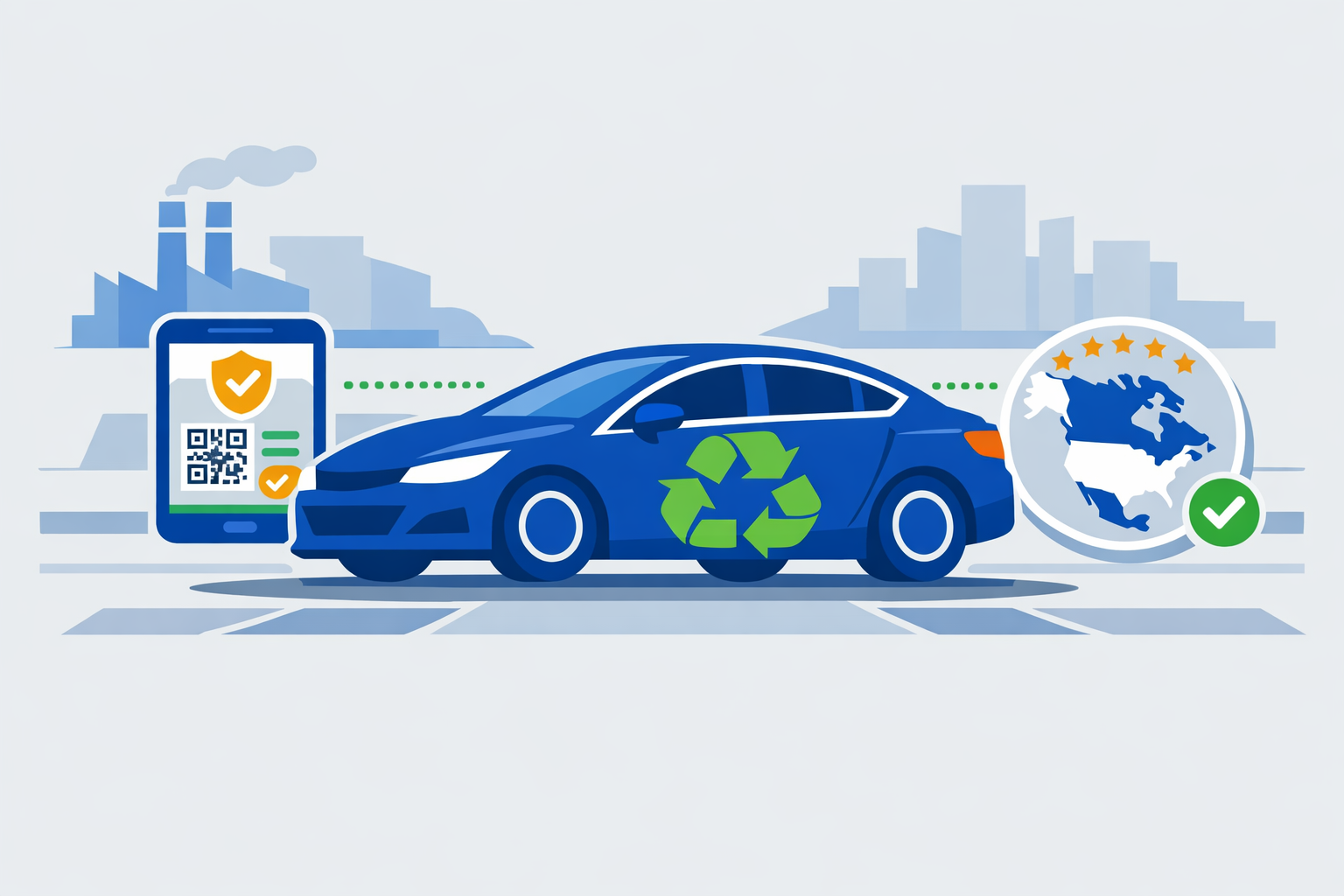
The European Union has set an end-of-2026 deadline for finalizing rules to calculate and verify recycled plastic content in new vehicles, placing immediate pressure on automotive OEMs and Tier 1 suppliers to build compliant traceability systems before binding content mandates phase in.
The deadline is embedded in the EU's revised End-of-Life Vehicles (ELV) Regulation, on which the European Commission and the Council reached political agreement in December 2025. The compromise text was published in February 2026. Under the agreement, carmakers must achieve a minimum 15% recycled plastic content six years after entry into force, rising to 25% within ten years. At least 20% of that recycled content must come specifically from end-of-life vehicles, according to the provisional text.
Background
The revised ELV Regulation replaces Directives 2000/53/EC and 2005/64/EC with a single, directly applicable regulation, closing gaps that previously allowed divergent member-state interpretations. The overhaul was driven by recognition that, despite plastics comprising roughly 12% of end-of-life vehicle mass, current automotive industry leaders use only 2-3% recycled content in their vehicles, with most material collected from ELVs sent to landfill or energy recovery, according to an OECD analysis citing Maury et al. (2023).
The framework also addresses a structural weakness in recyclate supply. According to the European Commission, the absence of Union-wide end-of-waste criteria for plastics results in additional costs of around €120 million per year for the EU plastics recycling sector, or approximately €260,000 per recycler - figures that compound the already limited availability of automotive-grade secondary polymers.
The EU framework permits chemically recycled plastics to count toward mandates through mass-balance accounting, opening higher-complexity waste streams to the automotive supply chain. However, mass-balance attribution requires a defined verification methodology - precisely what the 2026 implementing acts are expected to establish.
Details
The 2026 verification deadline centers on implementing acts that will determine how recycled content is calculated, documented, and audited across multi-tier supply chains. Rules for recycled plastic content are to be calculated and verified by end of 2026, followed by a feasibility study for setting the recycled content target in 2027 and a declaration of material formats in 2030, according to Ascend Materials' regulatory analysis of the ELV proposal.
Supply chain professionals face a compounding challenge: automotive plastics - spanning polypropylene (PP), acrylonitrile butadiene styrene (ABS), and engineered polymer compounds used in trims, housings, and structural components - are subject to tighter performance tolerances than packaging-grade recyclates. Validation cycles for new materials in automotive applications are lengthy, and approval processes are strict, meaning the shift to recycled-content compliance will build gradually even with clear regulatory direction, as noted by WasteTrade's sector analysis.
The regulation mandates that recycled materials originating from non-EU countries must be produced at facilities subject to audits conducted by independent third parties, adding a cross-border verification layer for OEMs with globally distributed supply chains. Suppliers unable to demonstrate material composition and recyclability data face exclusion from automotive supply chains under the new framework, according to compliance specialists at Certivo.
For EV battery housings and interior components - applications already under scrutiny for mass, thermal performance, and flame-retardancy requirements - integrating post-consumer recycled polymers introduces additional qualification steps. The regulation also introduces a mandatory Environmental Vehicle Passport (EVP), requiring producers to issue a digital record disclosing recycled content shares and substance data for every vehicle at registration. The digital vehicle passport must include information on restricted substances, the share of recycled content, and circularity strategies, according to Normachem's regulatory summary. This data infrastructure will be essential for market surveillance authorities verifying compliance at scale.
According to industry estimates cited by ICIS, 0.5 to 0.6 million tonnes of recycled polyolefins will be required annually by 2040 to meet automotive mandates, with recycled polypropylene expected to supply the majority, given polypropylene's prevalence in vehicle components.
Outlook
With the compromise text published and formal adoption expected by mid-2026, automotive manufacturers and Tier 1 suppliers face a narrow window to align procurement contracts, qualify recycled polymer grades, and establish data pipelines capable of supporting digital passport reporting. The Commission retains authority to temporarily delay or revise down recycled content targets if specific recycled plastics face availability shortfalls or excessive price volatility - a safeguard that may prove relevant given current capacity trends. The EU's installed plastics recycling capacity reached 13.2 million tonnes in 2023 but growth rates had fallen by 4% year-on-year, with projections pointing to a potential net decrease of around one million tonnes of capacity by end of 2025, according to European Commission data cited by Packaging Europe.