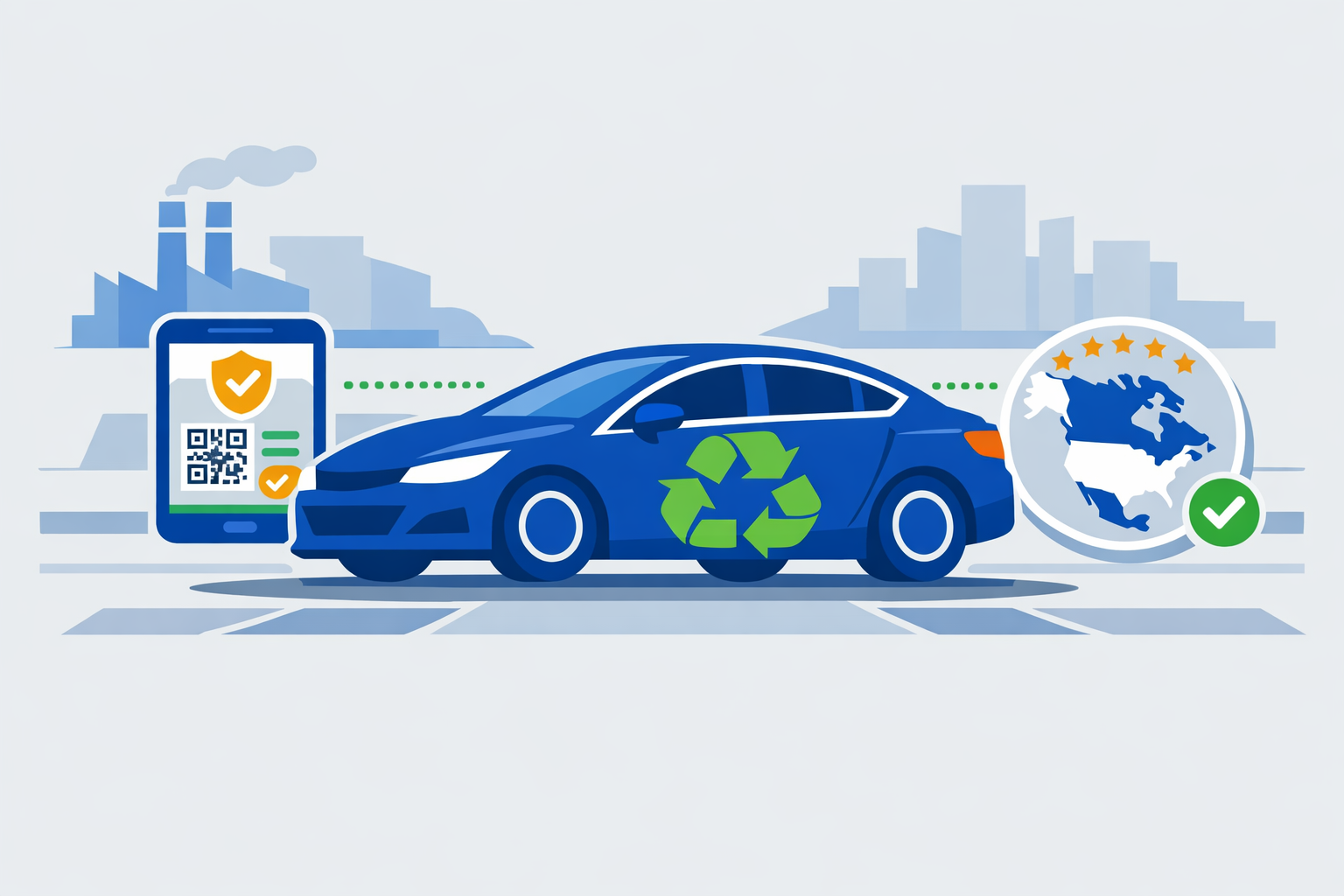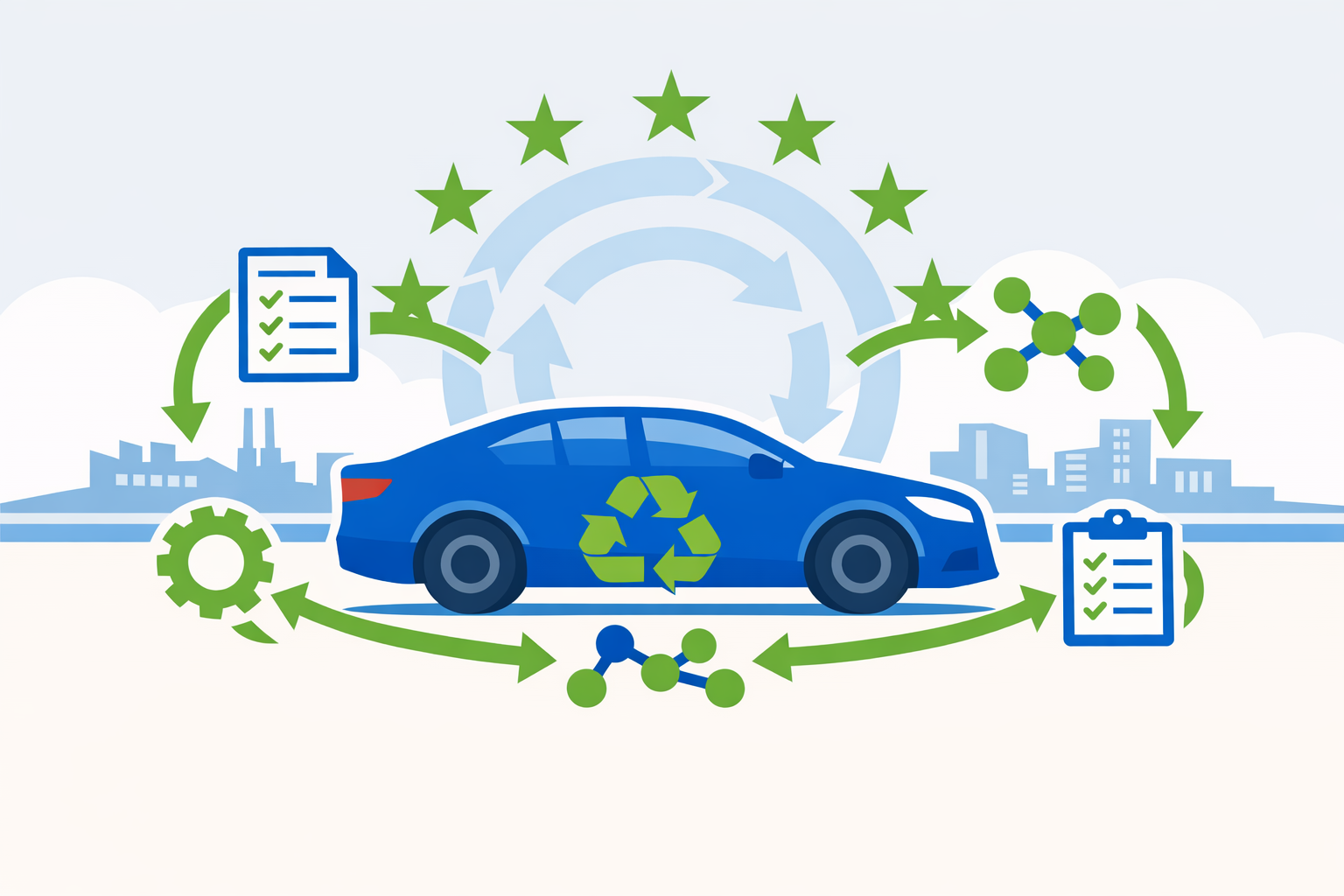
The European Union has mandated that rules for calculating and verifying recycled plastic content in new vehicles be established by the end of 2026, placing immediate compliance pressure on recyclers, compounders, Tier 1 suppliers, and original equipment manufacturers (OEMs) across the automotive value chain. The requirement stems from the EU's newly agreed End-of-Life Vehicles (ELV) Regulation, which reached a provisional political agreement between the European Parliament and the Council in December 2025. The compromise text was published in February 2026.
Background
The EU's updated ELV Regulation marks the next step in Europe's transition toward a more circular automotive industry. While the original ELV Directive has been in place since 2000, the revised framework strengthens expectations around recycled materials, circular design, and producer responsibility. The regulation replaces the existing directive with a directly applicable legal instrument binding all 27 member states without national transposition.
The automotive manufacturing sector currently consumes approximately 6 million tonnes of plastics per year in the EU, yet makes comparatively little use of recycled materials. Approximately 12% by mass of current end-of-life vehicles consists of plastics, but leading manufacturers use only 2-3% recycled content in their vehicles. The majority of material recovered from ELVs is sent to landfill or energy recovery.
Details
Rules for recycled plastic content calculation and verification are due by the end of 2026, followed by a feasibility study for setting the recycled content target in 2027 and a declaration of material formats in 2030. Recycled plastic content requirements in new vehicles will start at a minimum of 15% six years after entry into force, rising to 25% ten years after entry into force. At least 20% of this recycled plastic must come from closed-loop recycling-material recovered from end-of-life vehicles-to keep valuable materials within the EU's circular economy.
The verification burden is substantial. The shift is less about introducing entirely new obligations than about operationalizing circularity across increasingly complex material flows. Meeting recycled content targets, demonstrating circular design readiness, and verifying proper treatment outcomes all depend on reliable data about materials and volumes across supply chains and recovery networks. In many organizations, this information already exists but remains fragmented across multiple systems and operational stages.
Third-party certification frameworks are expected to underpin verification. Schemes such as RecyClass or EuCertPlast, alongside material traceability documentation, are among the tools used to substantiate recycled content claims. The EU increasingly recognizes chemically recycled materials as eligible, provided they meet mass-balance certification standards.
Cross-border material sourcing adds a further compliance dimension. Recycled plastics from non-EU countries may not count toward EU recycling targets until 21 November 2027, owing to differing standards, control mechanisms, and waste management infrastructure outside the bloc. The European Commission is also planning a proposal to introduce separate customs tariff codes for virgin and recycled polymers in the first half of 2026-a measure intended to improve import controls on recyclate.
Supply chain actors are already responding to anticipated requirements. The new ELV Regulation will require manufacturer circularity strategies, recycled content declarations, and expanded dismantling documentation. OEMs are already flowing these requirements down to suppliers before the regulation is formally adopted. Suppliers lacking structured material composition data and recyclability evidence risk exclusion from automotive programs.
The regulation also introduces a Circularity Vehicle Passport, an EU-wide extended producer responsibility system, minimum recycled content requirements, and stronger rules on parts reuse, vehicle collection, and treatment. At least 30% of plastics from ELVs must be recycled under the agreed framework.
Outlook
EU institutions reached a political agreement in December 2025, and the compromise text was published in February 2026. The provisional agreement must now be endorsed by the Council and Parliament before formal adoption; the regulation will apply two years after entry into force. The decisive test will come with the Commission's proposed Circular Economy Act, due in Q3 2026, which will be critical in determining whether the EU can deliver a durable and competitive framework for plastics recycling.