The European Commission must finalize implementing acts establishing the methodology for calculating, verifying, and certifying recycled plastic content in new vehicles by the end of 2026, triggering an intensive compliance push across automotive supply chains in Europe and beyond.
The mandate stems from the EU's revised End-of-Life Vehicles (ELV) Regulation, on which the European Parliament and Council reached a provisional agreement in December 2025 and published the compromise text in February 2026. The regulation replaces two earlier ELV directives and introduces, for the first time, legally binding recycled plastic content targets for vehicles sold across the EU. The verification framework-not the content targets themselves-is now the immediate operational priority for OEMs, Tier-1 suppliers, recyclers, and compounders facing the 2026 deadline.
Background
The original ELV Directive, in force since 2000, established collection and recovery targets focused largely on metals, leaving plastic recycling rates stubbornly low. According to the European Commission, only 19% of plastics from end-of-life vehicles is currently recycled, despite ELVs generating over six million end-of-life vehicles per year across the EU. The automotive sector consumes approximately six million tonnes of plastics annually but makes limited use of recycled material.
The Commission proposed revising the ELV framework in 2023 as part of the EU Circular Economy Action Plan. Following inter-institutional negotiations, the revised regulation introduces phased mandatory recycled plastic content targets: a minimum of 15% recycled plastic content in new vehicles within six years of the regulation's entry into force, rising to 25% within ten years. At least 20% of the recycled plastic content must originate from closed-loop recycling-that is, material recovered from end-of-life vehicles. The regulation applies to passenger cars, light commercial vans, motorcycles, and certain heavy-duty vehicles.
Details
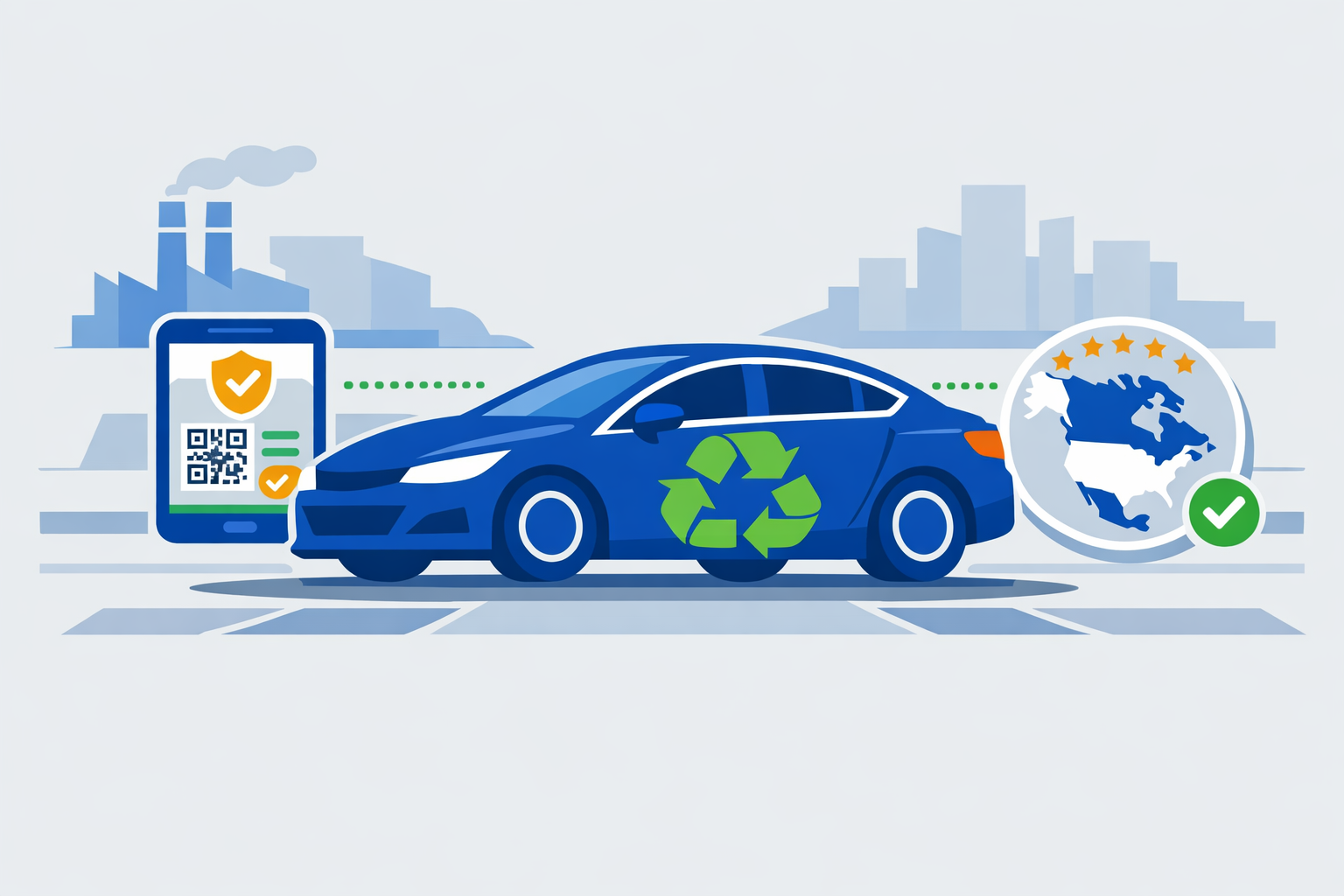
The critical near-term obligation is procedural rather than quantitative. According to the EUR-Lex text, by 31 December 2026 the Commission must adopt implementing acts establishing the methodology for the calculation and verification of the percentage of recycled content recovered from post-consumer plastic waste. These acts will also cover third-party audit requirements. A separate implementing act, due by the same deadline, must establish the methodology for assessing, verifying, and certifying the equivalence of rules applied when recycled content is recovered or collected in a third country-a provision directly relevant to multinational supply chains sourcing recyclate from outside the EU.
The verification methodology must account for available recycling technologies, including their economic and environmental performance, output quality, waste availability, energy consumption, and greenhouse gas emissions. The framework explicitly permits chemically recycled plastics to count toward targets via mass-balance accounting, provided defined methodology and verification conditions are met.
Compliance demonstration falls primarily on manufacturers and importers, who must produce technical documentation substantiating recycled content claims. According to industry analysts and regulatory observers, the challenge for most organizations is not the absence of data but its fragmentation across multiple systems and operational stages-spanning material compounders, Tier-1 and Tier-2 suppliers, recyclers, and dismantlers. Traceability standards such as ISO 14021 and third-party schemes including EuCertPlast are already referenced by some suppliers operating under early compliance frameworks.
According to an IDTechEx market forecast, sustainable plastics content in vehicles is expected to reach 18% by 2035, with recycled plastics accounting for 15% and bio-based plastics the remaining 3%-a projection that falls below the regulation's 25% target for year ten and underscores the supply constraint challenge. ICIS estimated that 0.5 to 0.6 million tonnes of recycled polyolefins would be required by 2040 to meet targets, with recycled polypropylene expected to supply the majority, given polypropylene's prevalence in interior trims, door panels, instrument panels, and under-hood components.
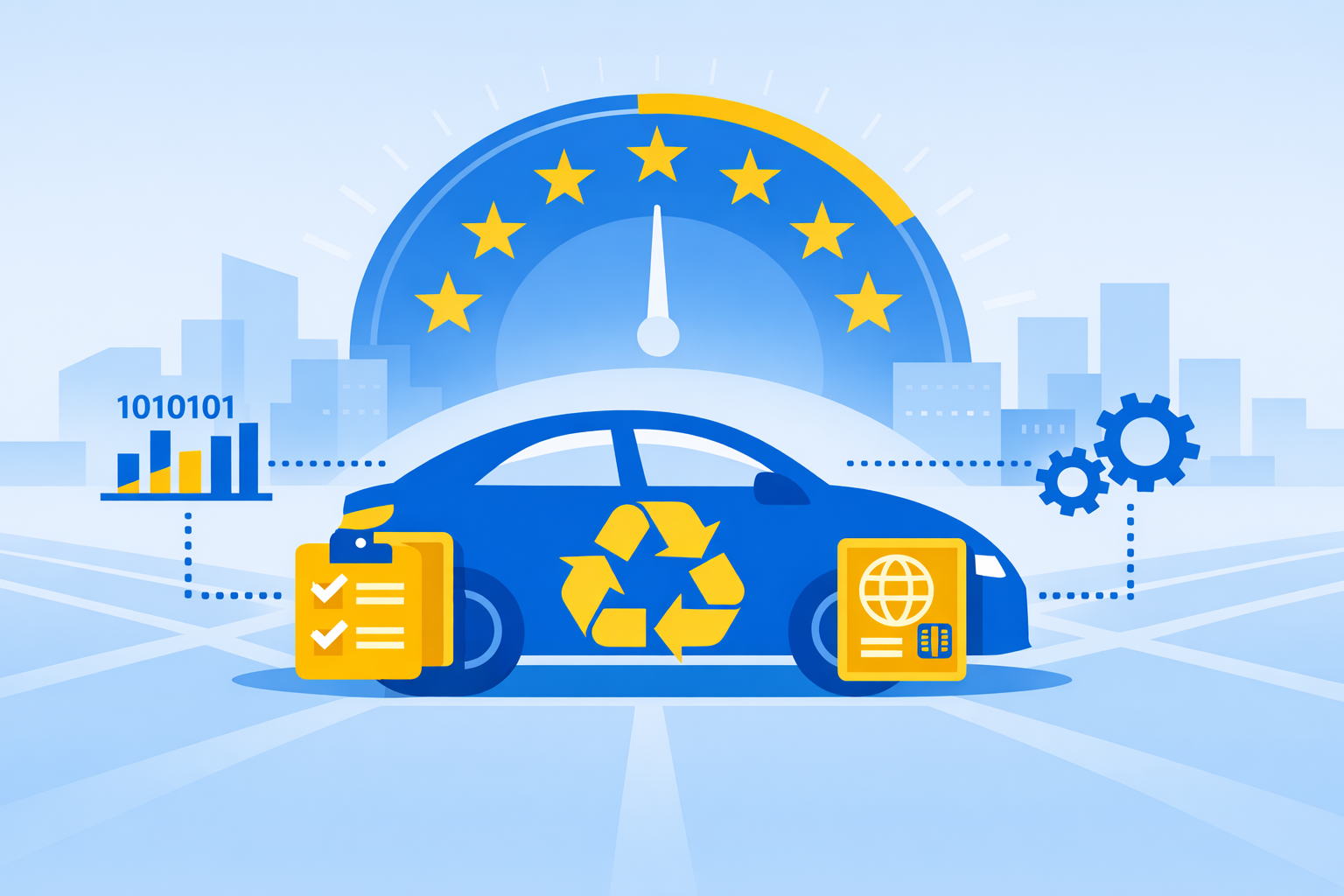
The regulation also mandates design-for-recyclability requirements, restricting the use of permanent adhesives, multi-material overmolded joints, and fasteners that impede separation. Starting in mid-2025, manufacturers must embed detailed material data into components through mandatory digital product passports, listing polymer types, additives, fillers, joining methods, and end-of-life handling instructions. Extended producer responsibility (EPR) provisions require OEMs to finance collection, depollution, and recycling of vehicles, with harmonized national EPR schemes to follow.
The regulation also grants the Commission authority to temporarily delay or revise recycled content targets downward "in case the lack of availability or excessive prices of specific recycled plastics make compliance with the minimum percentages of recycled content excessively difficult".
Outlook
Following finalization of the verification implementing acts at end-2026, a feasibility study for recycled content targets covering steel, aluminum, magnesium, and critical raw materials is due in 2027, broadening compliance obligations further across the supply chain. Procurement specialists and sustainability officers at OEMs and material suppliers should expect that third-party audit requirements, once formalized, will demand traceable documentation from recyclers and compounders in EU and non-EU jurisdictions alike. Industry bodies and regulatory affairs teams are closely monitoring whether the Commission will align automotive verification methodology with frameworks already advancing under the Packaging and Packaging Waste Regulation, which faces its own end-2026 implementing act deadline for recycled content verification.