The European Union has set a December 31, 2026 deadline for the European Commission to adopt implementing acts establishing a unified methodology for calculating, verifying, and certifying recycled plastic content - a move that directly shapes compliance obligations for automakers and their global supplier networks.
Background
The certification deadline stems from two converging regulatory pillars. The EU's End-of-Life Vehicles (ELV) Regulation, which reached a provisional political agreement between the European Parliament and Council in December 2025, introduced Europe's first mandatory recycled plastic content targets for new vehicles. In parallel, the Packaging and Packaging Waste Regulation (PPWR), which entered into force in February 2025, mandates that the Commission adopt implementing acts by December 31, 2026 to establish a unified methodology for assessing, verifying, and certifying recycled content from post-consumer plastic waste - including material sourced or processed outside the EU.
The convergence of these frameworks creates a dual compliance burden for the automotive plastics supply chain. Under the ELV Regulation, recycled plastic content must reach a minimum of 15% within six years of the regulation's entry into force, rising to 25% within ten years, with at least 20% of those totals required to come from end-of-life vehicles. According to the EU institutions, only 19% of plastics from end-of-life vehicles is currently recycled, while the automotive sector consumes approximately 6 million tonnes of plastics per year.
Details
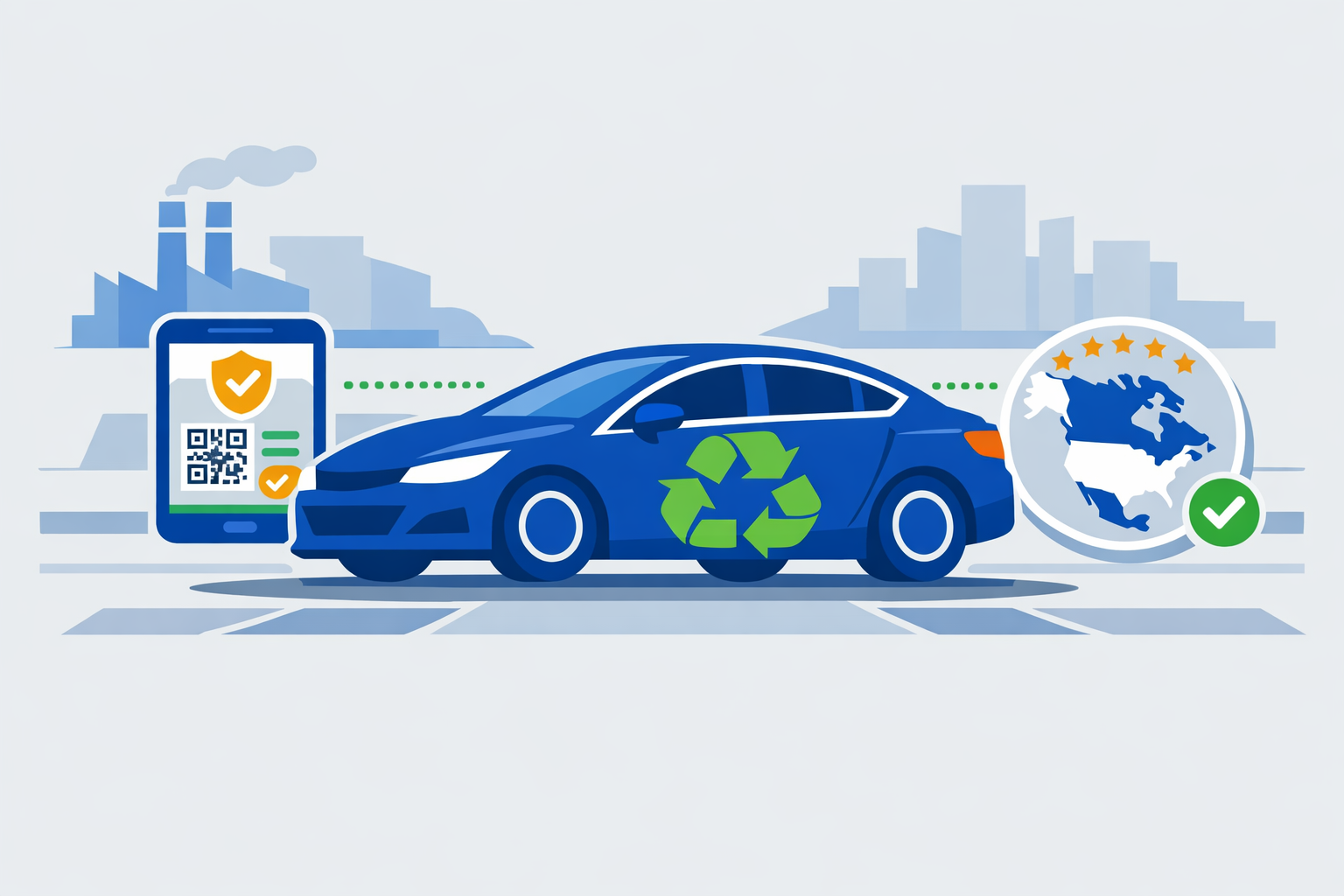
The pending implementing acts will codify how post-consumer recycled (PCR) content is calculated at the manufacturing plant level, verified through third-party audit, and certified when recyclate originates outside the EU. According to the European Commission's official legislative texts, by December 31, 2026, the Commission must adopt implementing acts establishing the methodology for assessing, verifying, and certifying - including through third-party audit - the equivalence of rules applied where recycled content is recycled or collected in a third country. This equivalence clause is particularly consequential for Tier-1 and Tier-2 suppliers sourcing recyclate from Asia or North America for EU-bound vehicle programs.
Third-party certification schemes such as RecyClass and EuCertPlast are expected to play a central role in the verification architecture. The EU increasingly recognizes chemically recycled materials provided they meet mass-balance certification standards - a provision that benefits polymer manufacturers investing in pyrolysis-based recycling of mixed automotive plastics. From January 1, 2029, all affected plastic packaging must comply with the adopted methodology for calculating and reporting recycled content.
Interior plastic components - dashboards, door panels, center consoles, and seat bases, typically manufactured from ABS, PC/ABS blends, and modified polyolefins - face the most immediate reformulation pressure. According to IDTechEx market research, sustainable plastics content in vehicles is forecast to reach only 18% by 2035, indicating a gap between regulatory ambition and current industry trajectory. IDTechEx notes that automotive-grade recycled polypropylene, polyethylene, and polyamide remain in short supply, complicating compliance timelines.
On the supply side, leading OEMs are accelerating programs. Stellantis has stated plans to use 40% recycled content in vehicle plastics by 2030, partnering with European recyclers to source post-consumer polypropylene and polyamide. BMW Group is testing interior panels made entirely from recycled thermoplastics, incorporating digital material passports accessed via embedded QR codes. Tier-1 supplier Faurecia has developed PP and ABS compounds under its NAFILean and MATTrim brands with up to 50% recycled content for injection-molded components.
The regulation applies equally to vehicles manufactured outside the EU and sold within it, meaning Asian and North American OEMs exporting to the bloc must also demonstrate certified recycled-content compliance. The European Commission has confirmed its intent to protect EU recyclers from lower-cost imports claiming recycled status without equivalent process standards, noting it has already imposed six trade defence measures on plastics-related products.
Digital circularity passports - requiring producers to disclose recycled content shares, restricted substances, and circularity strategies at the component level - will underpin the verification system. The ELV compromise text published in February 2026 confirmed that the EU institutions reached a political agreement on the ELV Regulation in December 2025.
Outlook
The Commission is expected to begin formal consultation on the verification methodology during mid-2026, ahead of the December implementing act deadline. Full enforcement of the ELV Regulation is expected to begin in 2031, but the 2026 methodology acts will define the traceability and audit infrastructure suppliers must have in place well before that date. Automotive plastics processors and compounders sourcing PCR feedstocks from third countries face the greatest near-term uncertainty, as the equivalence rules governing non-EU recyclate have yet to be finalized.