The European Union has set a firm end-of-2026 deadline to publish the calculation and verification methodology for recycled plastic content in new vehicles. This pivotal step under the forthcoming End-of-Life Vehicles (ELV) Regulation will impose auditing and traceability requirements on automotive supply chains globally.
Background
EU institutions reached a political agreement on the revised ELV framework in December 2025, and the compromise text was published in February 2026. The new regulation replaces the existing ELV Directive, which has governed vehicle recyclability and hazardous substance restrictions since 2000. The revised framework goes further by linking vehicle design, material selection, recycled content, and producer responsibility across a vehicle's full life cycle.
The policy push stems from a documented gap between current practice and circular economy ambitions. Plastics account for approximately 12% by mass of current end-of-life vehicles, yet leading automakers use only 2-3% recycled content in their cars. The majority of material collected from end-of-life vehicles is sent to landfill or energy recovery.
Details
Rules for recycled plastic content are to be calculated and verified by end of 2026, followed by a feasibility study for setting the recycled content target in 2027 and a declaration of material formats in 2030. The mandatory content thresholds are phased: a minimum 15% recycled content is required six years after entry into force, rising to 25% ten years after entry into force. At least 20% of the recycled content must be sourced from end-of-life vehicles.
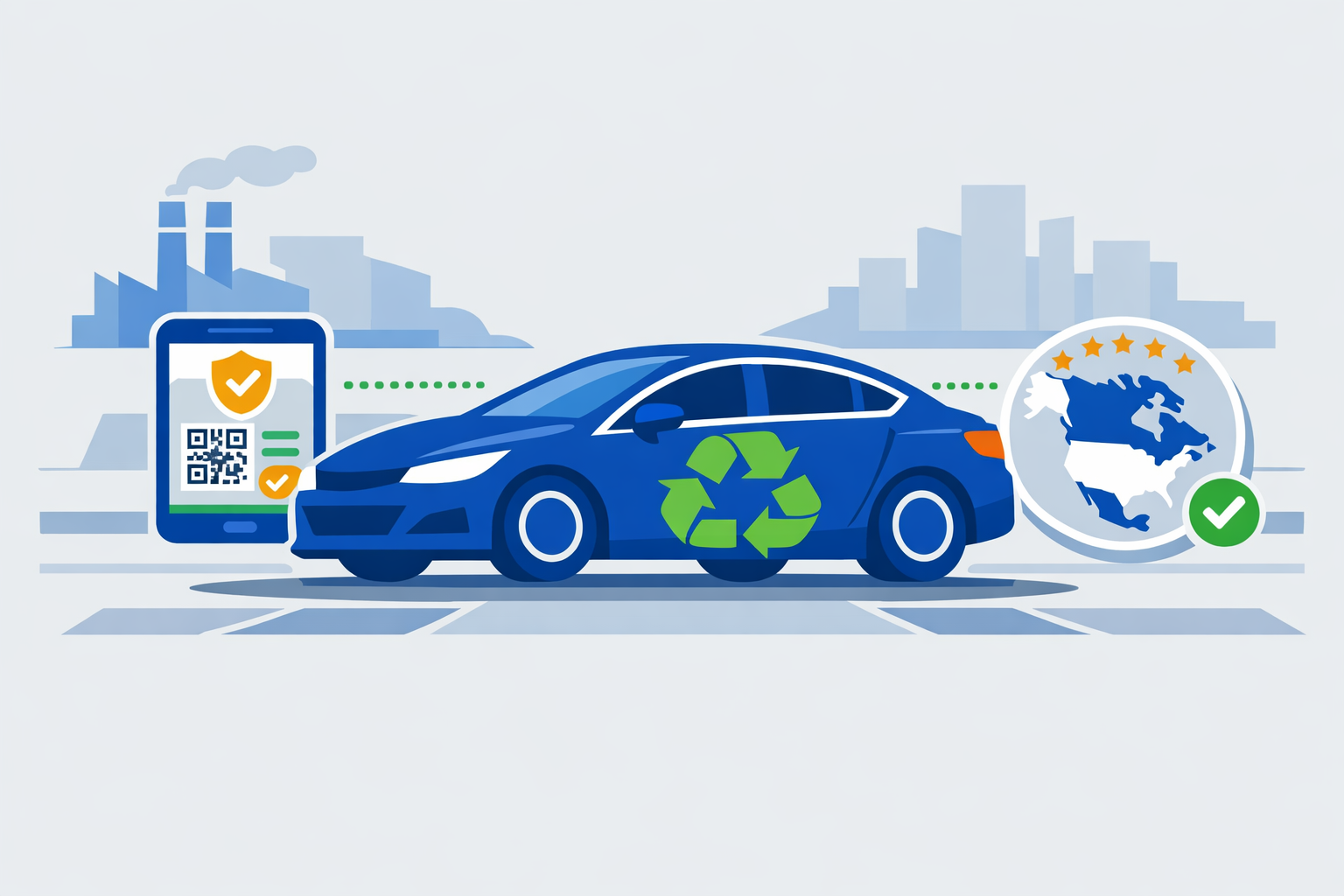
The verification framework carries direct consequences for cross-border procurement. Recycled materials may originate from non-EU countries, provided production facilities undergo audits conducted by independent third parties. This condition places equivalent compliance obligations on suppliers in North America, Asia, and elsewhere seeking to supply recycled polyolefins and polyamides to EU-market vehicles.
Suppliers unable to demonstrate material composition and recyclability data face exclusion from automotive supply chains. The regulation's traceability demands are compounded by parallel EU frameworks: digital vehicle passports are required to improve traceability and transparency across the value chain, linking material declarations from resin producers to Tier-1 suppliers and OEMs.
Demand projections underscore the scale of the task. Recycled content mandates are expected to be met primarily through recycled polyolefins. ICIS has previously estimated that 0.5 to 0.6 million tonnes of recycled polyolefins would be required by 2040, with recycled polypropylene supplying the majority, given polypropylene's prominence in automotive components. Currently, automotive-grade recycled polypropylene, polyethylene, and polyamide remain in short supply, according to IDTechEx market analysis.
OEMs are already adjusting procurement strategies. Nissan and BMW have incorporated recycled content into vehicle interiors and structural components, while Stellantis and Renault are expanding closed-loop plastic recovery programs in partnership with recyclers and dismantlers. Material suppliers are also repositioning: BASF and Covestro, among others, are investing in next-generation sustainable polymers to meet growing demand for high-performance recycled materials.
The regulation also contains a safeguard mechanism. The provisional agreement allows the European Commission to delay or temporarily revise down plastic content targets "in case the lack of availability or excessive prices of specific recycled plastics make compliance with the minimum percentages of recycled content excessively difficult."
Outlook
For automotive manufacturers and suppliers, end-of-life compliance is no longer limited to dismantling and waste treatment-it increasingly demands proof of circularity through reliable material data, stronger design requirements, and auditable information across the value chain. The Commission's end-of-2026 implementing act will define the precise verification methodology; its scope is expected to govern how mass-balance accounting and third-party certification schemes are recognized for both mechanically and chemically recycled feedstocks. Achieving ELV compliance will require closer collaboration among automakers, dismantlers, material suppliers, and policymakers to advance the circularity of automotive plastics.