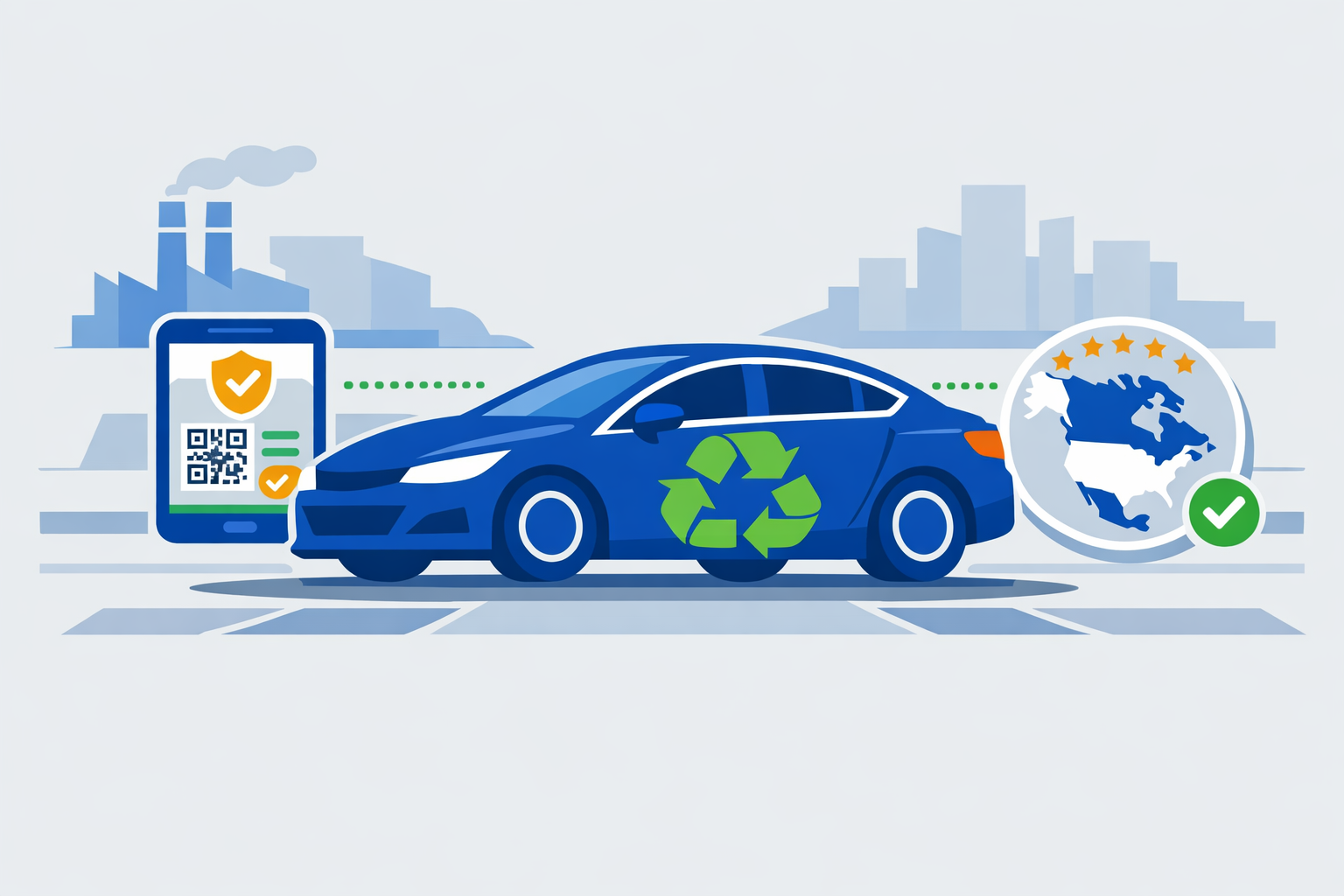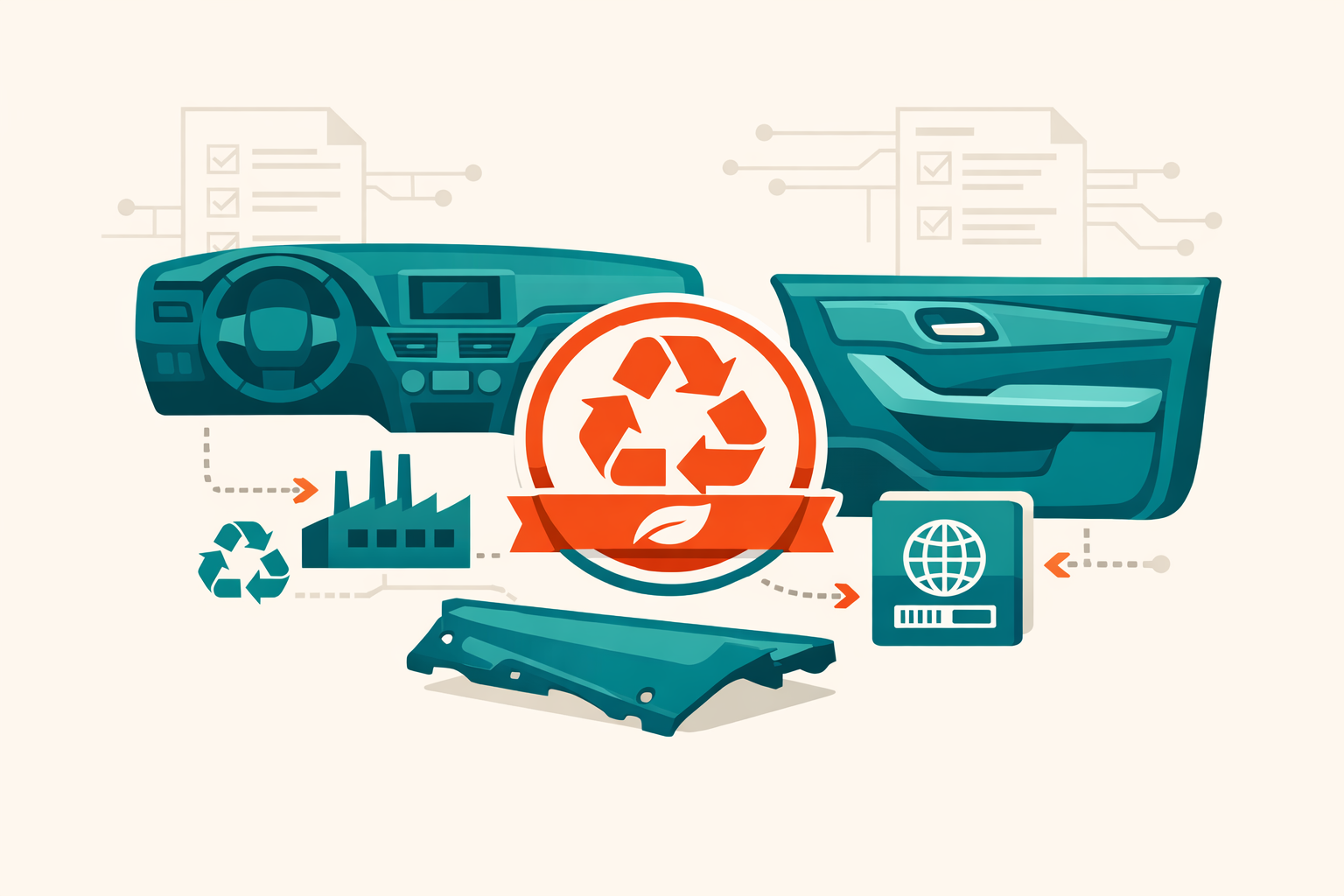
A proposed U.S. federal rule mandating post-consumer recycled (PCR) content in light-vehicle plastic components-including interior trim-is advancing toward finalization. The measure would force automakers and their Tier 1-2 supplier networks to prepare for phased compliance obligations, expanded material traceability requirements, and tightened reporting standards. Under development within a broader federal sustainability framework, the rule would mark the first federal mandate specifically targeting recycled polymer content in passenger vehicle components, building on earlier procurement guidelines covering remanufactured automotive parts.
Background
The U.S. proposal extends the federal government's existing EPA Comprehensive Procurement Guidelines, which have historically addressed recycled content in narrow categories such as rebuilt vehicular parts and coolants. The new measure targets structural and non-structural polymer components-dashboards, door panels, seat-back structures, and under-hood covers-that collectively account for a significant share of the roughly 10 million tons of plastics consumed annually by the global automotive industry.
The regulatory push mirrors legislative momentum already underway in Europe. A provisional EU agreement on End-of-Life Vehicle (ELV) regulation mandates that new vehicles incorporate at least 15% recycled plastic within six years of enactment, rising to 25% within ten years, with a minimum of 20% sourced through closed-loop recycling of ELV-derived material. The EU framework also introduces mandatory digital product passports requiring embedded polymer-type data, additive declarations, and end-of-life handling instructions-setting a traceability benchmark U.S. regulators are expected to reference.
Domestically, PCR content mandates for plastic packaging are already in effect in at least five U.S. states as of 2025, including California, Washington, and New Jersey. This precedent for minimum-content legislation is now migrating toward durable goods such as vehicles.
Details
The global post-consumer recycled plastics in automotive market was valued at approximately USD 11.92 billion in 2024 and is projected to reach USD 22.32 billion by 2030, representing a CAGR of 11.1%, according to Grand View Research. Interior components dominated PCR plastics applications in the automotive sector in 2024, accounting for over 60% of market value share, driven by the relative processability of recycled polypropylene (PP) and acrylonitrile butadiene styrene (ABS) for injection-molded interior parts.
Several major OEMs have announced voluntary targets that partially align with expected regulatory thresholds. Ford Motor Company pledged to use at least 20% recycled content across its vehicle lineup by 2025, while General Motors targets 50% sustainable materials in all vehicles by 2030, according to Grand View Research. Stellantis has separately committed to 40% recycled content in vehicle plastics by 2030, according to reporting in Plastics Engineering.
However, analysts caution that supply chain readiness remains uneven. According to IDTechEx research, sustainable polymer-based materials in automotive vehicles are forecast to remain below many stated OEM targets, reaching close to 18% of content by 2035-indicating a structural gap between corporate commitments and material availability. Key constraints include variable mechanical properties of PCR polymers relative to virgin grades, limited domestic supply of automotive-grade recycled resin, and the absence of uniform national certification standards for PCR feedstock.
North America's infrastructure for plastic waste collection and recycling is comparatively mature, but cost-sensitivity, the lack of uniform national mandates, and a dispersed manufacturing base pose challenges to consistent PCR integration across Tier 1 and Tier 2 supplier networks, according to Research and Markets analysis. Tier 1 suppliers such as Faurecia (Forvia) have developed PP and ABS compounds capable of incorporating up to 50% recycled content for interior applications, according to Plastics Engineering, but widespread Tier 2 adoption of traceable PCR feedstock pipelines remains nascent.
Third-party PCR certification is increasingly embedded in compliance frameworks. The Association of Plastic Recyclers (APR) notes that third-party certification for post-consumer recycled content provides transparency and assurance, and is increasingly being incorporated into legal requirements, with reclaimers, compounders, and brand-owning manufacturers all expected to hold certifications in states where such provisions apply.
Outlook
The proposed rule is expected to follow a phased implementation schedule, with public comment and interagency review preceding final adoption. Analysts anticipate that traceability requirements-including documentation of PCR origin, polymer type, and chain-of-custody certification across Tier 1-2 networks-will pose the most operationally complex compliance burden for smaller suppliers. Investment in domestic mechanical recycling capacity for automotive-grade PP, ABS, and polyamide is expected to accelerate as regulatory deadlines solidify. The divergence between voluntary OEM targets and forecast material availability suggests supply-side infrastructure development will remain a critical constraint through the end of the decade.