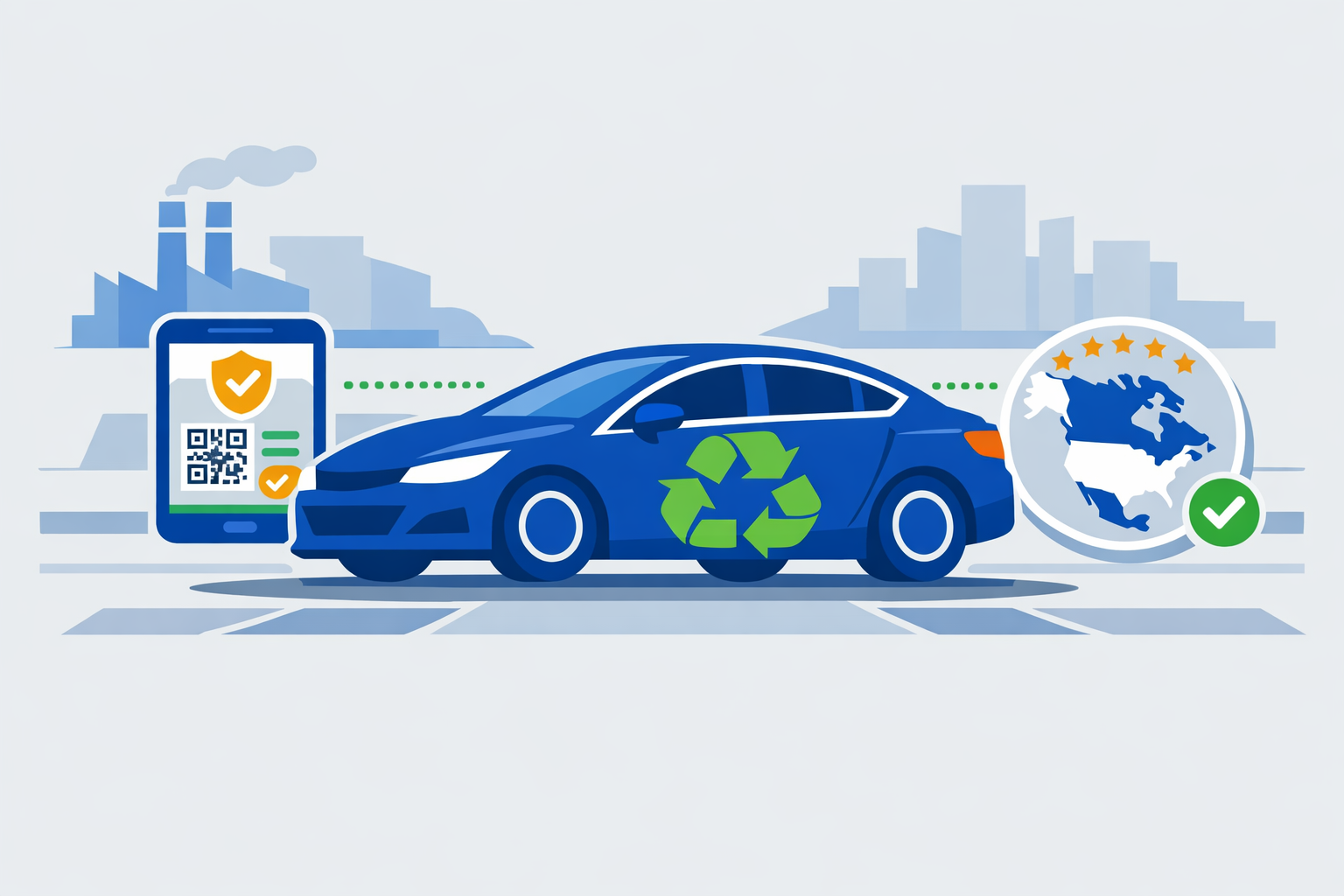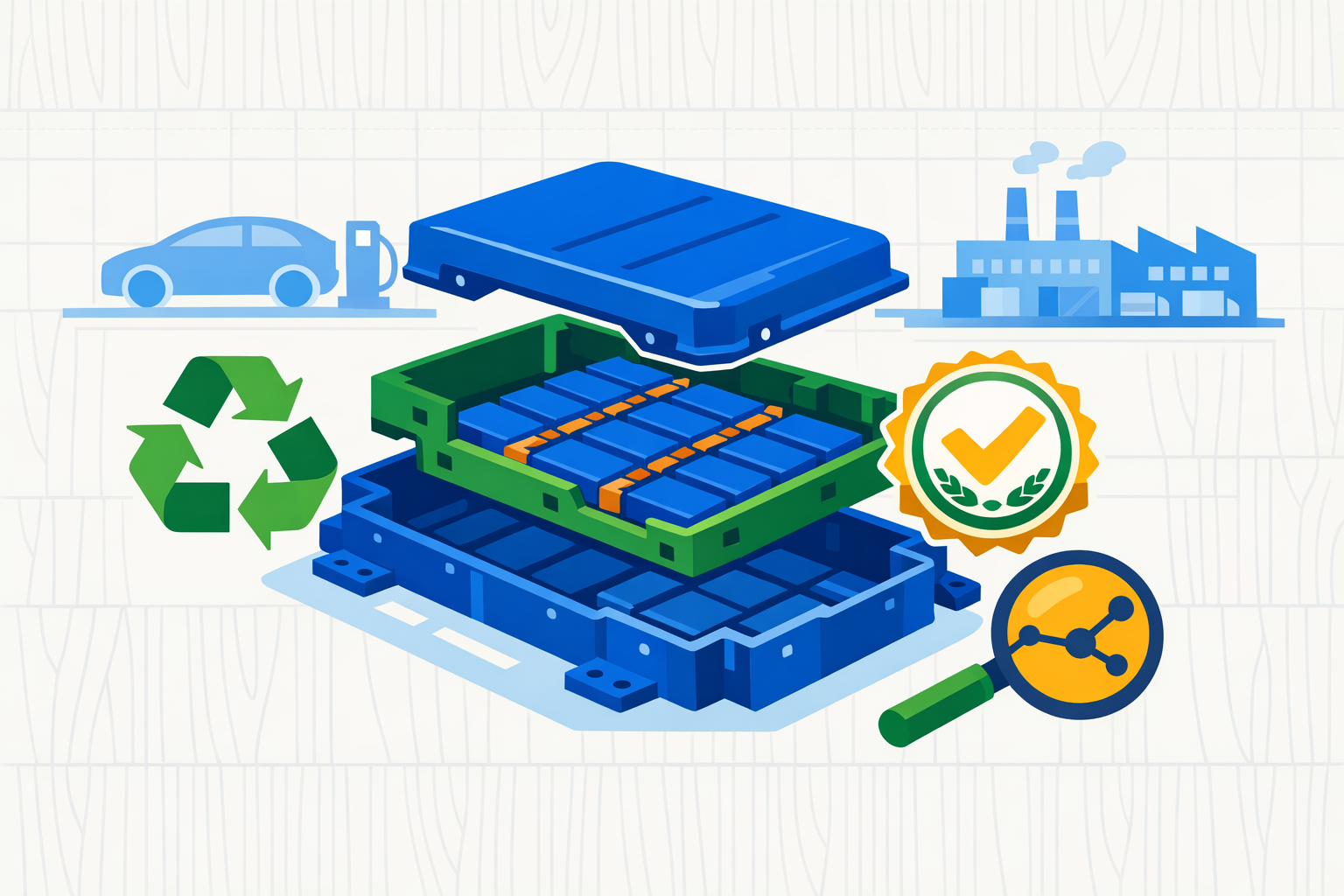
North American automakers are accelerating demands for independently certified post-consumer recycled (PCR) plastics in electric vehicle battery housings, driven by tightening state-level regulation, corporate sustainability targets, and growing investor scrutiny over supply chain traceability.
Background
The push toward certified PCR in structural EV components reflects a convergence of market pressure and regulatory mandates. The global post-consumer recycled plastics in automotive market was estimated at USD 11.92 billion in 2024 and is projected to grow at a compound annual growth rate of 11.1% from 2025 to 2030, reaching approximately USD 22.32 billion by 2030.
At the state level, the regulatory framework for certified PCR content continues to expand. As of August 2025, five U.S. states have enacted laws requiring post-consumer recycled content in plastic packaging, all specifying post-consumer recycled material. Both Oregon and California cite the APR PCR Certification Program, or a comparable standard, for aspects of compliance, and additional states are likely to adopt certification requirements to ensure accountability. As of August 2025, Canada has not set recycled content minimums for plastic products.
European precedent is also shaping OEM strategy. Automakers operating across North America and Europe face the EU's End-of-Life Vehicles framework, which targets mandatory recycled plastic content in new vehicles and is pushing global OEMs to develop unified sourcing standards rather than market-by-market approaches.
Details
Major North American automakers including Ford and GM have set sustainability commitments. Ford has pledged to use at least 20% recycled plastic content across its vehicle lineup by 2025, while GM aims for 50% sustainable materials in all vehicles by 2030. For battery housings specifically, manufacturers are integrating PCR-based polypropylene, ABS, and engineering plastic blends into housings, covers, and structural frames to reduce dependence on virgin plastics while meeting strength, impact resistance, and dimensional stability requirements. This shift is particularly pronounced in EV battery packs, where enclosure volumes are large and material efficiency is a priority.
Most EV batteries for light vehicle use now contain 50% more plastic than they did 10 years ago, according to Performance Plastics VP of Sales and Marketing Rich Reed. Enclosure suppliers are forming direct sourcing arrangements with recyclers and compounders to secure consistent PCR material quality and supply reliability, helping manage feedstock variability and support high-volume production.
On the certification side, the APR PCR Certification program, established by the Association of Plastic Recyclers (APR), is a rigorous, ISO-accredited third-party auditing program that brings transparency to the PCR market and supports a reliable supply chain for recycled materials. Since its launch in 2021, APR PCR Certification has been awarded to more than 35 plastic recyclers, covering an estimated 30% or more of post-consumer PET, PP, HDPE, and LDPE/LLDPE produced in North America.[1] The APR PCR Certification Program requires that certified pellet or flake contain a minimum of 90% post-consumer plastic material, with traceability verified through ISO chain-of-custody standards. Certification costs vary based on the number of products and sites audited, starting at approximately $5,000 USD.
Suppliers seeking to enter the EV battery housing segment face additional technical hurdles beyond certification cost. PCR materials must meet stringent automotive standards for durability, strength, and safety, and property variability in recycled feedstocks remains a challenge for structural applications requiring consistent impact resistance and dimensional precision. The growing adoption of post-consumer resin is set against a backdrop of increasing public mistrust and a frequent lack of clarity; emerging traceability tools aim to provide transparency and build trust with supply chain partners.
Cross-border harmonization is also under development. APR developed its official PCR certification scheme based on ISO chain-of-custody and traceability standards, written in coordination with EU RecyClass's Audit Scheme for Recycled Plastics Traceability-a step toward aligning U.S., Canadian, and Mexican supply chain documentation requirements for OEMs sourcing across USMCA borders. Competitive differentiation among material suppliers increasingly hinges on compliance certifications, supply chain transparency, and proprietary material formulations.
The American Chemistry Council has called on automotive OEMs to embed recycled content standards directly into their material certification processes, noting that such standards should include allowances for certain additives and trace chemicals in durable goods eligible for recycling, providing a policy "on-ramp" for durable automotive plastics recycling.
Outlook
Regulatory developments in carbon disclosure and circular economy targets are expected to further accelerate PCR material adoption, with manufacturers likely to integrate digital tracking systems for transparent documentation of recycled content and environmental impact metrics. OEMs and Tier-1 suppliers are expected to increase capital allocation for testing, validation, and certification as incoming model programs incorporate PCR content requirements for battery enclosures. The absence of a harmonized federal mandate in North America-contrasting with the EU's phased targets-means OEM-driven certification requirements are likely to set the de facto standard for the region in the near term.
Related coverage: US Proposes Federal Recycled Content Rule for Auto Plastics