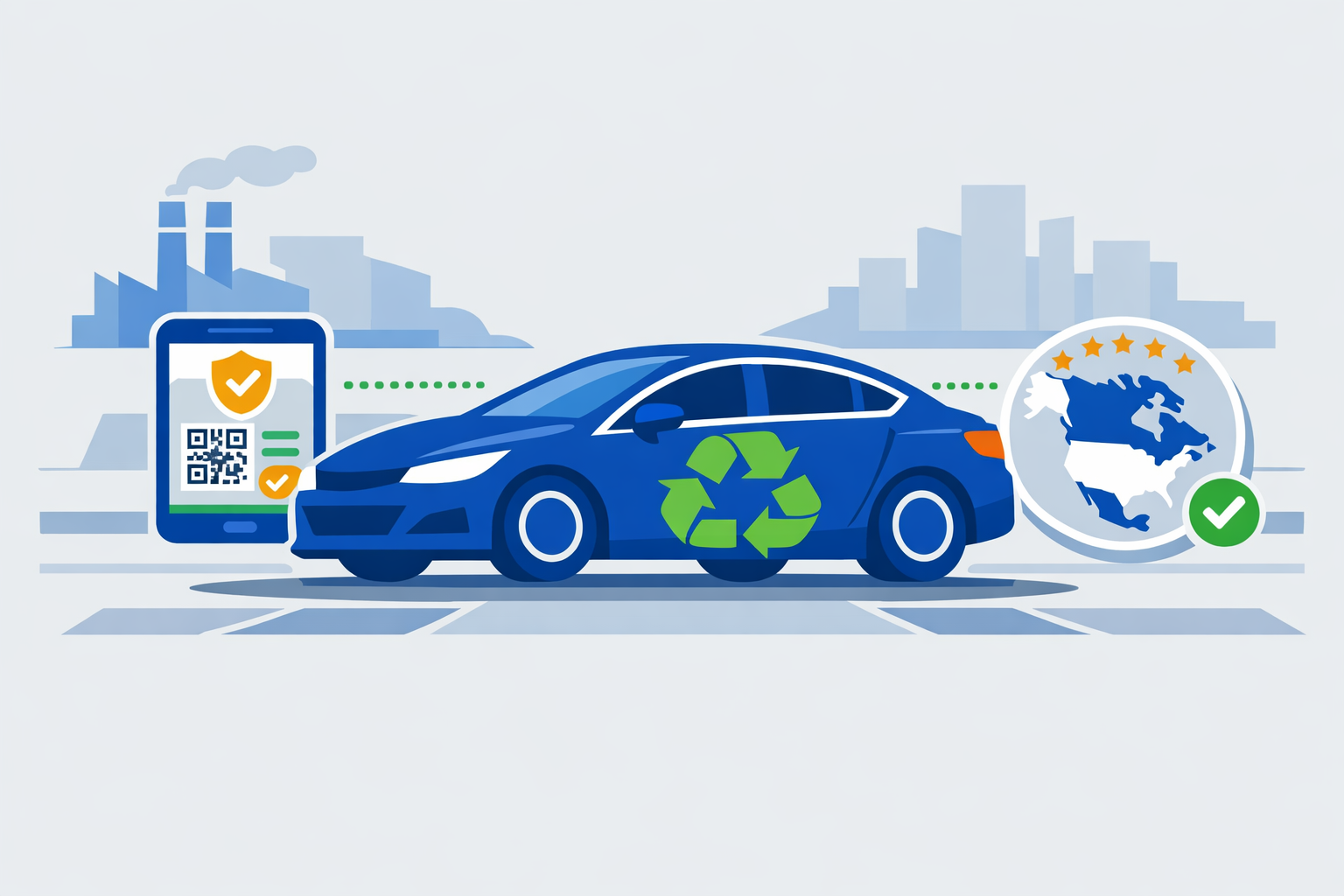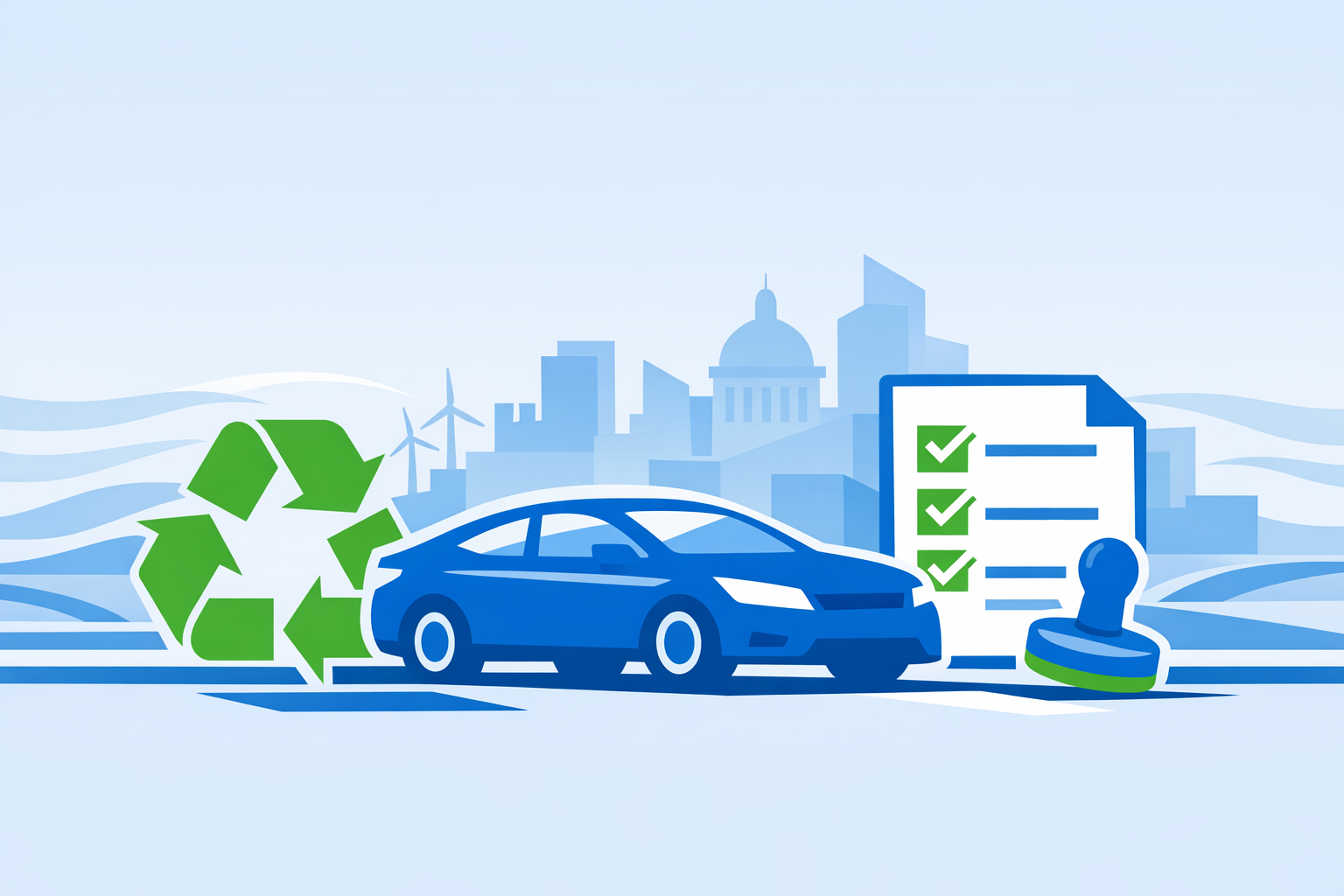
The European Commission must publish binding implementing acts establishing how recycled plastic content in new vehicles is calculated, verified, and certified-including through third-party audit-by 31 December 2026, a hard regulatory milestone embedded in the EU's incoming End-of-Life Vehicles (ELV) Regulation. The deadline marks the point at which commercially unverifiable sustainability claims give way to enforceable audit trails across the automotive supply chain, placing Tier 1 and Tier 2 polymer suppliers directly in scope of formal compliance obligations for the first time.
Background
The EU's original ELV Directive, in force since 2000, focused primarily on collection, dismantling, and end-of-life treatment, with little attention to pre-production material composition. The European Commission launched a formal review of the Directive in 2021, resulting in a legislative proposal for a full regulation in 2023. The shift from directive to regulation is legally significant: under the new regulation, rules apply uniformly across all 27 EU member states, eliminating the national transposition flexibility that previously allowed fragmented compliance environments to persist.
A provisional political agreement between the European Parliament and the Council was reached in December 2025, and the compromise text was published in February 2026, marking the final legislative stage before formal adoption. The regulation will enter into application two years after its entry into force, with phased recycled content targets following over the subsequent decade. Currently, only 19% of plastics from end-of-life vehicles is recycled, and the automotive manufacturing sector consumes approximately 6 million tonnes of plastics per year-almost entirely from virgin feedstock.
Details
The regulation introduces phased mandatory targets: a minimum of 15% recycled plastic content in new vehicles is required six years after entry into force, rising to 25% ten years after entry into force. At least 20% of the recycled content at each threshold must be sourced from end-of-life vehicles through closed-loop recycling-equating to 3% of total plastic mass at the six-year mark and 5% at the ten-year mark. The mandates apply to passenger cars, light commercial vans, regular heavy-duty vehicles, motorcycles, and special purpose vehicles, with an exemption for small-volume manufacturers of heavy-duty special purpose vehicles.
The verification framework is the critical near-term obligation. According to the regulation's official text, by 31 December 2026, the Commission shall adopt implementing acts establishing the methodology for the calculation and verification of the percentage of recycled content recovered from post-consumer plastic waste, along with the format for required technical documentation. The methodology may include the obligation to carry out independent third-party audits on manufacturers of recycled content, directly implicating compounders, recyclers, and material converters in the audit chain.
For Tier 1 suppliers, this creates a documentation challenge of significant scale. According to compliance analysts at Acquis Compliance, most supplier networks are not prepared for this level of structured, auditable data exchange, and existing processes relying on email, spreadsheets, and unstructured PDFs risk version drift and audit failure. The digital vehicle passport-a new requirement under the regulation-transforms compliance from a periodic reporting exercise into a continuous data obligation, requiring granular material provenance data to be maintained and retrievable across the supply chain lifecycle.
ICIS Plastics Recycling Analyst Mia McLachlan noted that "recycled content mandates are expected to be met primarily through recycled polyolefins, supported by the wider availability of suitable waste feedstocks compared with other polymers used in the automotive sector." ICIS separately estimated that between 0.5 and 0.6 million tonnes of recycled polyolefins would be required by 2040 to satisfy automotive demand, with recycled polypropylene supplying the majority, given its prevalence in interior and structural trim components. Chemical recycling has been approved as a compliance pathway under the provisional agreement, while bio-based plastics and tire elastomers remain under a separate Commission review due within 72 months of entry into force.
The regulation also strengthens Extended Producer Responsibility (EPR) requirements. Harmonised national EPR schemes will be required to ensure proper financing of ELV waste treatment and promote higher-quality recycling, with enforcement reinforced through additional inspections and a clearer legal distinction between used vehicles and end-of-life vehicles.
Outlook
The Commission retains a safeguard mechanism: targets may be delayed or temporarily revised downward if lack of availability or excessive prices of specific recycled plastics make compliance excessively difficult. Environmental groups, including the European Environmental Bureau, have criticized the negotiated reduction from an initial 25% target to a phased-in 15% as a concession to automotive industry lobbying. Plastics Europe Senior Policy Manager John Mortell noted that the proposal is "a key one for helping plastics transition away from a solely linear economy" and called for coherent policy to unlock circularity at industrial scale. Feasibility studies for recycled steel and aluminium content targets are underway in parallel, with separate legislative proposals expected to follow.