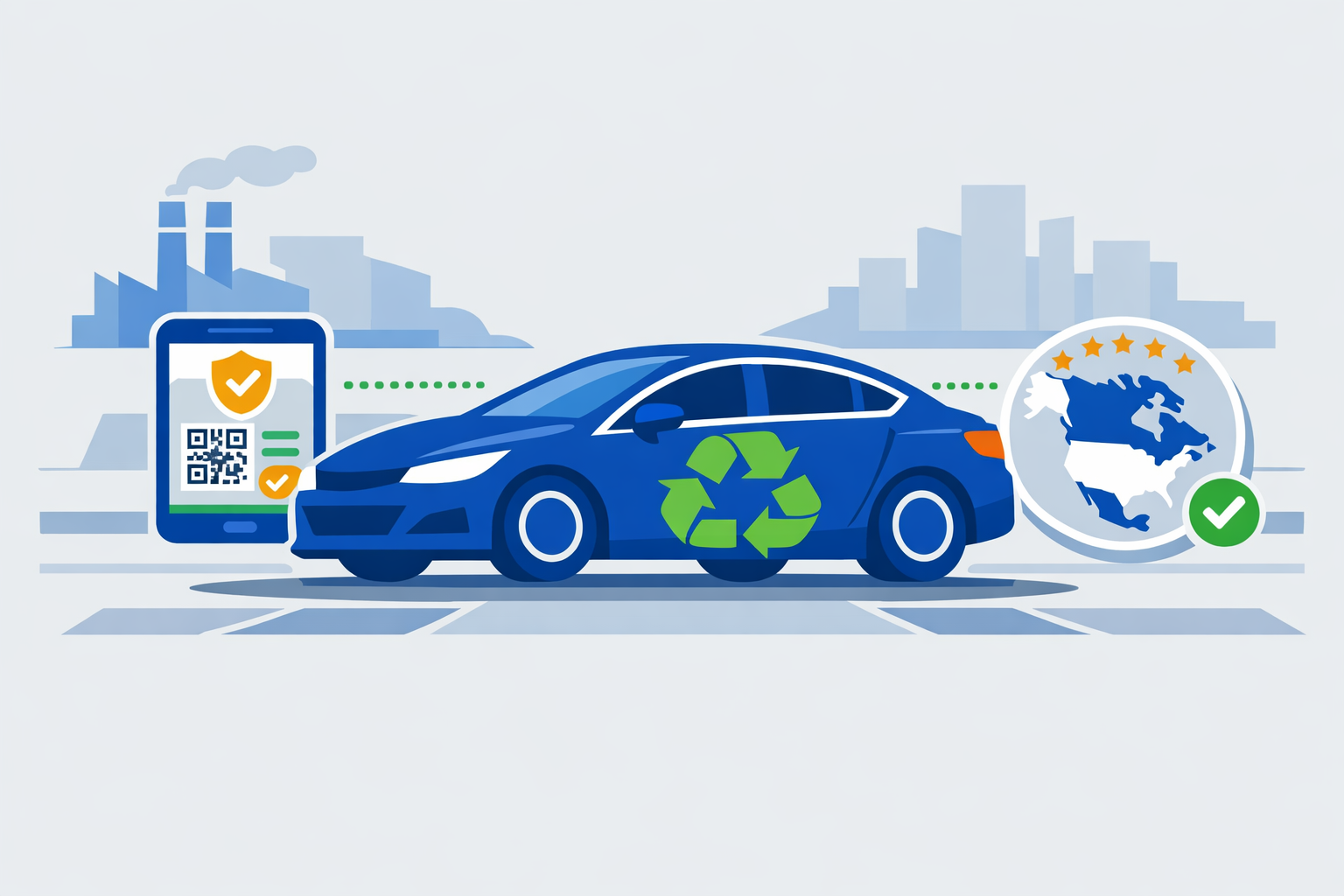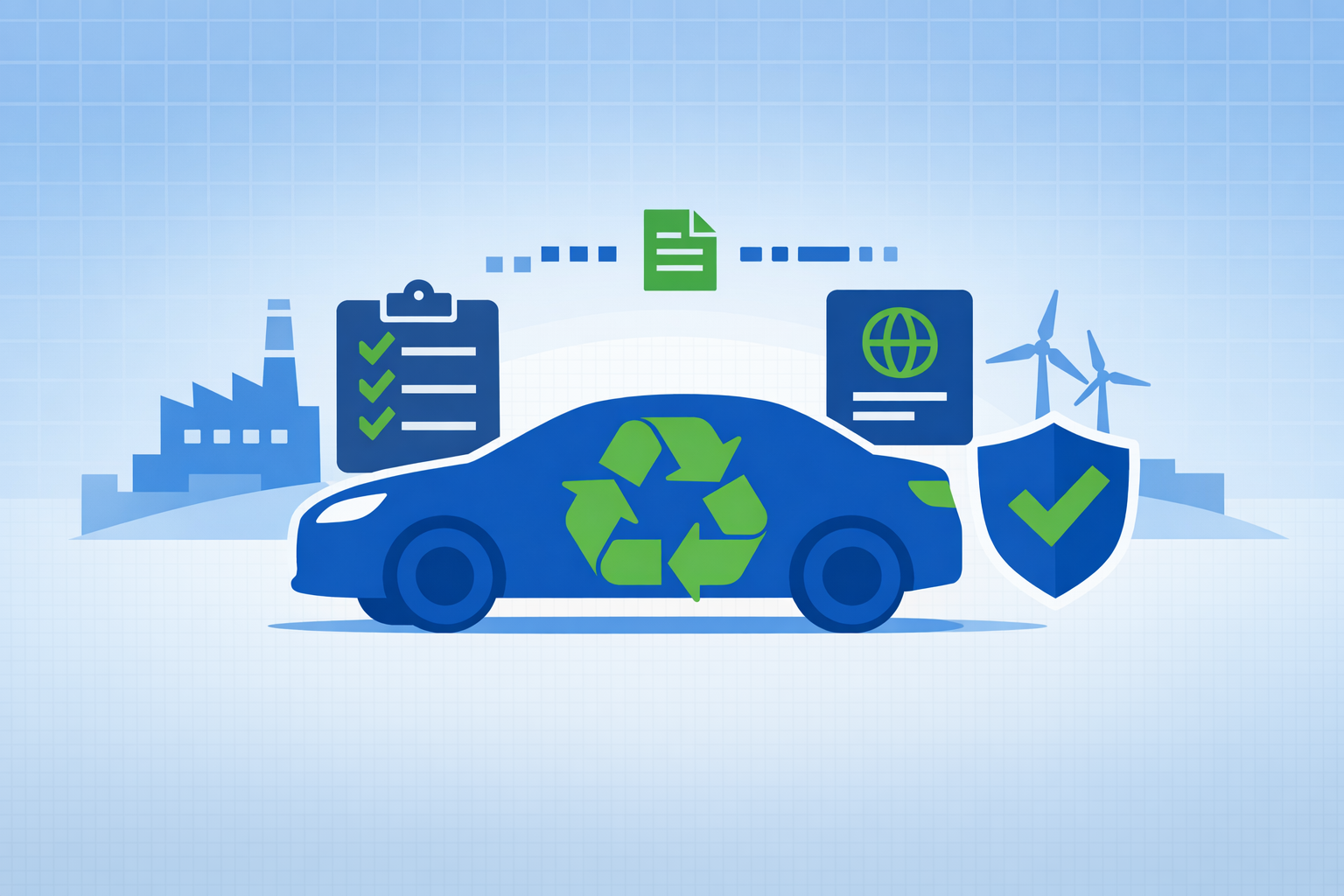
The European Union has established a binding end-of-2026 deadline for adopting the official methodology to calculate and verify recycled plastic content in new vehicles, a cornerstone requirement of the forthcoming End-of-Life Vehicles Regulation (ELVR) that will compel automakers and their supply chains to demonstrate post-consumer recycled (PCR) content with auditable precision.
EU institutions reached a political agreement in December 2025, and the compromise text was published in February 2026. The shift from an ELV Directive to a directly applicable ELV Regulation reflects a broader policy move from end-of-life waste management toward lifecycle-based circularity. Under the former directive, member states had to implement rules nationally; under the new regulation, they apply more uniformly across the EU, reducing fragmentation and improving legal clarity for manufacturers and treatment operators alike.
Background
The regulation replaces two existing EU directives that governed vehicle recyclability and end-of-life treatment since 2000, a framework critics argued had failed to drive meaningful uptake of secondary plastics in automotive production. Around 80% of the recycled plastic used in new vehicles today originates from pre-consumer industrial scrap, and only approximately 109,000 tonnes of post-consumer recycled plastic from end-of-life vehicles make their way into car manufacturing in the EU each year - roughly the plastic content of one million cars. Stakeholders report that just 19% of plastic from ELVs is actually recycled, with 40% going to energy recovery and 41% to landfill.
The automotive manufacturing industry is among the largest consumers of primary raw materials in the EU, consuming over 7 million tonnes of steel and around 2 million tonnes of aluminium per year, while making little use of recycled materials. The sector also accounts for 10% of overall EU plastic consumption - approximately 6 million tonnes per year.
Details
The regulation introduces phased mandatory targets for recycled plastic content in new vehicles. A minimum of 15% recycled content is required six years after the regulation enters into force, rising to 25% after ten years; at least 20% of these recycled content volumes must be sourced from end-of-life vehicles, equating to 3% of total vehicle plastic after six years and 5% after ten. The mandates apply to passenger cars, light commercial vans, regular heavy-duty vehicles, motorcycles, and special purpose vehicles.
Central to the regulation is the verification framework. By 31 December 2026, the Commission must adopt implementing acts establishing the methodology for the calculation and verification of the percentage of recycled content recovered from post-consumer plastic waste. The verification methodology may include the obligation to carry out independent third-party audits on manufacturers of recycled content to ensure that stipulated conditions are met.
The European Parliament has requested that the Commission develop a standardized method for calculating and verifying recyclate content in plastics, specifying that this methodology must take into account the best available recycling technologies, including chemical recycling. The regulation also highlights the potential role of digital product passports in improving the traceability and verification of recycled plastics in vehicle manufacturing.
On the materials side, industry analysts point to recycled polyolefins as the likely primary compliance route. According to ICIS Plastics Recycling Analyst Mia McLachlan, "recycled content mandates are expected to be met primarily through recycled polyolefins," with ICIS estimating that 0.5 to 0.6 million tonnes of recycled polyolefins would be required by 2040, the majority supplied by recycled polypropylene.
Supply chain readiness remains a significant concern. One of the primary challenges in meeting ELV targets is the limited availability of high-quality recycled plastics suitable for automotive applications; automotive-grade recycled polypropylene, polyethylene, and polyamide remain in short supply, and most plastics from scrapped vehicles are currently either downcycled into non-automotive applications or incinerated. Verification and certification are key to traceability and compliance, but fragmented implementation rules across member states could lead to complexity.
The provisional agreement also allows the European Commission to delay or temporarily revise down plastic content targets "in case the lack of availability or excessive prices of specific recycled plastics make compliance with the minimum percentages of recycled content excessively difficult."
Some automakers and suppliers are already making progress: Nissan and BMW have incorporated recycled content into vehicle interiors and structural components, while Stellantis and Renault are expanding closed-loop plastic recovery programs in partnership with recyclers and dismantlers.
Outlook
The provisional agreement must still be endorsed by the Council and Parliament before formal adoption, after which the regulation will start applying two years after its entry into force. The Commission has indicated that the calculation methodology being developed for automotive applications will serve as a model for future recycled content rules in other sectors, including packaging and textiles. According to IDTechEx, the ability of automakers to comply with the new targets will ultimately depend on supply chain collaboration, investment in recycling technologies, and regulatory flexibility in the coming years.