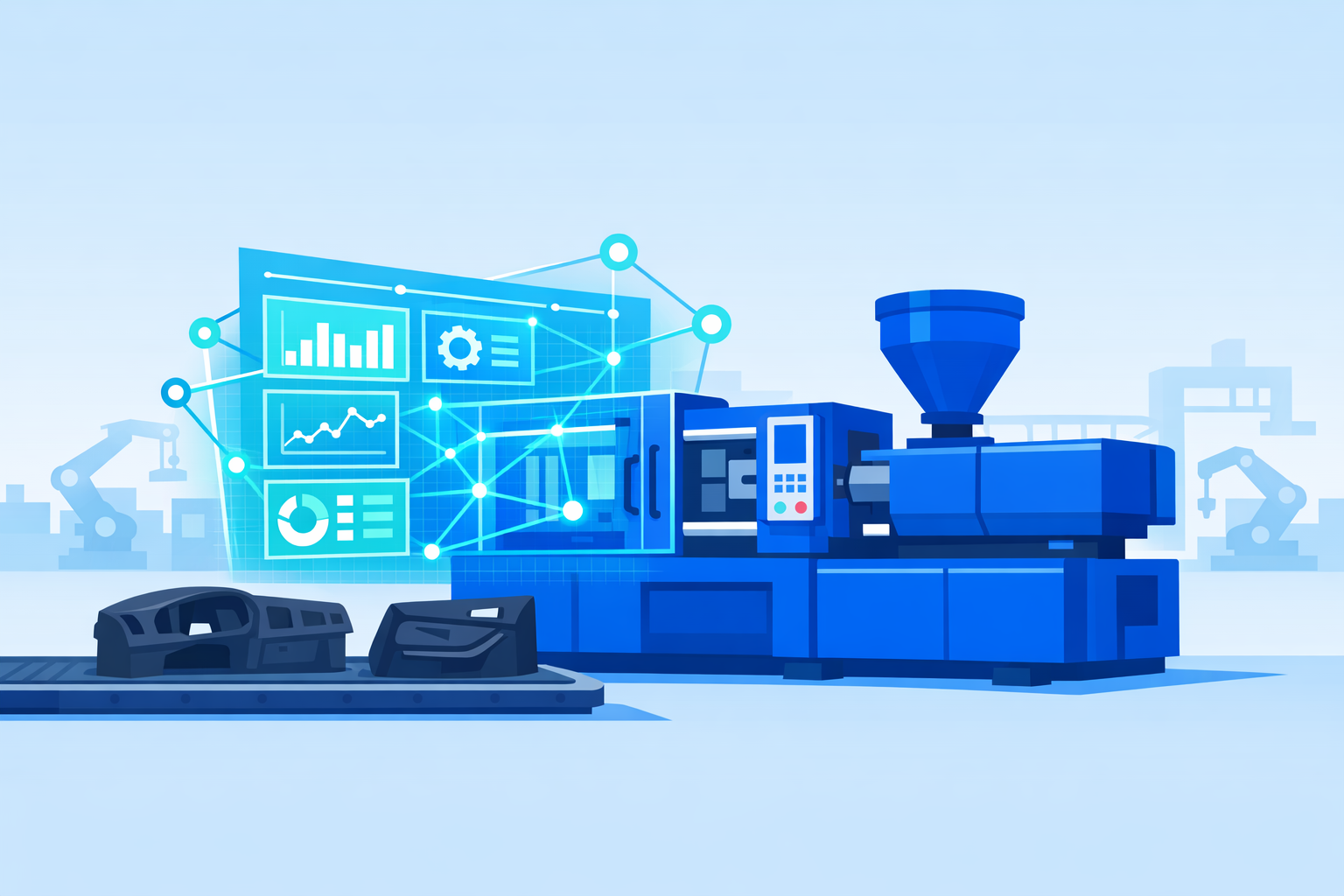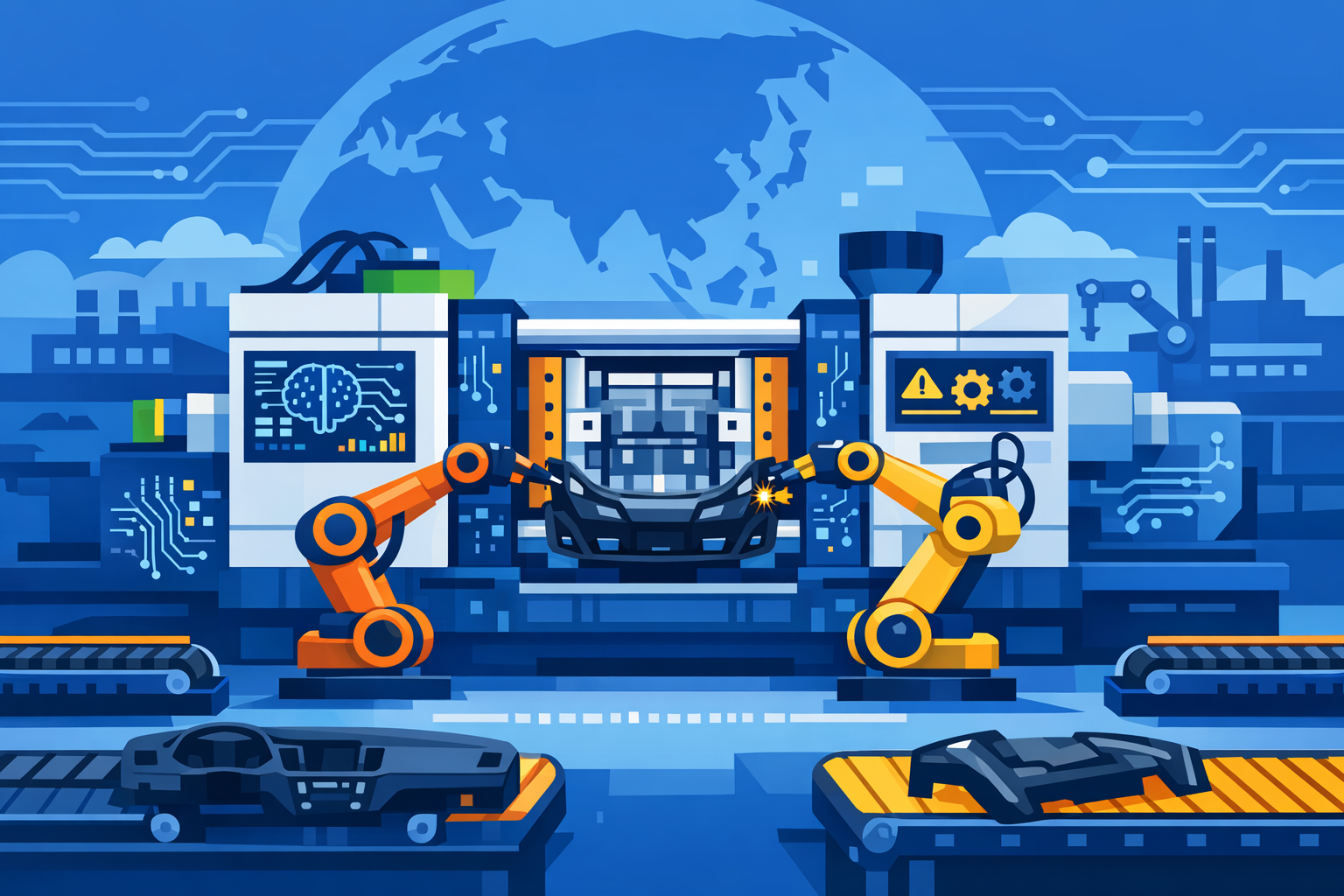
Capacities for AI-enabled mega-molding and regional plant construction are redefining automotive plastics capital expenditure, with investments projected to reach USD 14 billion by 2035. The "China-Plus-One" strategy is guiding original equipment manufacturers (OEMs) and Tier 1 suppliers to diversify manufacturing operations into Southeast Asia and India, reducing reliance on China amid ongoing geopolitical and supply chain uncertainties. This transition is driving the development of localized molding ecosystems equipped with AI-driven predictive maintenance systems and high-tonnage, multi-component molding technology.
Background
This investment surge coincides with global supply chain realignment and rapid growth in electric vehicle (EV) production, which requires lightweight, intricate plastic parts. Industry forecasts estimate the global plastics injection molding machines market will reach approximately USD 14.28 billion by 2035, citing supply chain decoupling and the China-Plus-One strategy as primary factors.[1] Additionally, the automotive injection molding automation segment was valued at USD 1.73 billion in 2024 and is projected to grow at a 4.4% CAGR, driven by increasing adoption of AI, Internet of Things (IoT), and predictive analytics.[2]
Details
"Mega-molding" systems-high-tonnage, multi-component (2K/3K) machines capable of producing assemblies such as housings, seals, and lenses in a single cycle-are experiencing more than 7% CAGR.[1] These machines streamline production and promote EV lightweighting through metal-to-plastic conversion, which require materials with high temperature and abrasion resistance.[1] AI-enabled adaptive control now supports self-optimizing processes by adjusting to real-time melt viscosity fluctuations to maintain part quality, while IoT sensors enable predictive maintenance, including timely screw replacement to reduce unplanned downtimes.[1]
Significant regional investments are underway. A Chinese automotive parts producer has committed RMB 1.5 billion to a new molding and assembly facility in Nansha, while another firm is investing RMB 300 million to upgrade automotive injection lines in Guizhou, focusing on high-precision dashboards and bumpers. In Zhuzhou, a new plant aims to produce 300,000 bumpers annually using automated injection molding lines.[3] Simultaneously, regional hubs such as India are growing in prominence due to the China-Plus-One trend, supported by competitive manufacturing costs and efforts to diversify supply chains.[3]
Outlook
As global automakers continue to broaden supply networks, investment in AI-enabled, high-tonnage molding capabilities is expected to intensify over the next decade. Advanced mega-molding systems and predictive maintenance technologies are poised to become standard in automotive plastics manufacturing. These trends are likely to fuel further expansion of manufacturing plants in emerging regional hubs to address requirements for precision, energy efficiency, and supply chain resilience.