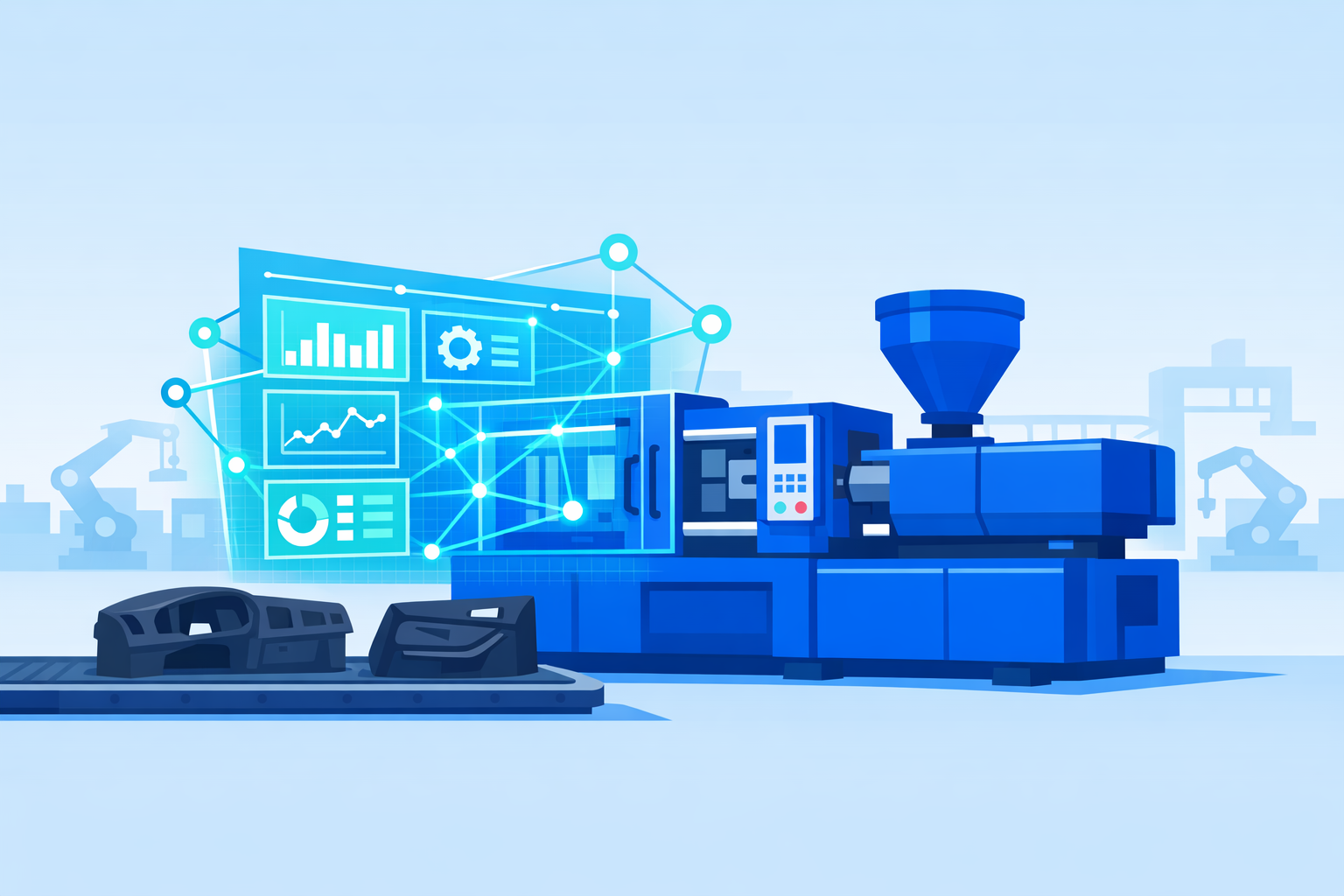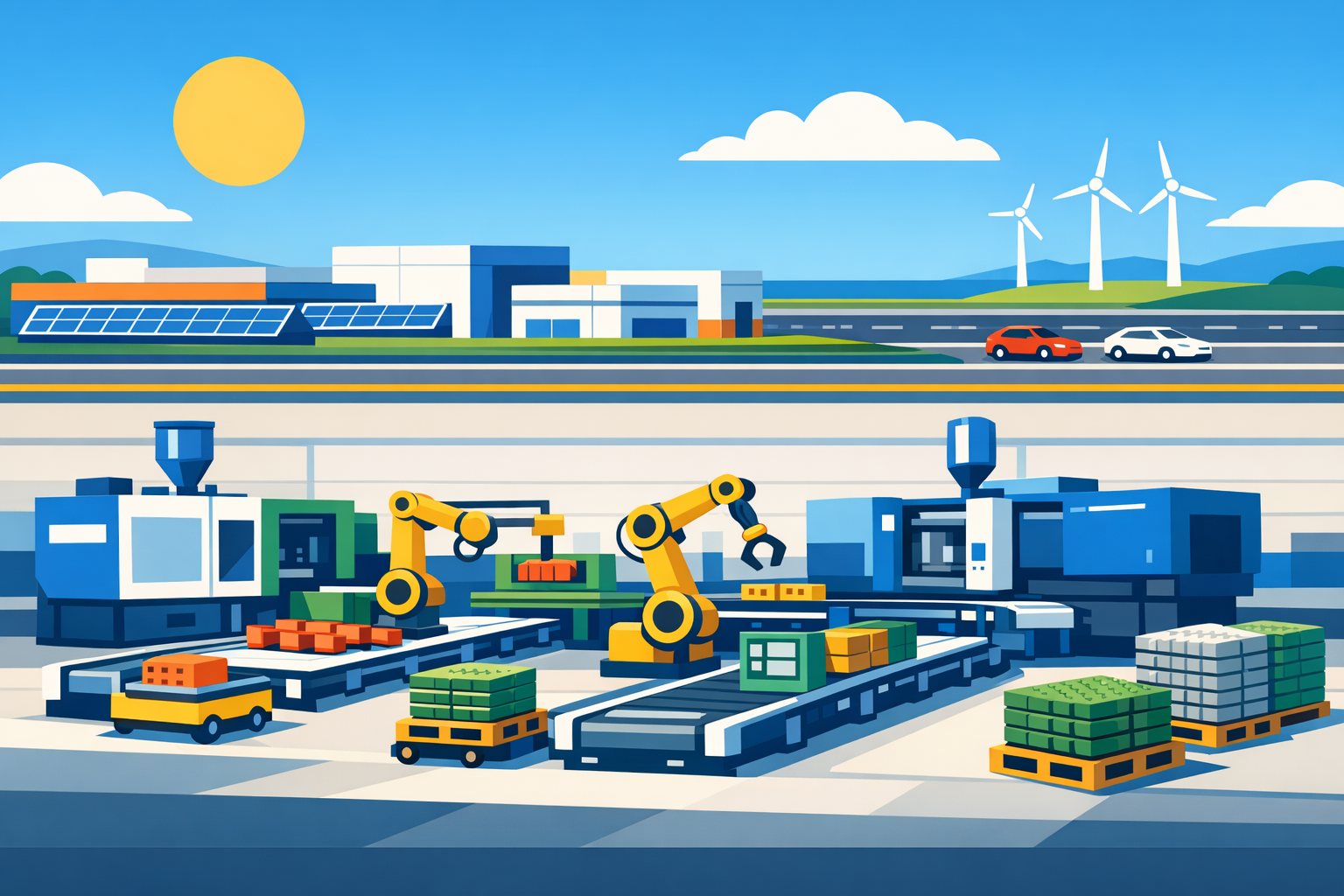
Leading U.S. plastics and injection molding companies are developing large-scale, multi-line molding campuses near electric vehicle (EV) production corridors in the Southeast and Midwest. These expansions are designed to reduce supply chain lead times, increase automation, and support greater use of recycled-content resins amid growing EV output, according to industry sources. Site selection is being shaped by regulatory incentives and shifting tariff policies, with implications for domestic job creation, supplier network restructuring, and exposure to energy costs.
Background
Reshoring in U.S. injection molding has accelerated due to supply chain disruptions, tariff fluctuations, and total-cost factors that favor proximity to original equipment manufacturers (OEMs). The U.S. injection molding machinery market was valued at $2.68 billion in 2024 and is projected to reach $4.07 billion by 2033, reflecting increased domestic capacity needs[1]. A survey conducted in early 2025 found that reshoring motivated firms 454 percent more often compared to the previous year, marking a significant strategic shift[1]. Plastics suppliers cite tariffs and supply chain instability as primary drivers for domestic reshoring[2].
Details
Firms are investing in "mega-molding hubs" with multiple high-tonnage injection molding machines and automated production lines located near major EV manufacturing centers, particularly in Michigan, Tennessee, and Georgia. These campuses feature integrated functions such as tooling, assembly, and quality testing, allowing rapid response to OEM requirements and design changes. Recycled-content resins are being incorporated to meet OEM sustainability objectives and regulatory requirements[3].
Capital investments per campus range from tens to hundreds of millions of dollars, depending on scale and automation levels, with plans to hire 200 to 500 employees per site. Workforce recruitment is a persistent challenge, as industry data indicate capacity constraints resulting from skilled labor shortages in injection molding operations[2].
Federal tax credits under the Inflation Reduction Act and state-level incentives play a significant role in location selection. Ongoing tariff uncertainty complicates landed cost projections, further encouraging domestic investment in capacity[1]. In response, OEMs are restructuring supplier networks to prioritize suppliers located closer to final assembly, aiming to reduce transportation costs, lead times, and supply risk.
Outlook
The establishment of these mega-hubs is anticipated to strengthen supply resilience for OEMs by consolidating capacity and enhancing responsiveness within EV supply chains. However, rising energy costs and resin price volatility continue to pose challenges to operational margins, particularly in energy-intensive molding processes. The long-term success of these campuses depends on securing skilled labor and managing fluctuations in input costs.
As the EV sector expands, these strategic hubs are likely to shape the future of automotive plastics supply, underscoring the U.S. molding industry's pivotal role in delivering efficient and sustainable components.