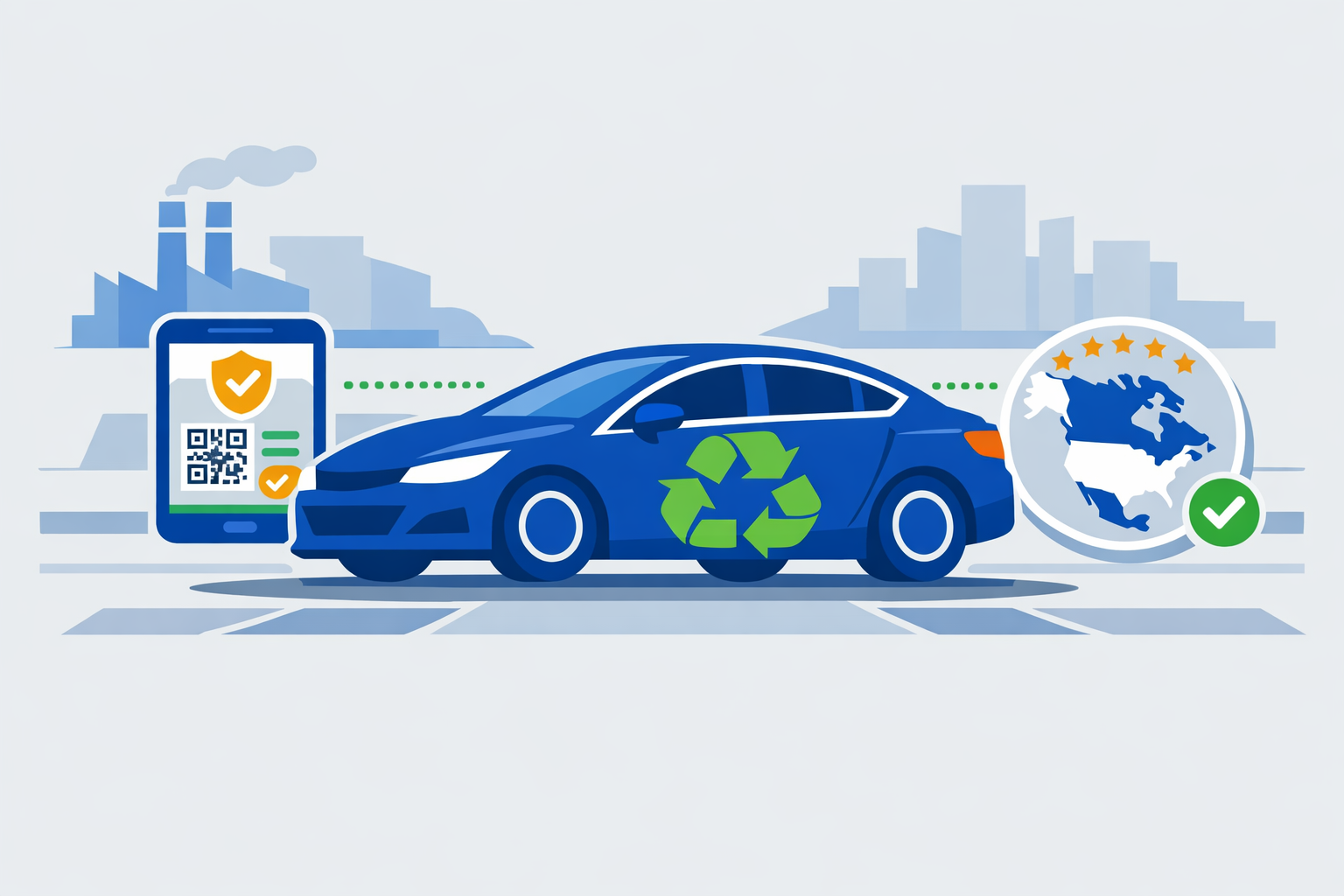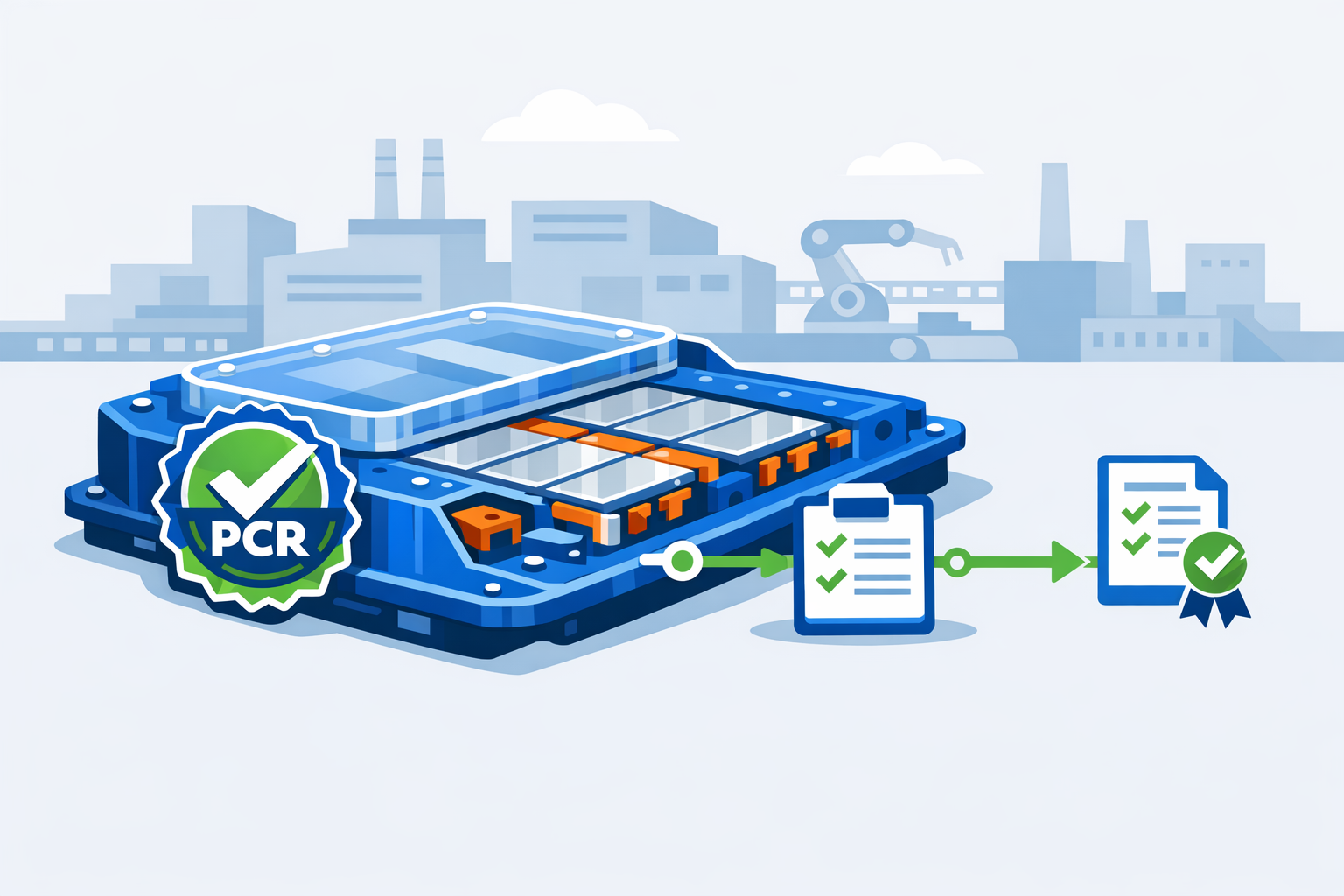
Major North American automakers are accelerating independent verification of post-consumer recycled (PCR) content in electric vehicle battery housings, driven by intensifying supply-chain scrutiny, evolving regulatory expectations, and the need to substantiate recycled-content claims across multi-tier supplier networks.
Background
The push for third-party PCR certification in battery housings reflects a broader industry shift in which supply-chain traceability and audited recycled content have become competitive differentiators-and increasingly a procurement prerequisite. The automotive industry now demands chain of custody, material declarations, and recycled-content verification. Suppliers offering audited PCR grades with certification are gaining preferred status.
EV battery housings present particular challenges for PCR adoption. OEM material and component validation cycles typically span two to four years, and large, complex structural parts require significant tooling investment. Battery housings increasingly incorporate structural fiber-reinforced plastics and flame-retardant grades for thermal performance and safety in high-voltage enclosures. Introducing PCR polymers into such performance-critical assemblies requires verified feedstock consistency-something only systematic third-party audit programs can provide.
Regulatory pressure compounds these commercial incentives. The Inflation Reduction Act (IRA) established federal and state initiatives to develop a domestic EV supply chain that includes battery housing components. To qualify for IRA tax credits of up to $7,500, a defined percentage of battery component value must be manufactured or assembled in North America, and critical minerals must be extracted, processed, or recycled within the region. Separately, a proposed U.S. federal procurement rule targets mandatory recycled-content minimums in light-vehicle plastic components, including battery enclosures, with implementation slated for 2026.
Details
Major North American automakers have set specific sustainability commitments. Ford has pledged to use at least 20% recycled content across its vehicle lineup by 2025, and GM is targeting 50% sustainable materials in all vehicles by 2030. These targets are intensifying internal pressure to ensure third-party verification of recycled content in safety-critical components-particularly battery housings, where unsubstantiated claims carry regulatory and reputational risk.
Third-party certification bodies are expanding automotive coverage to meet this demand. The Association of Plastic Recyclers (APR) PCR Certification program provides full chain-of-custody, third-party assessment verifying that recycled content comes from post-consumer sources. Companies select from approved certification bodies to audit against APR's PCR Standard, developed in coordination with EU RecyClass. The standard draws on ISO chain-of-custody and traceability requirements and is designed for global harmonization and more efficient processing for multinational companies. Recertification operates on a three-year cycle, with annual surveillance-based audits.
UL Solutions offers an alternative pathway through its UL 2809 Environmental Claim Validation Procedure. The program evaluates products against the UL 2809 standard for recycled content-covering post-consumer, pre-consumer, closed-loop, and ocean-bound plastic-and provides third-party validation of sustainability claims. TÜV SÜD collects data from recycled plastics supply-chain partners covering the origin of input waste materials, sorting practices, recycling processes, and blending, with onsite audits required to verify production practices and staff competence.
Certification marks rely on mass balance calculations combined with evaluation of manufacturers' quality management systems, covering chain of custody, traceability, material segregation, supplier qualification procedures, and non-conformance processes.
A 2025 European Commission Joint Research Centre study found that approximately 80% of recycled plastic currently used in new vehicles is pre-consumer waste generated during industrial processes-not from post-consumer sources. This finding underscores the verification challenge OEMs face in substantiating PCR claims. Only about 3% of plastic in new vehicles is currently recycled material on average, though some models reach up to 20%.
The global post-consumer recycled plastics in automotive market was estimated at USD 11.92 billion in 2024 and is projected to grow at a CAGR of 11.1% through 2030, according to Grand View Research. In North America, PCR plastics adoption in automotive is growing, driven by OEM sustainability targets and supplier readiness to provide PCR-enhanced compounds, supported by comparatively mature plastic waste collection and recycling infrastructure.
Digital transformation-including blockchain traceability for resin batches-is also being adopted to streamline material qualification and support regulatory compliance in EV plastics supply chains. Digital product passports for batteries are emerging to trace material composition, including recycled content, enhancing supply-chain transparency.
Outlook
North American PCR adoption faces headwinds including cost sensitivity, the absence of uniform national mandates, and a more dispersed manufacturing base. However, federal regulatory activity, combined with IRA compliance pressure and OEM procurement requirements, is expected to narrow those gaps.
Stellantis has committed to 40% recycled content in vehicle plastics by 2030, partnering with European recyclers for post-consumer polypropylene and polyamide compounds. The company is focusing on non-visible structural parts-including battery trays and underbody shields-with a stated requirement for full traceability and compliance. North American OEMs are expected to issue equivalent structural supplier requirements as third-party PCR certification frameworks mature and regulatory timelines firm up.