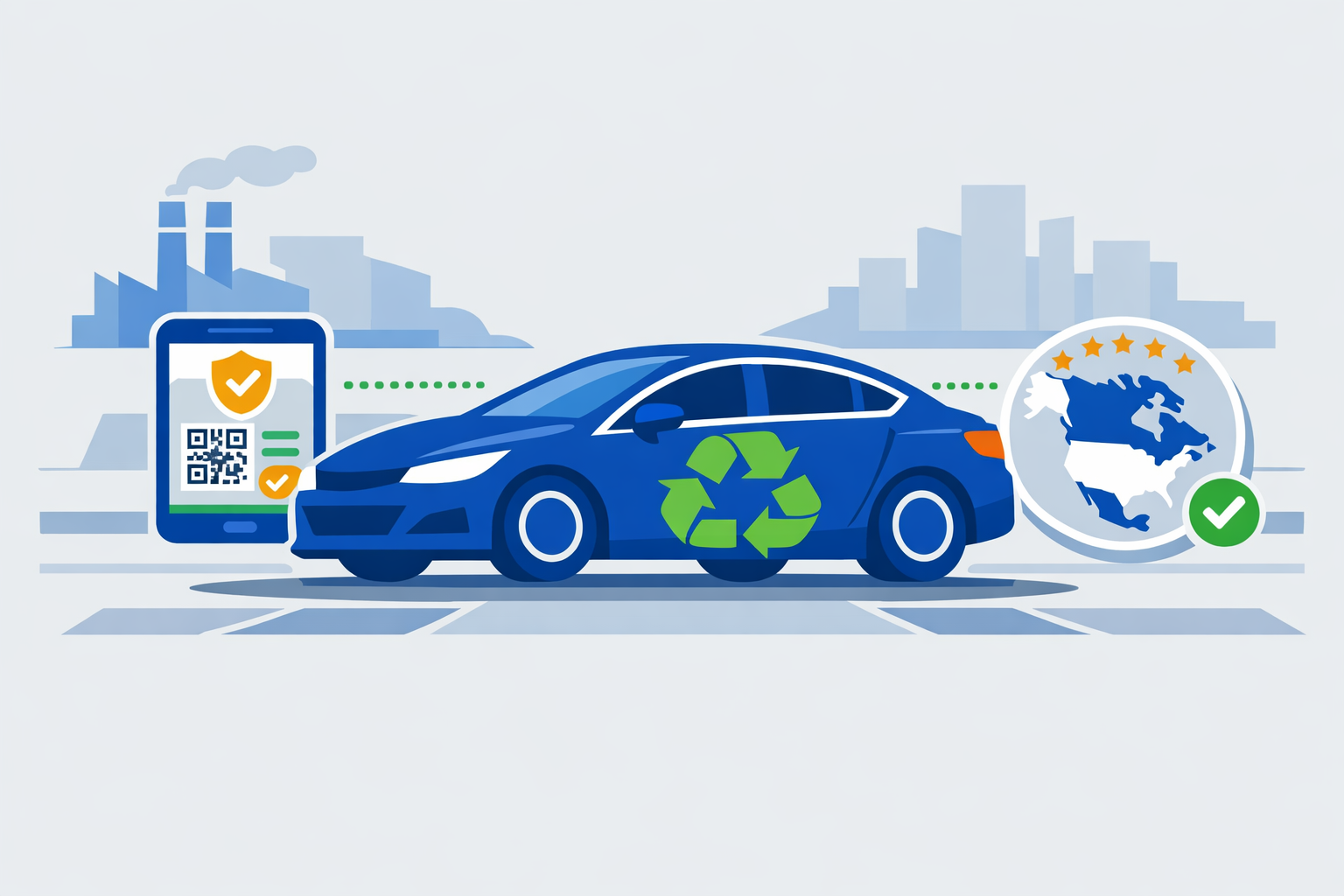
Major North American automakers are advancing a framework to require independent, third-party certification for polymer resins, composites, and sealants used in electric vehicle (EV) battery housings - a move that would fundamentally restructure material qualification across the EV supply chain. The initiative aims to standardize quality benchmarks and reduce field risk. Rollout is expected in phased increments, beginning with new EV platforms launched within the next 12 to 18 months and extending to legacy models as certifications are renewed.
Background
Battery housing has become a critical design element as automotive OEMs work to ensure vehicle safety and structural integrity while reducing weight. Protective battery enclosures and covers are widely regarded as one of the largest potential growth areas for composite materials in the automotive market. Battery electric vehicle (BEV) batteries are larger and heavier than those in internal combustion engine vehicles and require robust protection against hazards such as leakage and thermal runaway.
Interest is growing among OEMs and battery module producers in using composite materials for battery enclosures - the covers and trays that hold and protect frames and battery cells. By replacing traditional metal enclosures with carbon fiber or glass fiber-reinforced polymers, automakers can achieve weight reductions of up to 40%, directly extending vehicle range. However, the field remains new enough that adequate screening methods for battery enclosure materials do not yet universally exist, according to Amanda Nummy, senior polymer materials engineer at Hyundai-Kia America Technical Center.
The Inflation Reduction Act has spurred both state and federal initiatives to develop a domestic EV supply chain that includes battery housing components, creating additional regulatory pressure on material qualification processes.
Details
The proposed certification framework would require accredited laboratories to independently verify that materials used in battery enclosures meet predefined performance specifications. Automakers have described the approach as risk-based rather than prescriptive, with testing focused on real-world thermal cycles and crash scenarios to preserve flexibility for material innovation.
The most established independent test protocol in this space is UL 2596, the Test Method for Thermal and Mechanical Performance of Battery Enclosure Materials, which uses a thermal runaway box method to evaluate enclosure performance. UL Solutions' Battery Enclosure Thermal Runaway (BETR) evaluation applies UL 2596 to help material manufacturers, suppliers, and OEMs select battery enclosure materials with greater confidence. The methodology evaluates material performance by simulating a thermal runaway scenario, testing material plaques rather than entire battery assemblies to reduce costs and development time for resin manufacturers and material suppliers.
Industry precedents for this type of verification are already emerging. SABIC's Stamax 30YH570, a 30% glass fiber-reinforced polypropylene copolymer resin, became the first polymer used in EV battery systems to receive UL Verification for marketing claims of thermal and mechanical performance, earning the UL Verified Mark in 2023 based on testing under UL 2596. UL Verification, grounded in objective, scientific assessment by a respected third party, can provide customers with high confidence in a material's flame delay performance.
Evolving safety standards are prompting more stringent crashworthiness and thermal insulation requirements, spurring collaborative programs between OEMs, material suppliers, and research institutions to validate novel composite formulations under accelerated aging and crash scenarios. At the infrastructure level, Henkel has opened its new North America Battery Application Center in Madison Heights, Michigan, strengthening regional support for OEMs and battery manufacturers with advanced material application capabilities for EV components.
The certification process for composite battery enclosures currently requires 18 to 24 months for automotive applications, according to market research - a timeline that critics argue will increase costs and slow the onboarding of new battery designs as chemistries evolve. The composites industry also faces concentrated supply risks: over 65% of global carbon fiber production is controlled by five manufacturers, and recent geopolitical tensions have exposed vulnerabilities in precursor material supply chains.
Industry analysts note that mandatory certification could drive downstream suppliers to consolidate around a smaller set of certified materials. Sustainability imperatives are simultaneously reshaping supply chains, with increased emphasis on lower-carbon feedstocks, recyclability, and closed-loop material recovery. Experts say post-consumer recycled (PCR) certification frameworks should align with these priorities to avoid creating compliance conflicts with end-of-life material tracing requirements.
Regulators in several states have begun engaging with automakers and polymer suppliers to define testing protocols, data reporting requirements, and traceability standards. Testing laboratories and certification bodies are simultaneously expanding capacity, investing in high-throughput screening equipment and accelerated aging rigs to address the anticipated surge in qualification demand.
Outlook
If successfully implemented, the North American certification framework could set a global precedent, potentially requiring overseas suppliers to obtain equivalent third-party validation to maintain access to North American EV production lines. Supply chain partners across polymer compounders and sealant manufacturers are already evaluating lab accreditation timelines, material data sheets, and cross-reference databases to ensure readiness ahead of the initial rollout window. How the industry handles cost allocation, post-certification surveillance, and alignment with recycling regulations will determine whether the framework functions as a durable quality standard or a structural barrier to supply chain participation.