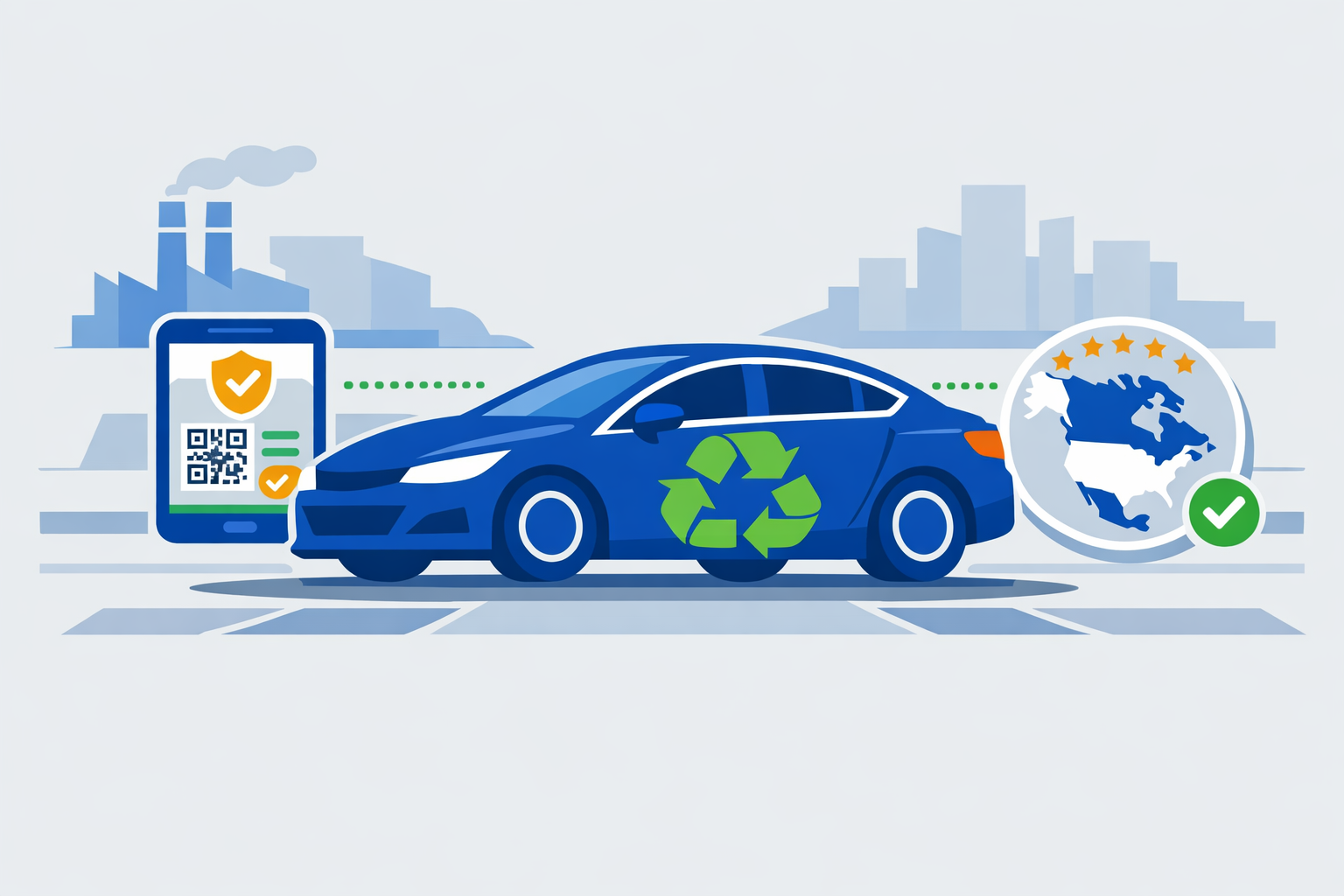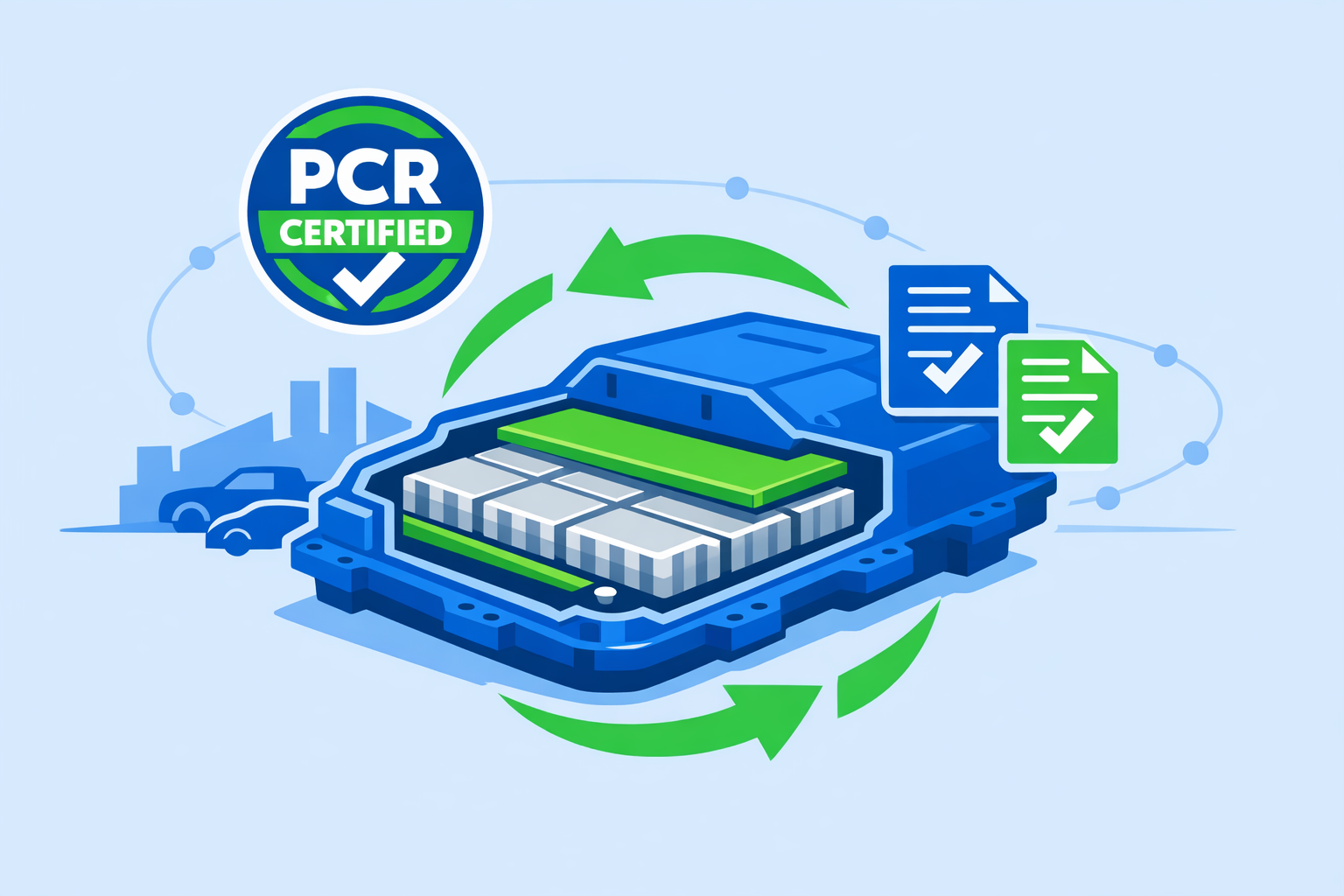
Major North American automakers are requiring suppliers to provide third-party-certified post-consumer recycled (PCR) polymer content in electric vehicle battery housings, responding to tightening regulations and growing scrutiny of recycled content claims in safety-critical components. The shift is accelerating as regulatory requirements, corporate sustainability commitments, and state-level content mandates converge on the automotive supply chain-placing resin suppliers, recyclers, and battery-pack integrators under new verification pressures.
Background
The move toward certified PCR in EV battery enclosures reflects a broader transformation in automotive material sourcing. Stringent environmental regulations in the U.S. and Canada have pushed automakers to adopt more sustainable material practices, including recycled content mandates and extended producer responsibility (EPR) laws that incentivize PCR integration. Major North American automakers have made ambitious sustainability commitments, with Ford pledging to use at least 20% recycled content across its vehicle lineup by 2025 and GM aiming for 50% sustainable materials in all vehicles by 2030.
Expanding state legislation is also driving the push for third-party verification. As of August 2025, five U.S. states have passed laws requiring post-consumer recycled content in plastic packaging. Both Oregon and California cite APR's PCR Certification Program-or an equivalent-for aspects of compliance with state laws, and more states are likely to include certification requirements to ensure accountability. A proposed federal rule mandating recycled polymer content in light-vehicle components, including battery housings, is also advancing through interagency review.
European regulatory pressure adds urgency. The EU's End-of-Life Vehicles directive proposal would require that at least 25% of plastic used to build a vehicle comes from recycling, setting a precedent that North American policymakers and OEMs are closely monitoring.
Details
The central mechanism driving OEM action is growing reliance on accredited third-party certification to substantiate PCR content claims-particularly for components where safety verification and material traceability are non-negotiable. APR's PCR certification provides independent assessment and verification that recycled content-plastic pellets or flake-originates from post-consumer sources such as plastic packaging commonly recycled by U.S. households. Since its launch in 2021, the certification has been awarded to more than 35 plastic recyclers, covering an estimated 30% or more of the post-consumer PET, polypropylene, HDPE, LDPE, and LLDPE produced in North America.
APR upgraded its certification program in late 2024, rolling out a revised standard in phases. APR President and CEO Steve Alexander said the upgraded program "provides stronger accountability and transparency to prepare companies for requirements on recycled plastic resin that are emerging in laws across North America and globally, particularly in minimum content mandates and EPR for packaging laws." Reclaimers seeking new or initial certification after April 1, 2025, must certify to the new standard.
The APR PCR Certification program is a rigorous, ISO-accredited third-party auditing program that brings transparency to the PCR market and supports a reliable recycled materials supply chain. Approved certifying bodies include UL Verification Services and AMI Testing & Services. TÜV SÜD also offers PCR and post-industrial resin (PIR) certification separately in accordance with ISO 14021, clearly indicating the origin of recycled materials-a distinction increasingly relevant as automotive OEMs tighten specifications for safety-critical parts.
For resin suppliers, the certification process is operationally demanding. Certification bodies review six to twelve months of data, including supplier records, confirm PCR content using appropriate calculations, and perform on-site audits where applicable. For battery housing applications-where polymer compounds, typically glass-fiber-reinforced polyamides or polypropylenes, must meet flame retardancy, dimensional stability, and impact resistance specifications-reconciling PCR content with performance requirements remains a primary technical challenge. Advances in compounding and material processing have improved the mechanical properties of recycled plastics, making them suitable for structurally demanding automotive parts. Innovations in polymer blending and additive technology now allow recycled polypropylene and polyethylene to meet the safety and performance standards automotive OEMs require.
Industry demand for certified PCR is accelerating across the supplier base. PureCycle CEO Dustin Olson noted that "a reliable, transparent market for post-consumer material is a critical step in building a circular economy," adding that the company has seen "an increasing demand from customers for third-party certifications such as APR's." APR's Demand Champion program recognizes companies that commit to consistent demand for North American PCR, which is considered necessary to scale recycling capacity.
Cost implications are significant. OEMs and Tier-1 battery-pack integrators face dual pressures: sourcing consistently graded PCR resin at volume and funding the testing and validation programs needed to qualify recycled compounds to internal and regulatory safety standards. PCR certification is not mandatory in all markets, but it is increasingly required by regulatory authorities, funding programs, and public tenders.
Outlook
Harmonization of PCR certification standards across North America and alignment with EU frameworks remain an industry priority, with policymakers and bodies such as APR actively engaged. In 2025, APR supported the CIRCLE Act-the first federal bill offering tax credits for recycling infrastructure-and continued championing PCR mandates and other policies designed to build stable demand for recycled material. As OEM supplier qualification timelines extend to two or more years for safety-critical components, resin suppliers and recyclers that achieve certified PCR status now are positioned to meet sourcing windows opening for next-generation EV platforms. Tier-1 plastics suppliers without a credentialed PCR supply chain face mounting risk of disqualification from future battery housing program awards.