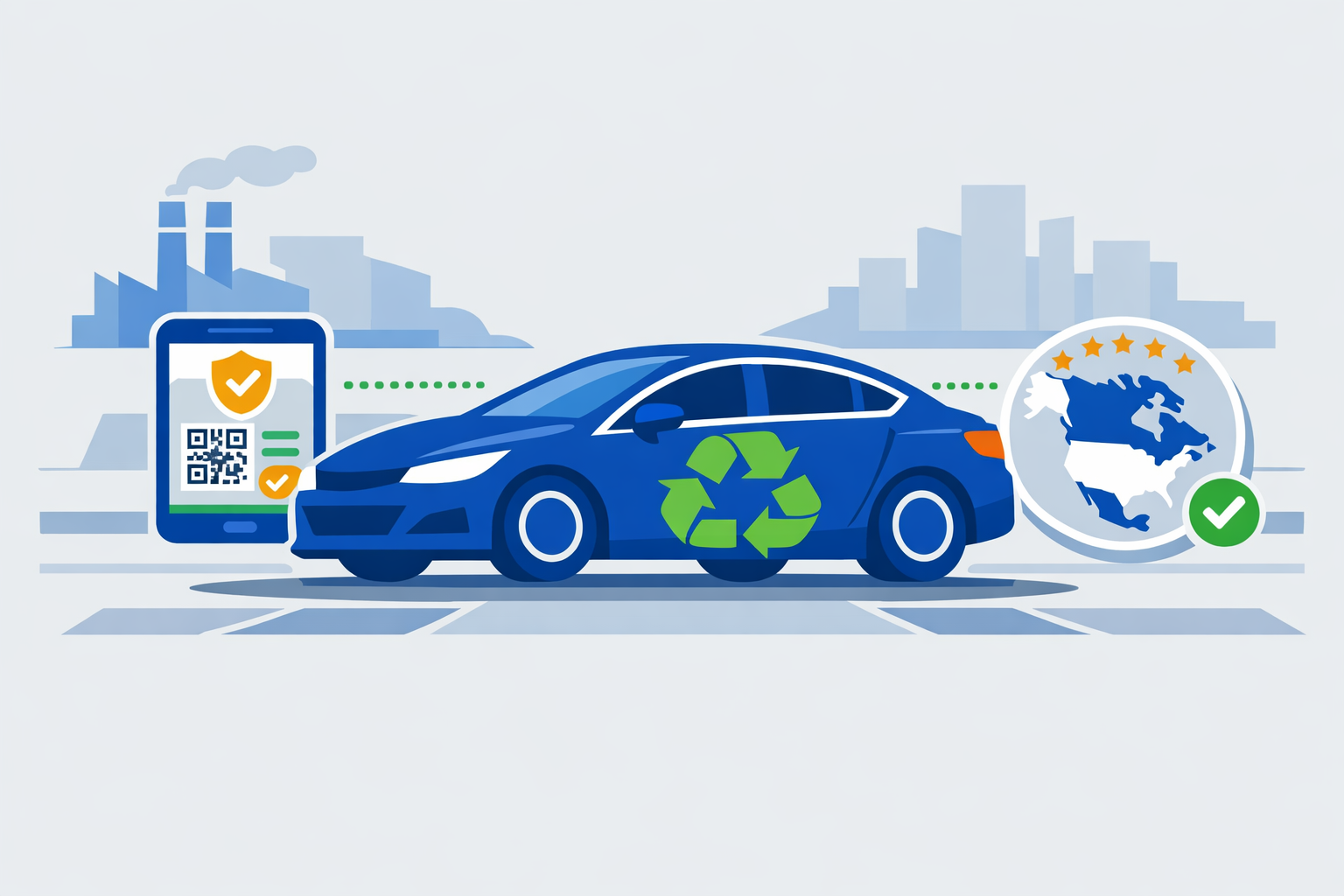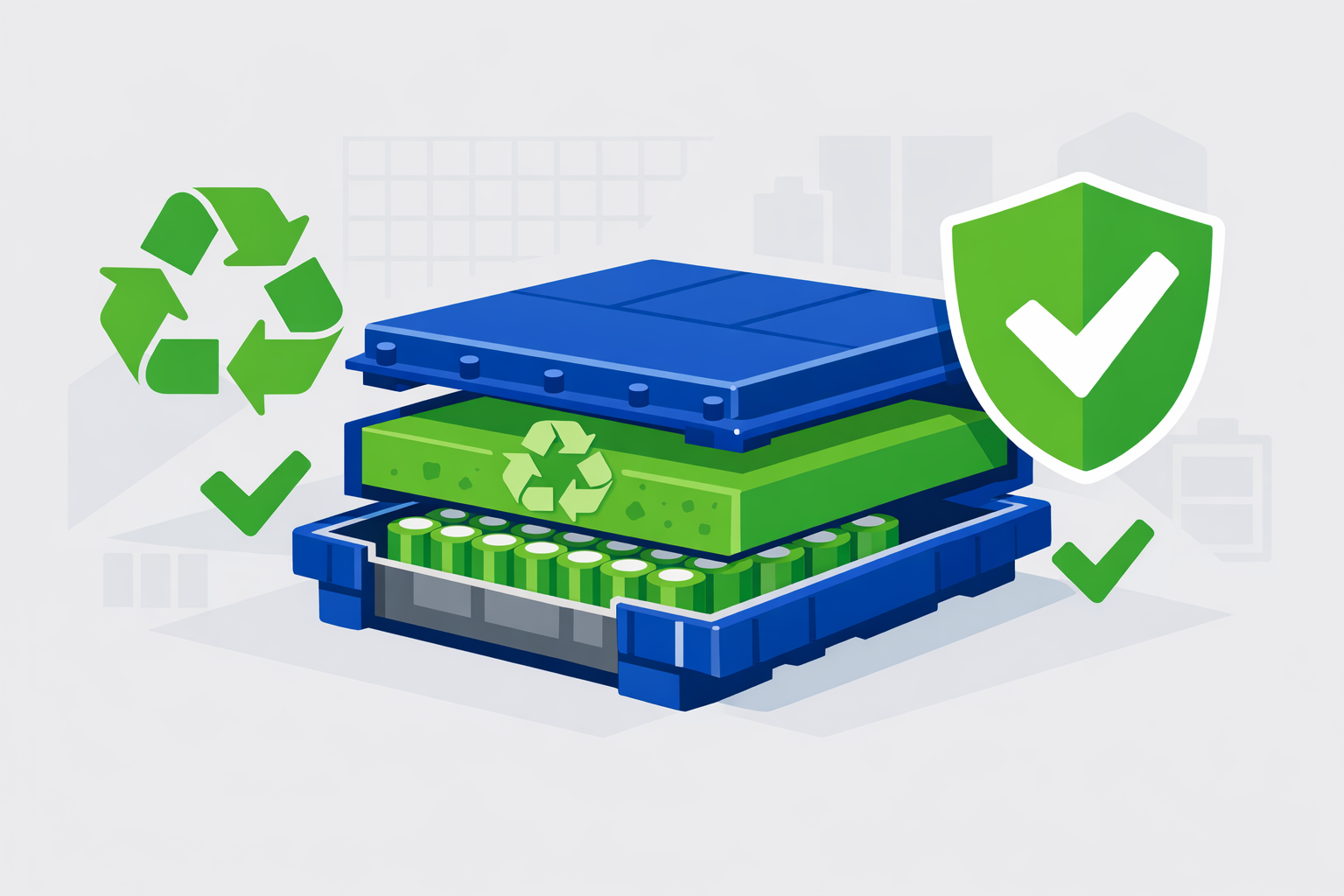
A growing number of North American automakers are requiring independent, third-party certification of post-consumer recycled (PCR) polymer content in electric vehicle battery housings, marking a significant shift in how recycled material claims are validated across the EV supply chain. The move responds to mounting regulatory pressure, greenwashing concerns, and quality risks tied to unverified recycled feedstocks in structural battery enclosure components.
Background
The EV battery housing market is expanding rapidly. According to Future Market Insights, the global EV battery housing market is forecast to grow at a compound annual growth rate of 31.3%, from USD 2.66 billion in 2025 to over USD 40.5 billion by 2035. In North America, the battery housing materials segment is expected to grow from USD 655.5 million in 2024 to USD 2.71 billion by 2035, according to Research and Markets. As polymer-based and composite enclosures displace traditional iron housings-driven by lightweighting, thermal management, and modular pack architecture-material content traceability has become a procurement-critical issue.
OEM sustainability commitments have further elevated recycled content targets. Ford has pledged to use at least 20% recycled content across its vehicle lineup, and GM has set a target of 50% sustainable materials, according to Grand View Research. Voluntary sustainability claims, however, have drawn regulatory scrutiny. In the European Union, allegations of greenwashing have prompted companies to seek independent certification against standards such as EN 15343, ISO 14021, and EN 45557 to demonstrate transparent, traceable PCR and post-industrial recycled (PIR) material declarations, according to TÜV SÜD.
Regulatory developments on both sides of the Atlantic are amplifying this pressure. The EU Battery Regulation requires manufacturers of EV batteries to report carbon footprint data from February 2025, with mandatory supply chain due diligence-covering lithium, cobalt, nickel, and graphite sourcing-taking effect from August 2025, according to Prewave. A Digital Battery Passport, mandating traceable composition and recyclability data via QR code, becomes mandatory for EV batteries in the EU from February 2027. In North America, a proposed U.S. federal rule would mandate defined minimum percentages of recycled polymer in light-vehicle components including battery enclosures, though the rule remains under interagency review.
Details
The shift toward third-party PCR verification in battery housings is driven by both quality and liability considerations. EV drivetrain and high-voltage battery systems present stress environments that existing polymer qualification protocols-developed for internal combustion engine (ICE) platforms-were not designed to address. Applying ICE-era test procedures to EV applications can be misleading in many cases, according to Plastics Today. Introducing unverified recycled polymers into enclosures subject to elevated thermal, mechanical, and electrical demands compounds that qualification risk.
Several established frameworks exist for third-party PCR verification. The APR PCR Certification program, operated by the Association of Plastic Recyclers, is an ISO-accredited third-party auditing program designed to bring transparency to the PCR market and support a reliable supply chain for recycled materials, according to Sabert/Nuvida. All organizations seeking new or initial APR PCR certification after April 1, 2025, are required to certify to the updated standard. UL 2809, administered by UL Solutions, offers independent scientific verification of recycled content claims across industries including automotive and batteries. In Europe, TÜV SÜD certifies PCR and post-industrial recycled content separately under ISO 14021, with chain-of-custody audits that trace actual material flows throughout the supply chain.
Post-consumer recycled material-repurposed from items discarded by end users-is preferred over pre-consumer material derived from manufacturing scrap, as it delivers greater environmental benefit through landfill diversion. Products containing higher levels of post-consumer waste tend to be more specifically labeled, since achieving such content is both more technically demanding and more costly than using pre-consumer alternatives. For OEMs specifying structural battery enclosure resins-typically glass-filled polyamides, long-fiber thermoplastics, or sheet molding compounds-performance consistency of PCR feedstock remains a key qualification hurdle.
Compositesworld has noted that material suppliers developing enclosure compounds will be required to formulate sustainable and recyclable options that meet both the mechanical and thermal performance requirements for battery enclosures and automaker price targets. Independent certification provides a mechanism to segregate compliant supply from uncertified streams, enabling defensible procurement decisions across Tier-1 and Tier-2 supplier networks.
The supplier qualification implications are considerable. The North America EV battery components market was valued at USD 15.40 billion in 2025, with IRA and USMCA content rules and 2024-2025 tariff actions reshaping award criteria so that OEMs now emphasize domestic footprint alongside price, according to Research and Markets. Third-party PCR certification aligns with this localization push by enabling verification of domestically sourced recycled resin streams.
Outlook
As OEM supplier quality requirements formalize around independent PCR verification, Tier-1 enclosure manufacturers face near-term qualification timelines requiring investment in chain-of-custody documentation and audit readiness. As of August 2025, the U.S. has no federal end-of-life battery recycling policy, a gap that industry-led certification standards are partly filling. With the EU Digital Battery Passport taking effect in 2027 and North American recycled content rules advancing through rulemaking, the certification infrastructure now being established for battery housings is expected to extend to other high-value polymer components within EV pack architectures.
Related coverage: US Proposes Federal Recycled Content Rule for Auto Plastics | EU Boosts Recycled and Biobased Composites for EV Battery Enclosures