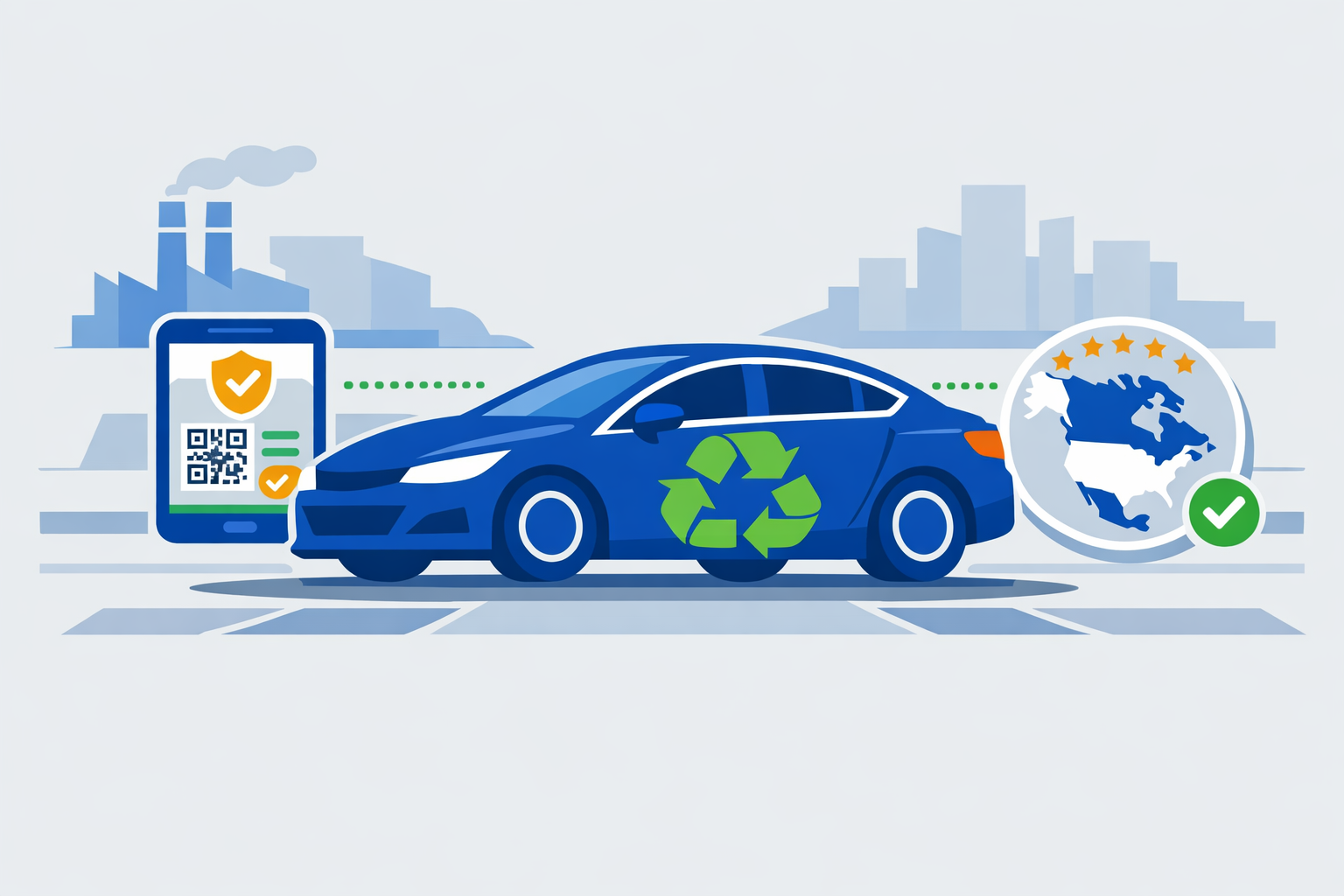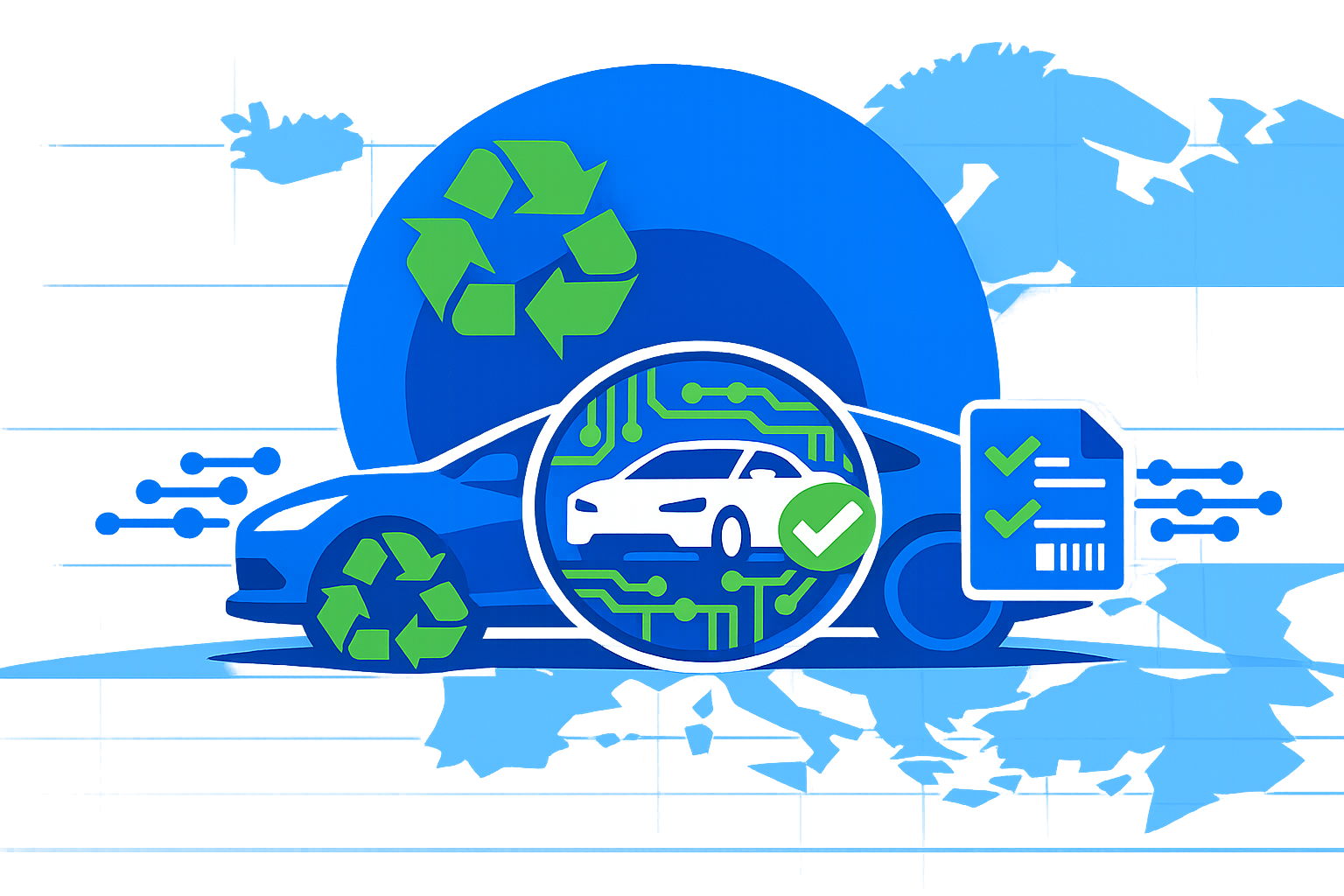
Only 19% of plastics from end-of-life vehicles (ELVs) in the EU is currently recycled - a figure the European Union's landmark End-of-Life Vehicle Regulation is explicitly designed to reverse. The regulation represents the most sweeping overhaul of automotive circularity rules in more than two decades, and its verification requirements are already reshaping how OEMs, Tier 1 suppliers, and materials processors plan their operations.
For procurement specialists and manufacturing leaders, the central challenge is not merely sourcing recycled content - it is proving it. The regulatory clock is running.
The Regulatory Shift: From Directive to Directly Binding Regulation
In December 2025, the European Parliament and the Council reached a provisional political agreement on the new ELV Regulation, replacing two existing directives. The compromise text was published in February 2026. Unlike its predecessor directives, which required transposition into national law, the new framework is a directly applicable regulation operating uniformly across all EU member states. This eliminates the patchwork of national interpretations that complicated cross-border supply chains under the old regime.
The regulatory ambition is substantial. The ELV Regulation introduces, for the first time, mandatory minimum targets for recycled plastic content in new vehicles: at least 15% within six years of entry into force, rising to 25% within ten years. Of these targets, 20% must be sourced through closed-loop pathways - specifically, plastics recycled from end-of-life vehicles or from parts removed during the use phase. In absolute terms, 3% of a vehicle's plastic content must derive from ELVs after six years, and 5% after ten years.
The scope is broad. Mandatory requirements apply to passenger cars, light commercial vans, regular heavy-duty vehicles, motorcycles, and special-purpose vehicles, with a limited exemption for small-volume manufacturers of heavy-duty special-purpose vehicles.
The December 2026 Verification Milestone: Why It Matters
While the content targets themselves will not take effect until roughly 2032 and 2036, a critical intermediate deadline falls at the end of 2026. Rules for calculating and verifying recycled plastic content are required to be finalized by December 2026, followed by a feasibility study in 2027 and a formal declaration of material formats in 2030.
This timeline is not administrative housekeeping. The verification methodology will determine which recycled streams count toward compliance, how mass balance accounting applies, and what documentation standards auditors will accept. Organizations that wait until those methodologies are published before building their data infrastructure risk being unable to demonstrate compliance when mandatory targets take effect.
The regulation also tasks the European Commission with reviewing bio-based plastics and elastomers from tires within 72 months of entry into force, and "where appropriate" presenting legislative proposals that could allow them to count toward recycled content targets. Chemical recycling remains notably absent from the current harmonized end-of-waste criteria for mechanical and solvent-based recycling, though the regulatory wording leaves the door open for future inclusion.
What Verification Actually Requires
For most automotive organizations, the information needed to demonstrate recycled content compliance already exists - but is typically fragmented across multiple ERP, PLM, and manufacturing execution systems that were not designed to create a continuous circular material record. Structuring that data into an externally auditable form is the primary operational challenge.
The regulation introduces a Digital Circularity Vehicle Passport, requiring manufacturers to document restricted substance declarations, recycled content shares, circularity strategies, and links to spare parts catalogues for each vehicle type. This is not an isolated data-collection exercise - it integrates with broader EU digital product passport (DPP) requirements under the Ecodesign for Sustainable Products Regulation (ESPR).
According to a KPMG 2026 readiness survey, 81% of European companies lack the structured lifecycle data required for DPP compliance - a finding that underscores the gap between regulatory intent and operational reality across the automotive supply chain.
At the material level, verification will require batch-level traceability from recycling facility through compound production to the finished vehicle component. Third-party certification against recognized standards - such as ISO 14021 - will be expected for recycled content claims. Suppliers relying on self-declarations without chain-of-custody documentation face the highest compliance exposure.
Supply Chain Implications: Material Availability and Pricing
The regulation's recycled content mandates are expected to be met primarily through recycled polyolefins - polypropylene (rPP) in particular, given that polypropylene is a key structural polymer in automotive interior, exterior, and under-hood components, appearing in dashboards, door panels, bumpers, and battery housings.
ICIS has estimated that 0.5 to 0.6 million tonnes of recycled polyolefins will be required annually by 2040 to meet automotive demand created by the regulation, with the majority supplied by recycled polypropylene. Current ELV plastic recycling rates make this a significant scaling challenge. The global recycled polyolefin market is projected to grow from approximately US$68.6 billion in 2026 to US$124.6 billion by 2033, at a CAGR of 8.9%, driven in part by automotive mandates and aligned packaging regulations.
However, structural market tensions persist. Virgin polyolefins continue to price below many recycled grades during periods of low crude feedstock costs, complicating the economic case for recycled content adoption absent regulatory obligation. The EU has acknowledged this dynamic: the regulation includes a provision permitting the Commission to delay or temporarily revise down plastic content targets if "lack of availability or excessive prices of specific recycled plastics make compliance with the minimum percentages of recycled content excessively difficult."
For procurement teams, this underscores the importance of securing long-term supply agreements with certified recyclers now, rather than relying on spot market availability as mandatory deadlines approach.
Design-for-Recycling: Engineering Ahead of Enforcement
A dimension of the regulation that risks being underweighted by compliance teams is its design requirements. The framework requires vehicle manufacturers to provide detailed dismantling instructions for the removal and replacement of parts both during use and at end-of-life. It places pressure on design choices that impede separation - including permanent adhesives, overmolded joints, and multi-polymer assemblies.
Stellantis has announced a target of 40% recycled content in vehicle plastics by 2030, partnering with European recyclers to source post-consumer polypropylene and polyamide compounds, with a focus on non-visible structural parts such as battery trays and underbody shields. BMW Group is testing interior panels manufactured entirely from recycled thermoplastics, with digital material passports accessed via QR codes embedded in the parts to support transparency across the vehicle's lifecycle.
These early-mover strategies reflect a broader industry recognition: design choices made at the vehicle development stage today will determine whether closed-loop ELV recycling is technically feasible at scale under the coming regulatory framework.
Regulatory Harmonization and Cross-Border Considerations
The shift from directive to regulation removes much of the member-state discretion that previously created compliance inconsistencies across the EU single market. Under the former ELV Directive framework, member states were required to transpose rules into national law, which generated regulatory fragmentation. The new regulation applies uniformly, reducing legal uncertainty for cross-border supply chains.
Enforcement will be reinforced through expanded inspections and a clearer legal distinction between used vehicles and end-of-life vehicles - directly addressing the long-standing problem of "missing vehicles" that leave EU recycling systems before treatment. An export ban on non-roadworthy vehicles, applicable five years after entry into force, will close a loophole that has historically allowed valuable ELV material streams to leave Europe, weakening the feedstock base for closed-loop automotive recycling.
For global automotive players operating across EU and non-EU markets, these rules create pressure for regulatory alignment. Manufacturers selling into the EU will need to maintain separate - or preferably harmonized - material documentation systems that satisfy both EU verification requirements and equivalent frameworks emerging in other jurisdictions.
Key Compliance Milestones at a Glance
| Milestone | Timeline | Obligation |
|---|---|---|
| Political agreement reached | December 2025 | Provisional deal between European Parliament and Council |
| Compromise text published | February 2026 | Full regulation text available to stakeholders |
| Verification methodology deadline | December 2026 | Rules for calculating and verifying recycled plastic content finalized |
| Regulation enters into force | ~2026-2027 | Two-year application clock begins post formal adoption |
| Recycled steel & aluminium targets set | 2 years after entry into force | Commission publishes targets following feasibility studies |
| First recycled plastic content target | ~Year 6 (est. 2032) | Minimum 15% recycled plastic; at least 3% from ELVs |
| Bio-based plastics review | Year 6 | Commission review on bio-based eligibility for targets |
| Second recycled plastic content target | ~Year 10 (est. 2036) | Minimum 25% recycled plastic; at least 5% from ELVs |
Readiness Priorities for OEMs and Tier 1 Suppliers
Organizations seeking compliance readiness ahead of the December 2026 verification methodology deadline should take a structured approach across several functional areas:
1. Conduct a material inventory audit. Map all plastic components by polymer type (referencing ISO 1043), mass fraction, and current supplier documentation. Identify gaps in recycled content data at the part and batch level.
2. Establish supplier traceability requirements. Engage Tier 1 and Tier 2 suppliers to collect batch-level chain-of-custody documentation and third-party certification references. Prioritize closed-loop ELV-sourced material streams.
3. Build a unified lifecycle data infrastructure. Consolidate material data across ERP, PLM, and manufacturing execution systems to create a continuous circular material record aligned with Digital Circularity Vehicle Passport requirements.
4. Review and adapt vehicle design. Apply design-for-recycling principles: reduce permanent adhesives and mixed-material assemblies, standardize polymer types per component family, and prepare dismantling instructions as mandated by the regulation.
5. Commission third-party verification. Audit recycled content claims before the Commission finalizes verification methodology. Use findings to close sourcing and documentation gaps.
6. Monitor implementing acts and harmonized standards. Track European Commission delegated and implementing acts specifying calculation and verification methodologies. Engage with standardization bodies (CEN/CENELEC) and sector associations to influence and anticipate harmonized approaches.
For related analysis on how these circularity rules extend to fiber-reinforced polymer composites and the challenges of classification under the plastics category, see EU Tightens Circularity Rules for Automotive Composites.
Conclusion
The EU ELV Regulation reframes automotive sustainability compliance as a lifecycle-long data governance challenge, not a downstream waste management obligation. The December 2026 deadline for finalizing verification methodology represents the immediate strategic pressure point. Organizations that build traceable material records, redesign for recyclability, and secure long-term certified recycled feedstock supply ahead of that milestone will be far better positioned when mandatory content targets take effect in the early 2030s. Those that wait for full enforcement clarity before acting face both a compressed readiness window and intensifying competition for compliant recycled material supply.