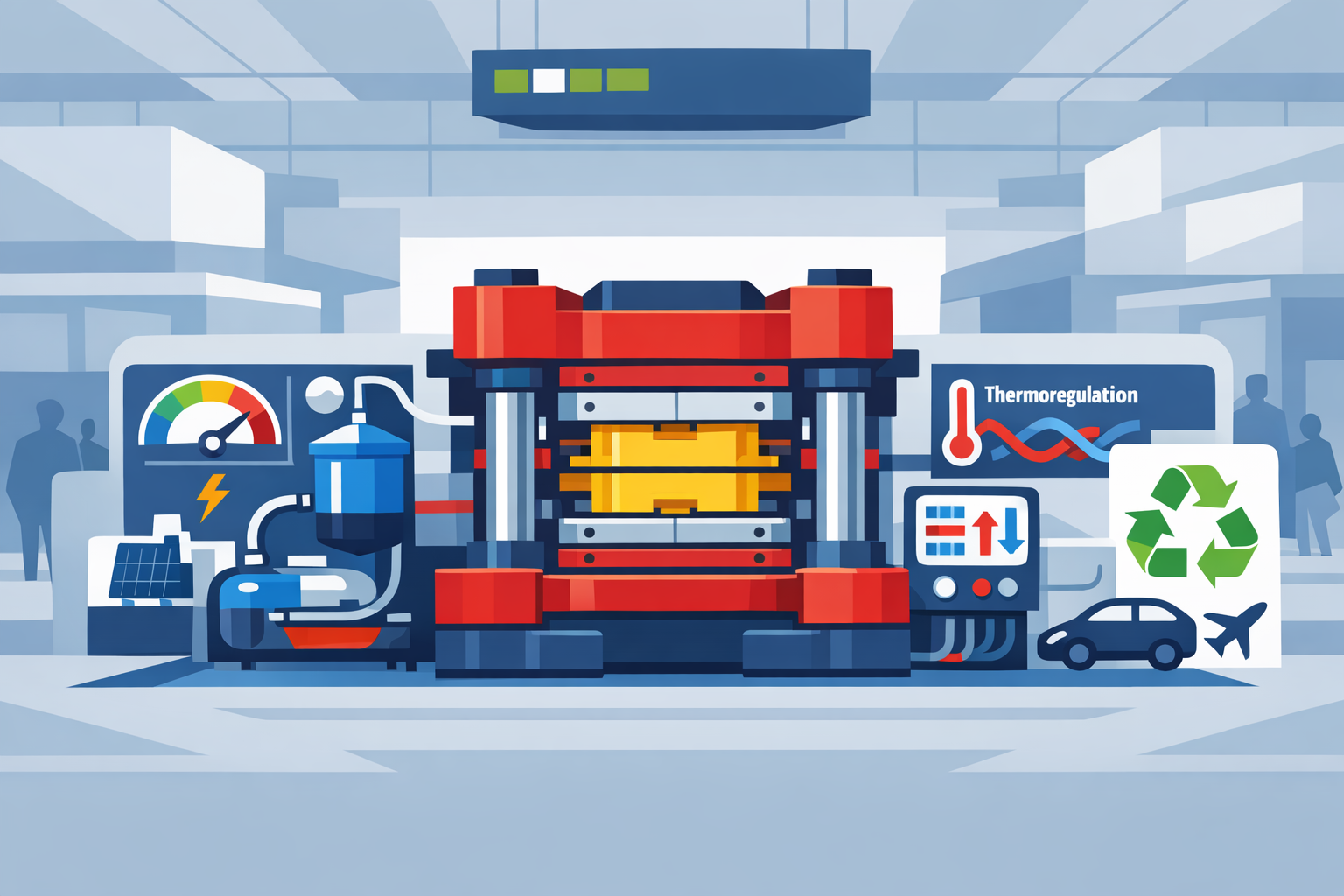
Cannon Group introduced a suite of integrated composite manufacturing technologies at JEC World in Paris from March 10 to 12, targeting improved efficiency, process flexibility, and sustainability in both thermoset and thermoplastic applications. The portfolio includes the NEXUS intelligent mold thermoregulation system, advanced thermocompression and vacuum-assisted resin injection lines, and the POSSIBLE end-of-life recycling project for polyurethane composites. These technologies were previously demonstrated in Caronno Pertusella, Italy, on January 15, 2026[1].
Background
Cannon's advancements respond to industry demands for precise process control, higher throughput, and enhanced sustainability in automotive and aerospace composite manufacturing. Thermoset and thermoplastic composites provide weight savings and performance benefits but present challenges in processing efficiency and end-of-life management. Conventional heating systems and batch recycling methods have shown shortcomings in energy use and material circularity[2].
Details
The NEXUS mold thermoregulation system utilizes composite materials embedded as active mold heating elements, eliminating the need for thermal fluids. According to Cannon, NEXUS reduces energy consumption by up to 70% and achieves mold heating in about eight minutes, compared to traditional hour-long cycles. The system delivers a 25% increase in process efficiency and enables controlled temperature gradients on the millimeter scale, supporting applications such as PU RIM with high thermal precision and reduced cycle times[2]. Andrea Castelnovo, Technology and R&D Manager, noted that conventional systems face a "physiological limit" in energy efficiency, while NEXUS allows targeted heating, significantly reducing thermal waste[2].
Cannon also presented validated manufacturing lines for aerospace-grade thermoset and thermoplastic composites, featuring advanced thermocompression presses, vacuum-assisted systems, and precision resin injection solutions designed to meet stringent aerospace and defense specifications[1].
In sustainability, Cannon introduced the POSSIBLE (PrOduce SuStainabLE Industrial Bodies) project, developed with MAP S.p.A. and the University of Bergamo under the EU NextGenerationEU program. The initiative demonstrated the reuse of end-of-life rigid PU foam and PU-glass fiber composites as secondary reinforcements using recycled powder or granulate, dosed and mixed under controlled conditions. Trials achieved recycled content at industrially relevant levels without compromising process consistency or component integrity[3].
Additionally, Cannon launched compact, high-tonnage, short-stroke compression presses developed with TEP-Taylor Engineering & Plastics for facilities with limited ceiling height. These presses offer a space-efficient footprint, production flexibility, and precision suitable for a range of composite manufacturing applications[1].
Outlook
Cannon's integrated solutions-combining digital thermal control, unified manufacturing processes, and PU composite recycling-reflect ongoing shifts toward advanced, sustainable composite processing. As demand for lightweight, recyclable materials increases in the automotive and aerospace sectors, these validated technologies may support broader adoption of circular, energy-efficient manufacturing models. The practical benefits will depend on continued deployment and performance confirmation in industrial environments, particularly regarding throughput and supply chain sustainability.