The European Union has reached a provisional agreement on a new End-of-Life Vehicles (ELV) regulation that introduces binding recycled-plastic content targets for all new vehicles sold in the bloc. The plastic in each new vehicle type must contain a minimum of 15% recycled plastic within six years of the rules' entry into force, rising to 25% within ten years. Twenty percent of these targets must be achieved through closed-loop recycling - material recovered from end-of-life vehicles or parts removed during the use phase. EU institutions reached a political agreement in December 2025, and the compromise text was published in February 2026, placing the regulation on track for formal adoption.
Background
The regulation replaces two existing directives - the 2000 ELV Directive and the 2005 type-approval directive on recyclability - merging them into a single, directly applicable framework covering the full vehicle lifecycle. It is a cornerstone of the European Green Deal and the circular economy action plan, aimed at transitioning the automotive sector to a more circular model.
Automotive manufacturing is one of the most resource-intensive sectors in the EU and among the largest consumers of primary raw materials, including plastics at 6 million tonnes per year, yet makes little use of recycled materials. Under existing rules, only 19% of plastics from ELVs is recycled. The Commission's original 2023 proposal called for a 25% recycled-plastic target within six years, with 25% from ELV-derived sources, but following industry concerns about feasibility, the European Parliament lowered the overall recycled plastic target to 20%, with 15% specifically from ELV-derived sources. The final trilogue compromise settled on 15% at year six and 25% at year ten.
Details
One of the most significant new elements is the introduction of mandatory recycled material requirements, especially for plastics, though exact calculation methodologies are expected to be defined through later implementing acts. Rules for recycled plastic content are to be calculated and verified by the end of 2026, followed by a feasibility study for setting the recycled content target in 2027 and a declaration of material formats in 2030.
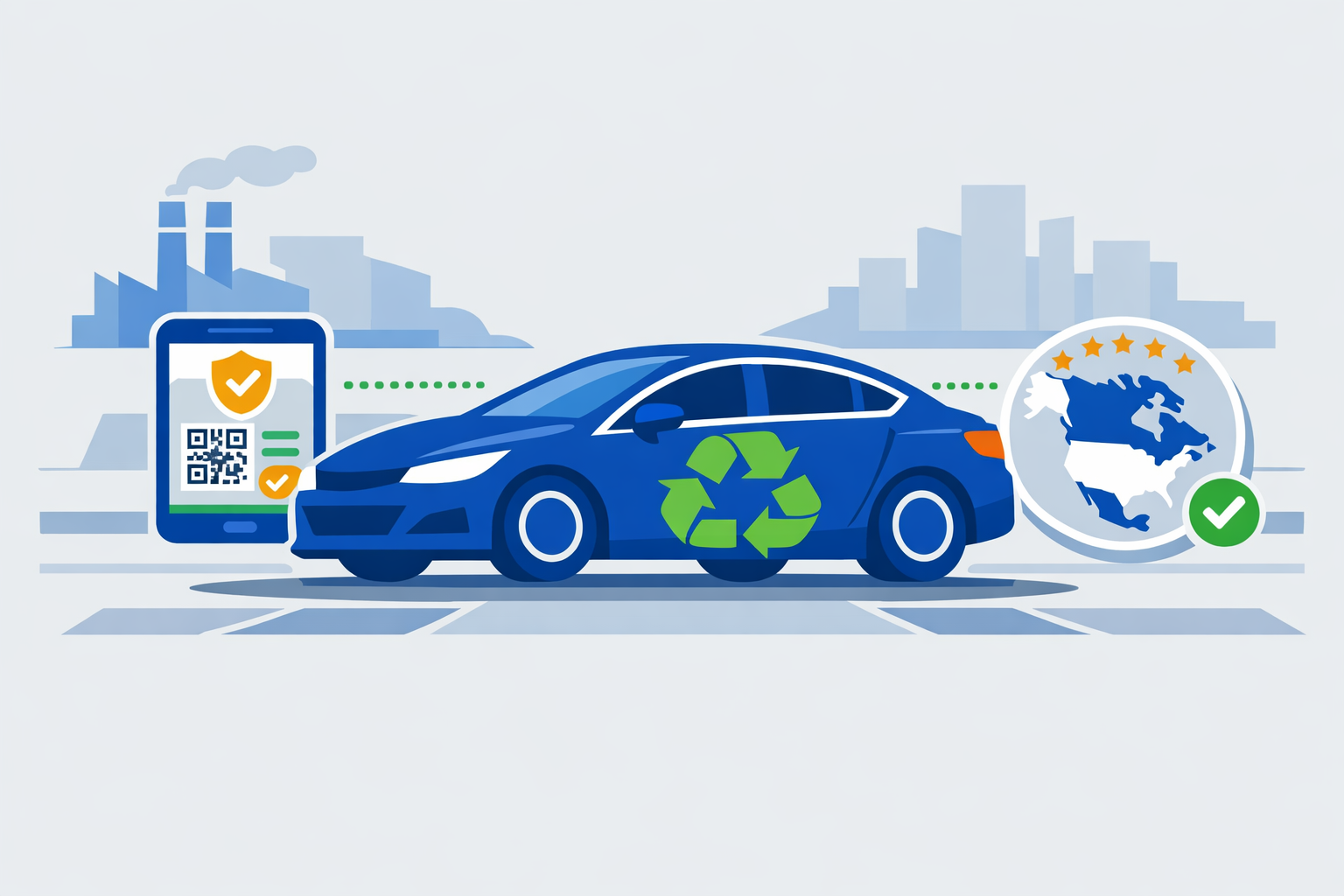
The European Parliament has requested that the Commission develop a standardised method for calculating and verifying recyclate content in plastics, accounting for the best available recycling technologies, including chemical recycling. Producers must include in a digital product passport information on restricted substances, the share of recycled content, circularity strategies, and references to the spare parts catalogue.
The Commission is also required to introduce targets for recycled steel and aluminium two years after the regulation enters into force, following the completion of feasibility studies. Under extended producer responsibility provisions, OEMs will bear greater financial responsibility for vehicle disposal and material recovery.
Environmental groups have noted gaps in the agreed text. The European Environmental Bureau and Environmental Action Germany said lawmakers reduced recycled plastic content targets from 25% to 15% six years after entry into force, postponing the 25% requirement until a decade after entry into force. IDTechEx forecasts that sustainable plastics content in vehicles will reach 18% by 2035, with recycled plastics accounting for 15% and bio-based plastics making up the remaining 3%.
Outlook
Before formal adoption, the provisional agreement must be endorsed by the Council and the Parliament. Once adopted, the regulation will enter into force 20 days after publication in the EU's Official Journal. For composites suppliers and polymer compounders, the verification methodology due by the end of 2026 will be a critical milestone - defining how recycled-content claims in glass-fibre-reinforced polyamides, polypropylene compounds, and other automotive-grade materials are substantiated across cross-border supply chains.