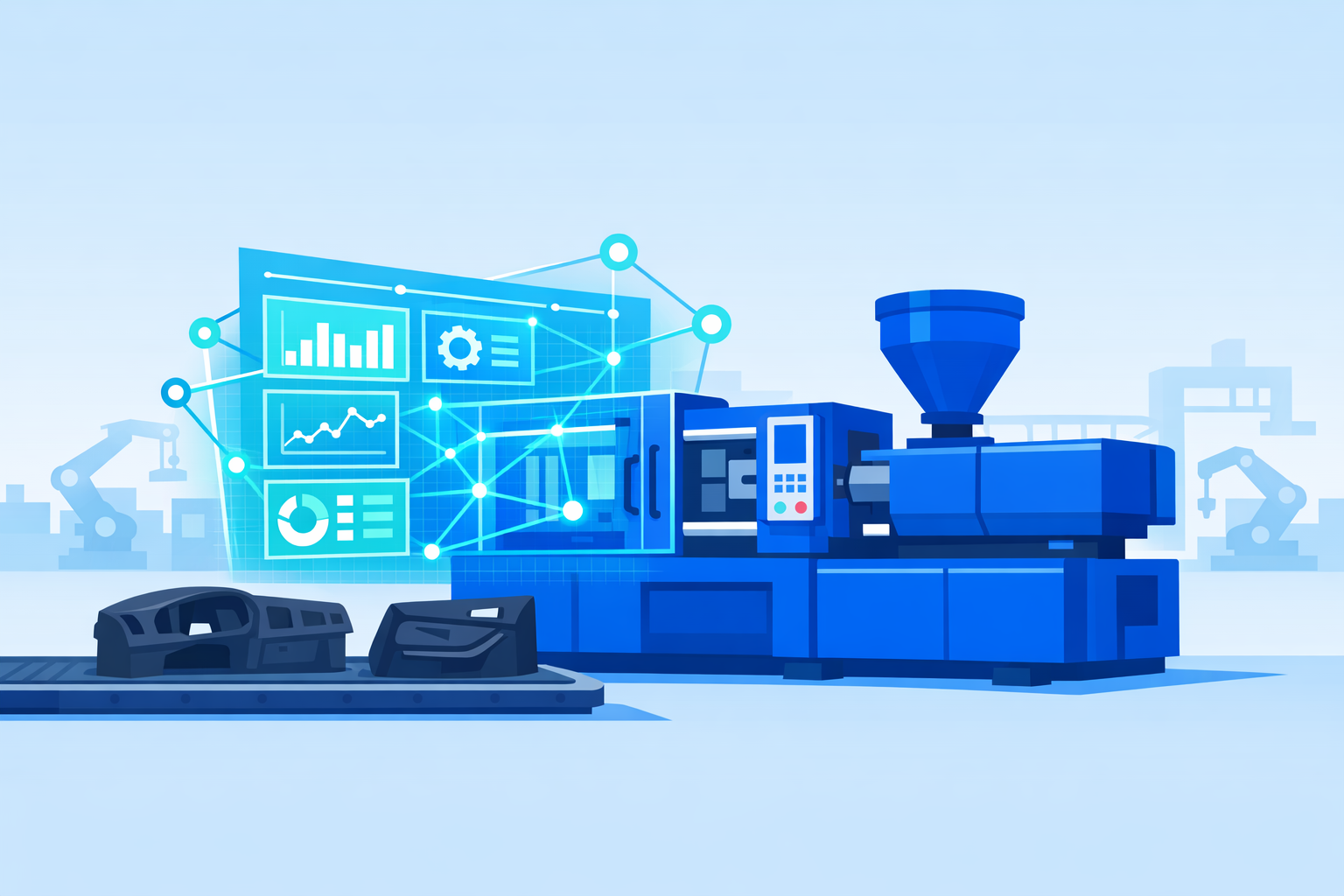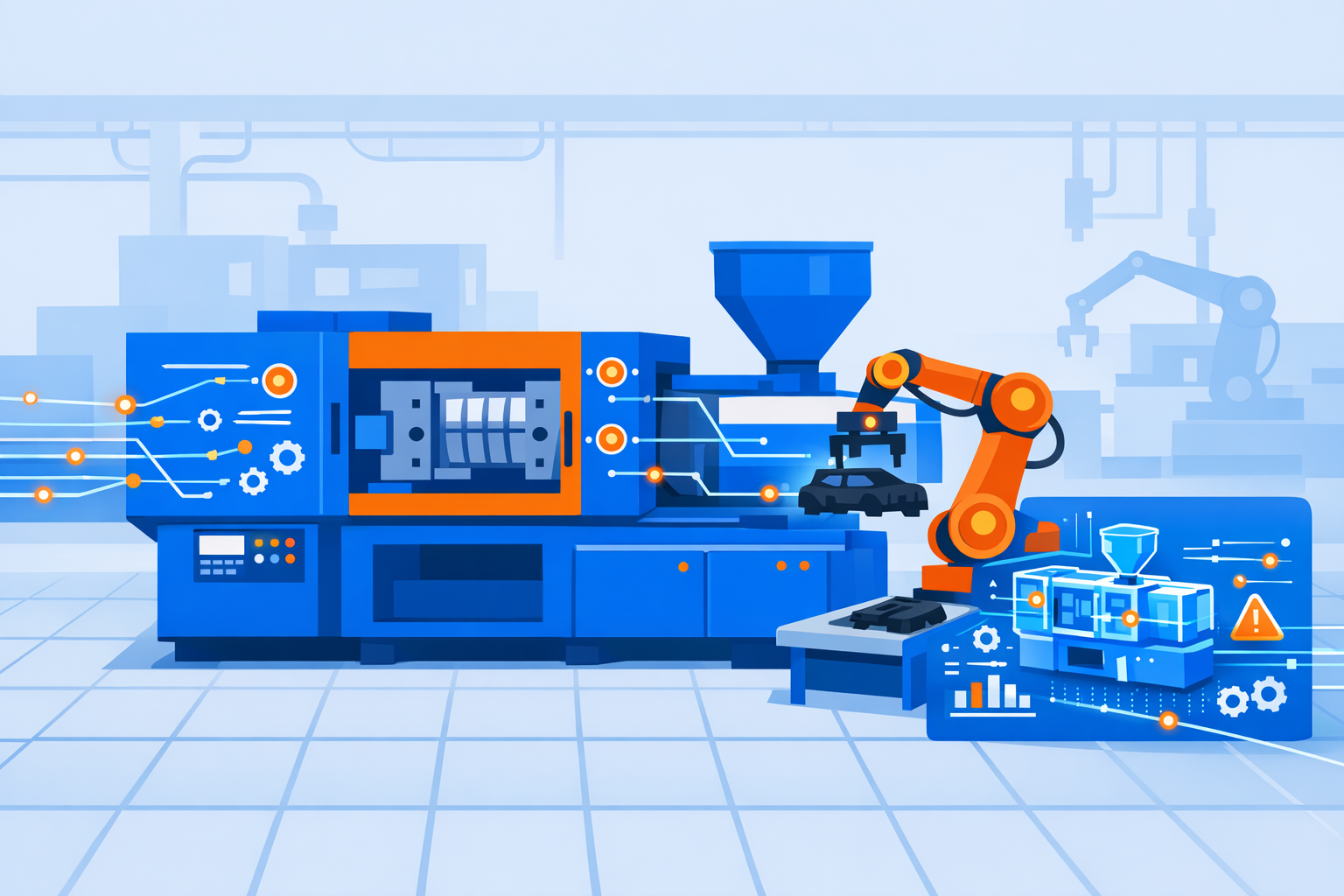
AI-powered adaptive control systems are reshaping injection molding processes for automotive plastics by reducing scrap, energy use, and cycle times while improving reliability through real-time optimization and predictive maintenance. These systems leverage machine learning, Industrial Internet of Things (IIoT) sensors, and digital twin technologies across manufacturing networks, accelerating the shift toward smart manufacturing in the context of ongoing supply-chain challenges and sustainability requirements.
Background
Automotive injection molding is under significant pressure to minimize waste, boost throughput, and incorporate sustainable materials such as recycled and bio-based polymers. Traditional parameter adjustments depend on operator expertise and trial-and-error methods. AI-driven systems provide autonomous adaptation to changing process conditions, reducing reliance on manual intervention and enhancing resilience across distributed production facilities.
Details
Recent data from IMMS GmbH, presented on February 1, 2026, described a hybrid AI approach combining a genetic algorithm with a CatBoost surrogate model. This framework delivered a 4.5% reduction in cycle time while maintaining quality, with 95% of optimized solutions adhering to industrial constraints[1].
Machine manufacturers and material suppliers also benefit from embedded adaptive controls. A 2025 MDPI publication indicated that neural network-based platforms using sensor inputs-such as nozzle and cavity pressure, and clamping force-lowered process variability by up to 5%, supporting improved stability and yield consistency[2]. Another method utilized tie-bar elongation monitoring via strain gauges, increasing yield rate from 60% to 90% through dynamic control of V/P switchover and holding pressure[2].
For predictive maintenance, AI-based regression monitoring reportedly reduced defect rates by 35% in automotive plants, allowing a German molder to save €2.3 million annually by decreasing out-of-spec components from 3.2% to 0.8%[3]. Industry developments include real-time AI control of melt temperature, injection speed, and cooling intervals to maintain consistent quality and maximize throughput[4].
Digital twin deployments further enhance process oversight. AI-augmented virtual models simulate mold dynamics and part cooling, supporting proactive process adjustments, shortening prototyping cycles, and improving traceability[4].
Edge AI solutions such as MicroAI report material waste reductions of up to 70% alongside increased overall equipment effectiveness, achieved through predictive maintenance and real-time fault detection[5].
Outlook
The integration of AI, advanced sensor technology, and digital twins is advancing autonomous, data-driven injection molding systems for automotive plastics. As AI systems expand across manufacturing networks, manufacturers are projected to achieve greater decarbonization, supply chain efficiency, and operational resilience. Challenges remain, including data governance, workforce development, and cross-platform technology integration.